Genetic counselors rely on family history to assess hereditary disease risk, but scattered intake forms and handwritten sketches often make it difficult to identify patterns. A genetic counseling genogram–also called a clinical pedigree–solves this by transforming complex history into a clear visual map. By moving to digital tools, counselors can build an accurate three-generation pedigree during the consultation, revealing inheritance patterns that might otherwise be missed. This guide explores how to move beyond manual drafting to prioritize clinical insight and patient care.
What Is a Genetic Counseling Genogram?
A genetic counseling genogram (or a clinical pedigree) is a structured family diagram used to document a patient’s medical history and inheritance patterns. While it looks like a family tree, its purpose is strictly diagnostic.
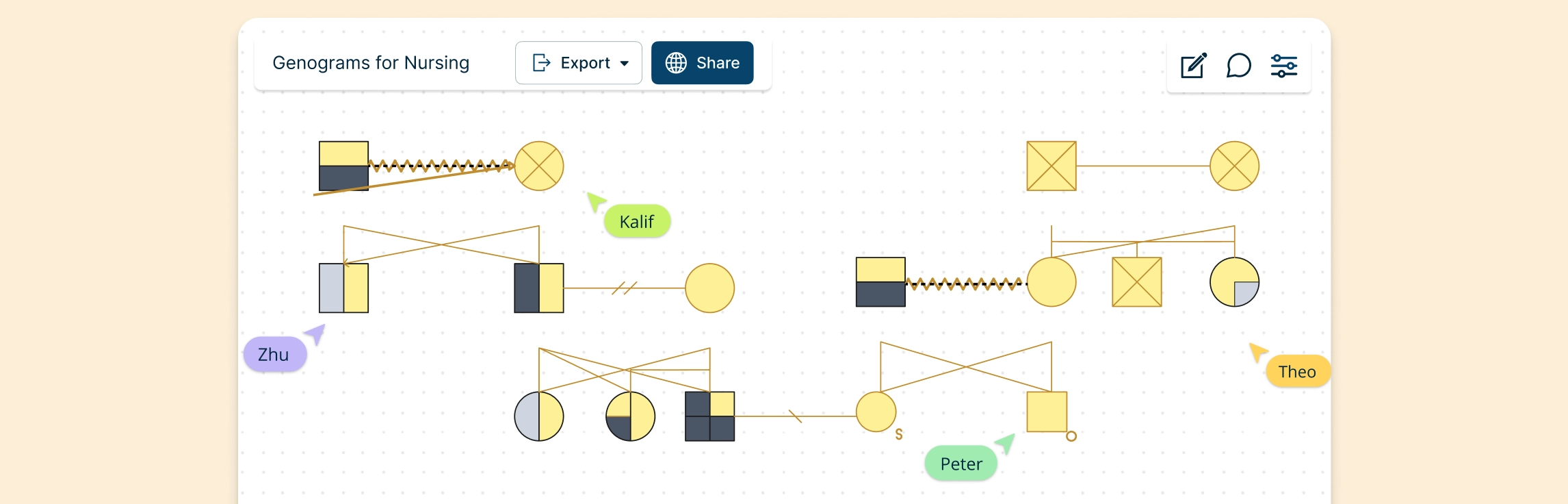
Think of this genogram as a visual database. It follows standardized clinical pedigree notation used in genetic counseling—allowing you to identify and analyze the transmission of health conditions across generations at a glance.
What Does a Genetic Counseling Genogram Show?
A comprehensive clinical pedigree provides a multi-layered view of a family’s biological narrative. At a glance, a counselor can identify:
- Family relationships across three generations: A clear map of biological, legal, and social connections.
- Hereditary diseases: The presence of chronic conditions, malignancies, or rare disorders within the bloodline.
- Age of diagnosis: Critical data points that help determine the aggressiveness or early-onset nature of certain conditions.
- Genetic mutations: Specific identified markers such as BRCA1/2, Lynch Syndrome, or PALB2.
- Carrier status: Visual indicators for asymptomatic individuals who may pass a trait to the next generation.
- Inheritance patterns: Clear evidence of autosomal dominant, recessive, or X-linked transmission.
Why Genetic Counselors Use Genograms
A genogram is the visual shorthand that allows a counselor to move from a pile of scattered intake notes to a clear, actionable medical strategy.
From Data Points to Diagnostic Patterns
The primary reason genetic counselors rely on a genogram is the need for instant pattern recognition. When evaluating rare autosomal recessive conditions or hereditary cancer syndromes—like a rare autosomal recessive trait—pattern recognition is essential.. A genogram is your map.
- Visualizing Inheritance: The visual layout makes vertical and horizontal transmission patterns jump off the page.
- Capturing Complete Family Health Context:: Counselors can indicate specific health data (age of onset, chronic conditions, and comorbidities) directly on the genogram.
This creates a family history pedigree that tells a complete story of risk.
Speed and Accuracy in the Consultation Room
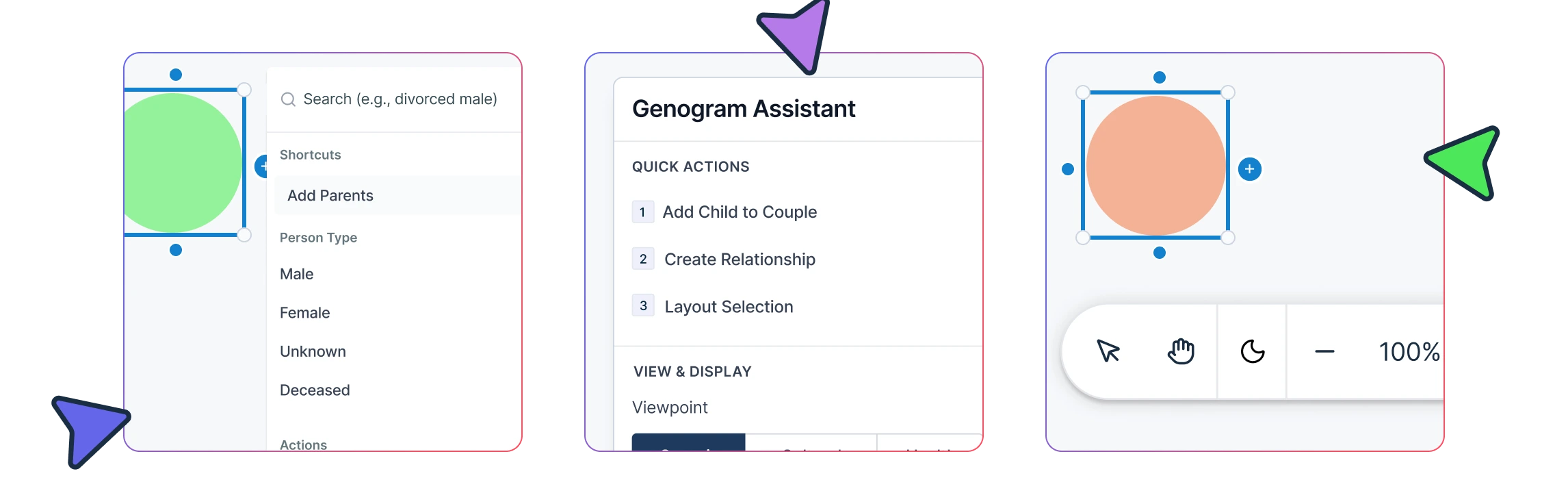
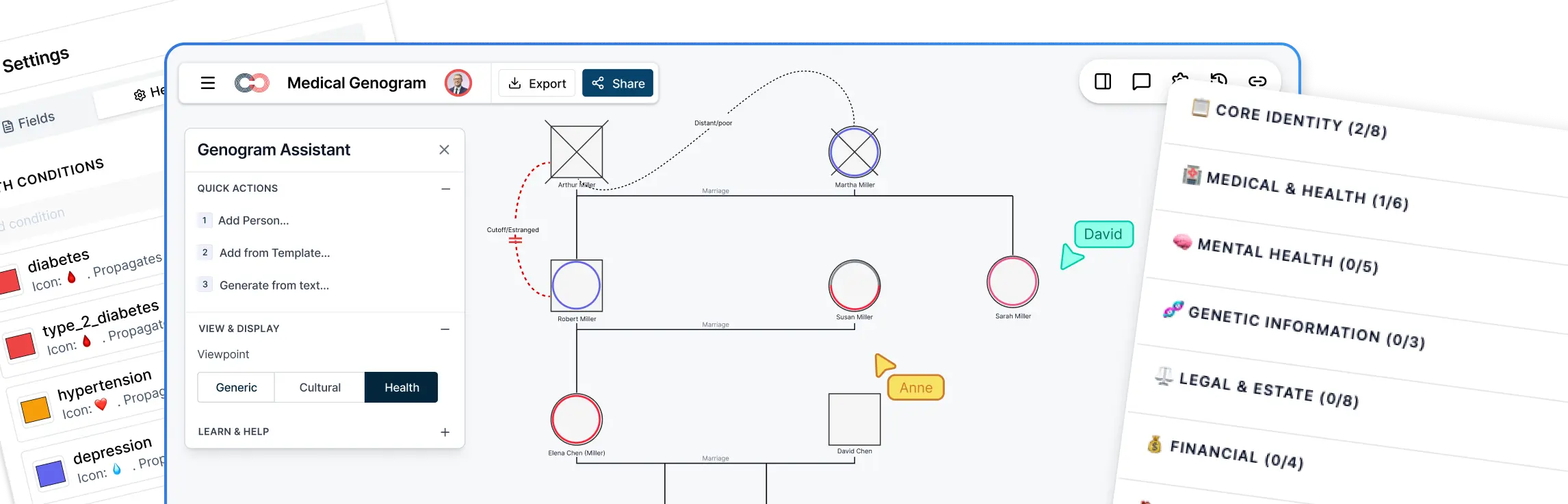
- Build During the Session, Not After: With intuitive keyboard shortcuts and auto-derived shapes, you can map a 3-generation pedigree as the patient speaks.
- Clinical Notation Standards: Using McGoldrick/Gerson notation ensures that your work is medically accurate. If a patient is a carrier or has a confirmed genetic marker, the symbols reflect that automatically—no manual “coloring in” required.
Facilitating Difficult Conversations
A genogram isn’t just for the counselor; it’s a powerful communication tool for the patient.
- Empowering Patients: Seeing a visual representation of their family’s health history often helps patients understand the necessity of preventive options such as genetic testing or screening.
- Clarifying Complex Relationships: With 71 relationship types, you can accurately map the nuances of blended families, adoptions, and biological vs. legal connections, ensuring the “risk” is attributed to the correct genetic line.
Why Modern Genetic Counselors Must Move Beyond Paper
The Challenge of Scattered Workflows
In many clinical settings, the intake process remains tethered to manual sketches and fragmented notes. This “scattered workflow” creates a significant bottleneck; counselors must stay engaged with the patient while simultaneously acting as a manual drafter. The subsequent need to digitize these paper sketches into an EHR-compatible format is not just a secondary task—it is a duplication of effort that eats into clinical time.
The Visual Advantage: Moving Beyond the Spreadsheet
While a spreadsheet can store data, it often obscures the complex inheritance patterns essential for accurate diagnosis. A genetic counseling genogram acts as a diagnostic narrative, providing a high-level view that a table cannot match:
- Immediate Pattern Recognition: A professional genogram makes it possible to instantly identify hereditary clusters—such as early-onset malignancies or vertical transmission—that might otherwise be lost in a text-heavy file.
- Standardized Clinical Accuracy: By utilizing McGoldrick/Gerson notation, practitioners ensure that every person’s shape and relationship line adheres to recognized medical standards. This isn’t just a diagram; it is a precise, family history pedigree encoded with clinical data.
The Objective: Prioritizing Clinical Intuition over Data Entry
The primary goal of adopting a digital genogram for genetic counseling is to reclaim mental bandwidth. When the software handles the complexities of layout, symbol logic, and generational alignment, the counselor is free to focus on the patient.
- Real-Time Pedigree Construction: Using professional shortcuts and structured templates, you can construct an accurate pedigree during the session.
- From Input to Insight: By automating the mechanics of drawing, you shift the focus from data entry to clinical intuition, allowing for a more thorough assessment of hereditary risks in real-time.
Standardizing Family Health Documentation for Clinical Clarity
1. Standardized Clinical Symbol Library
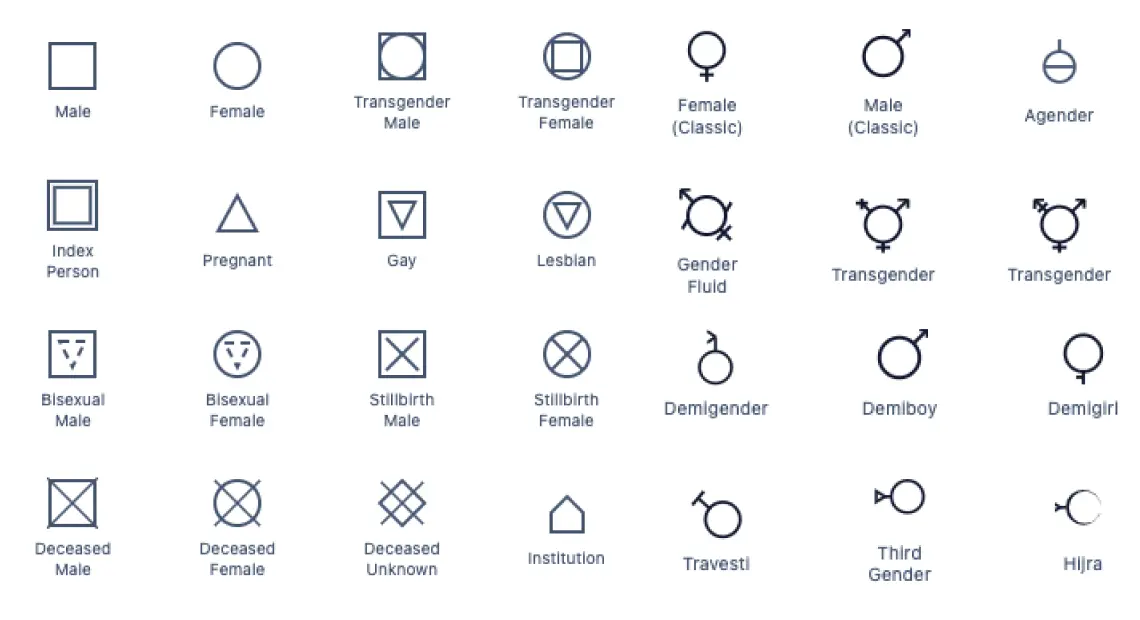
Accuracy in genetic mapping begins with adherence to professional standards. Creately provides a curated library of person shapes following McGoldrick/Gerson notation. Rather than manually drawing geometry, clinicians can utilize standardized circles, squares, and diamonds that automatically adapt based on patient data. This includes auto-derived markers for deceased relatives, pregnancies, and transgender identities, ensuring every genetic counseling genogram is clinically sound.
2. Multidimensional Data Layering
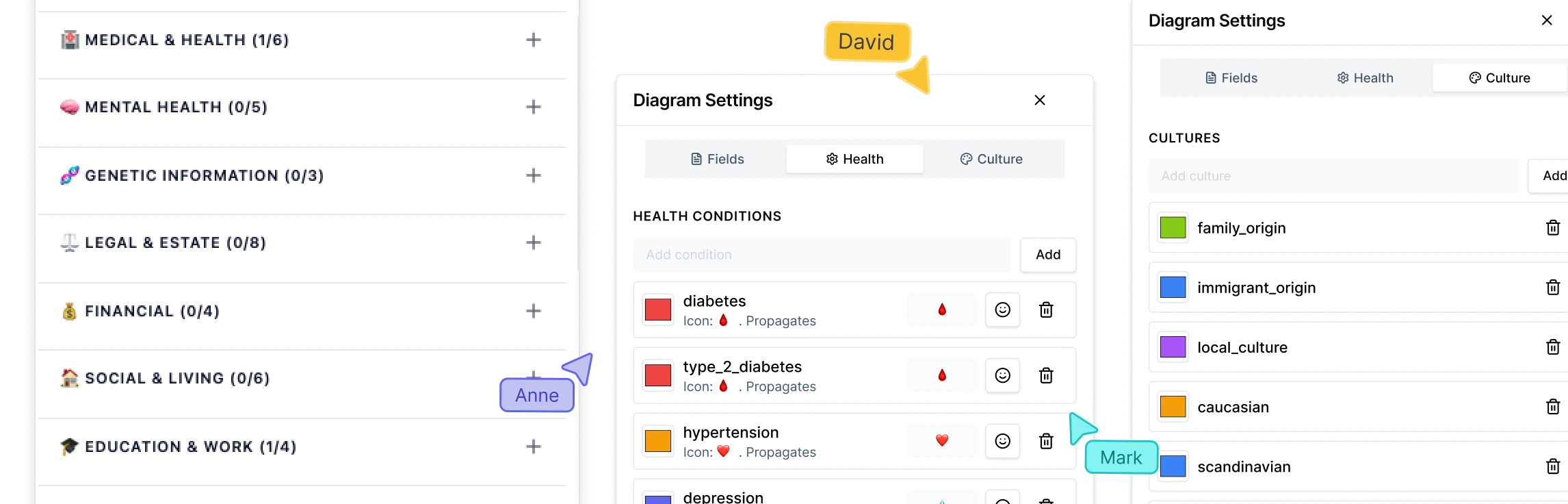
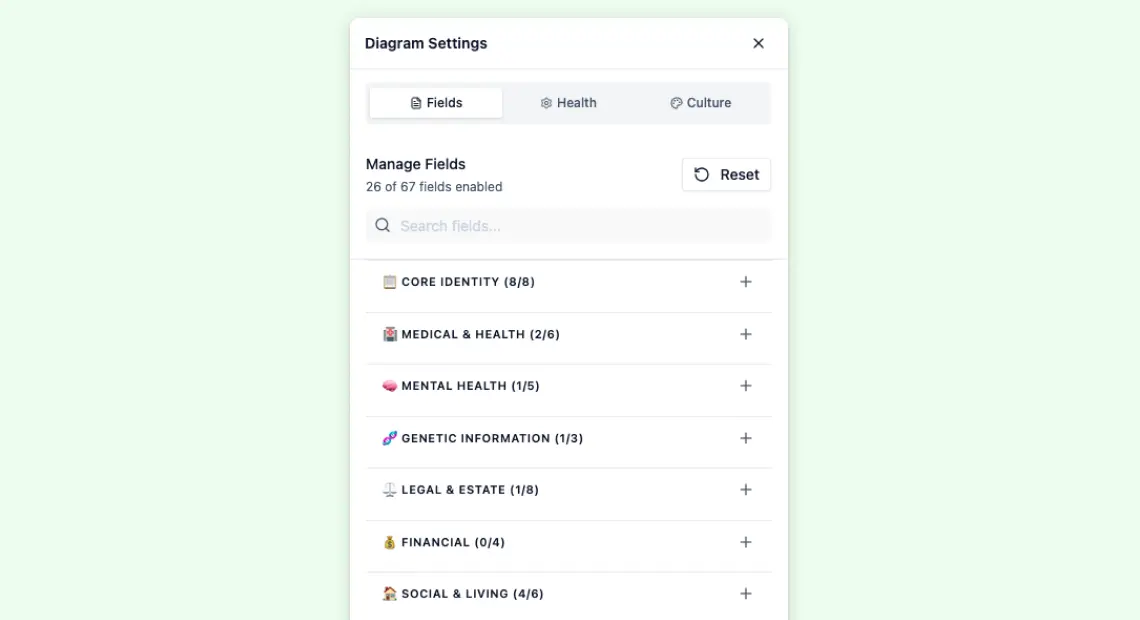
A significant challenge in family diagramming is managing information density. The platform allows you to toggle between psychosocial and medical “lenses” without cluttering the canvas. By activating the Medical & Genetic field pack, you can isolate critical health data while maintaining the ability to view broader family dynamics when necessary.
3. Intuitive Professional Interface
The interface is engineered to feel like an extension of clinical thought. By minimizing technical friction—utilizing lightning-fast keyboard shortcuts and a “snap-to-grid” logic—the platform allows the practitioner to remain focused on the patient narrative rather than the software mechanics.
4. Advanced Marker Tracking for Mapping High-Stakes Pathologies
Precision Oncology: The BRCA Genogram
When constructing a BRCA genogram, precision is paramount. The field pack enables the tracking of specific mutations (BRCA1, BRCA2, PALB2) alongside age of onset and pathology details. This structured data entry ensures that the clinical pedigree serves as a robust tool for calculating lifetime risk and informing surgical or surveillance recommendations. This helps counselors recognize patterns such as early-onset breast cancer or multiple affected relatives across generations.
Neurological and Hematological Documentation
- Neurological: Efficiently map APOE4 or Huntington’s repeats across multiple generations to visualize penetrance and age-related risk.
- Hematology: Document carrier status for Sickle Cell or Factor V Leiden using distinct visual encodings. Professional shading and line styles distinguish between affected individuals and asymptomatic carriers at a glance.
5. Health View Mode for Instant Pattern Recognition
Visualizing Hereditary Clusters
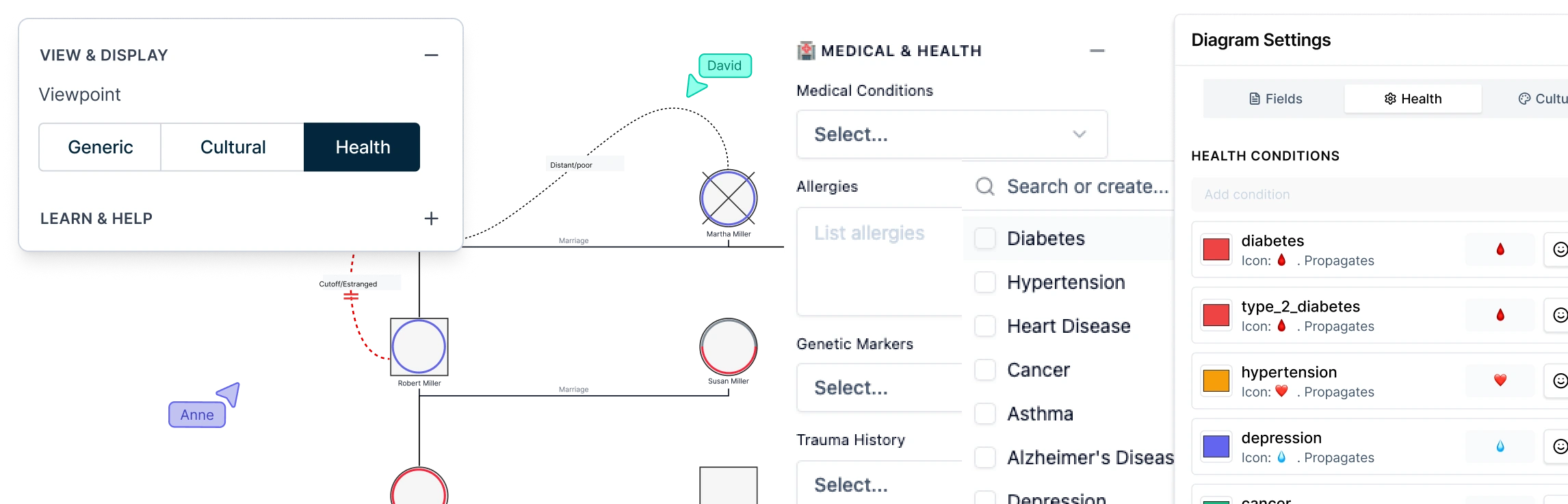
The Health View Mode acts as a powerful filter, color-coding family members based on specific medical conditions. This mode isolates health data from the standard pedigree view, allowing counselors to identify hereditary disease patterns that might be obscured by domestic or emotional data.
Analyzing Inheritance Hierarchies
By establishing a clear visual hierarchy, practitioners can detect autosomal dominant, recessive, or X-linked patterns in seconds. This “clarity at a glance” significantly reduces the cognitive load during complex case reviews and serves as an effective tool for patient education during the reveal.
6. AI-Powered Hereditary Pattern Detection
AI-Assisted Pattern Recognition
The platform incorporates AI-driven analysis to highlight patterns. It can use your current data to flag potential inheritance patterns, such as clusters of affected individuals or potential inheritance trends, that may warrant a closer clinical review. This helps to manage the complexity of expansive family trees.
7. Optimized Clinical Workflows: Intake to Export
Streamlined Pre-Visit Review
To optimize clinical hours, counselors can send secure links to patients prior to their appointment. Patients can initiate their own family trees, which the counselor then reviews and refines during the session—a process shown to reduce intake time by approximately 30%.
8. Cancer Risk Assessment Workflow
The platform features specialized workflows tailored for high-priority screenings, including hereditary breast, ovarian, and Lynch Syndrome (colorectal) assessments. These workflows ensure that all necessary data points for standardized risk-assessment models are captured efficiently.
9. Professional Report Generation
Documentation is finalized through structured clinical case files. One-click generation produces a high-resolution PDF or DOCX for EHR/EMR integration, complete with:
- Standardized symbol legends.
- Individual health profiles and union summaries.
- Confidentiality statements and AI-derived observations.
Ready-to-Use Pedigree and Genogram Templates for Genetic Counseling
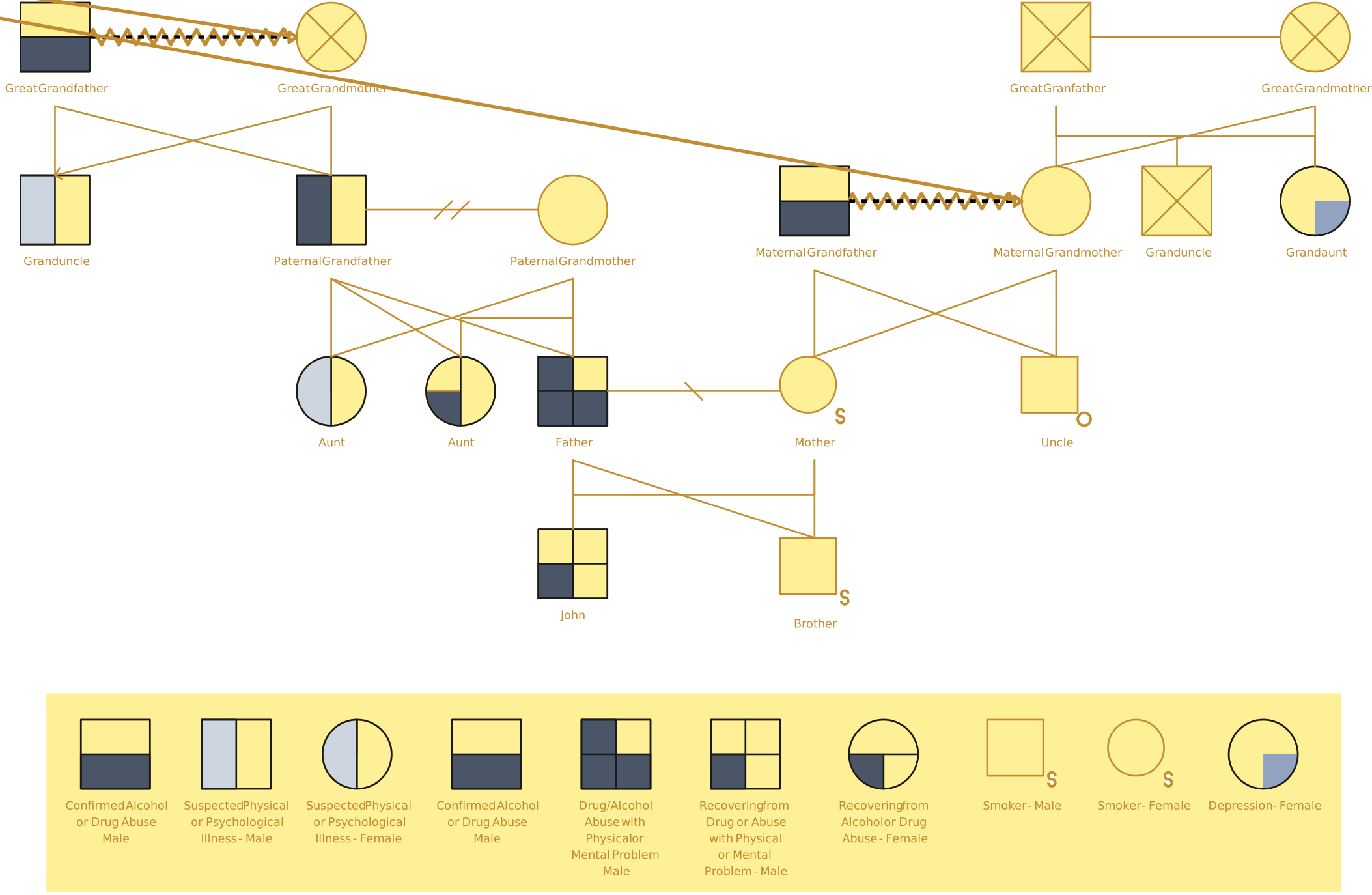


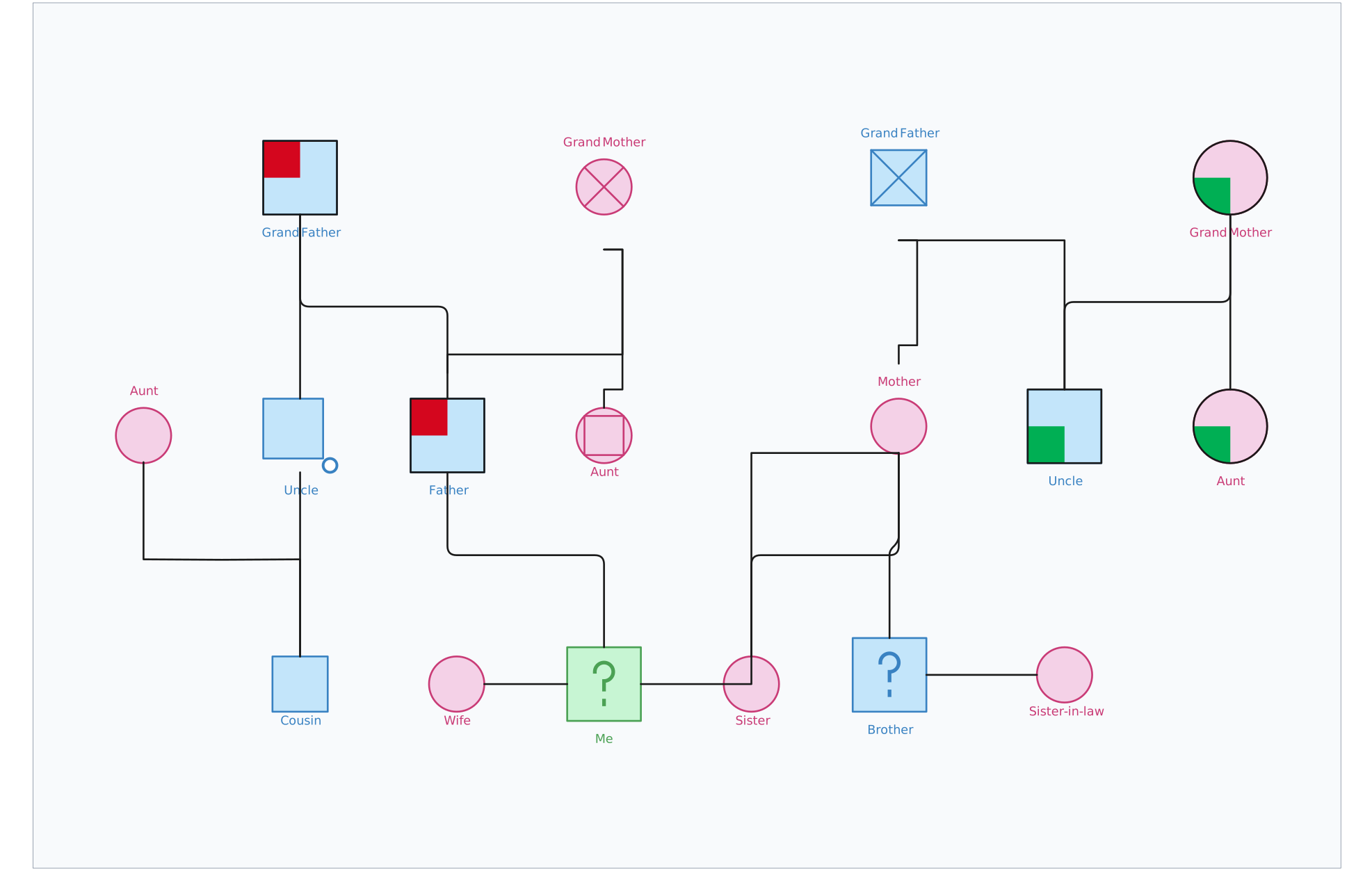
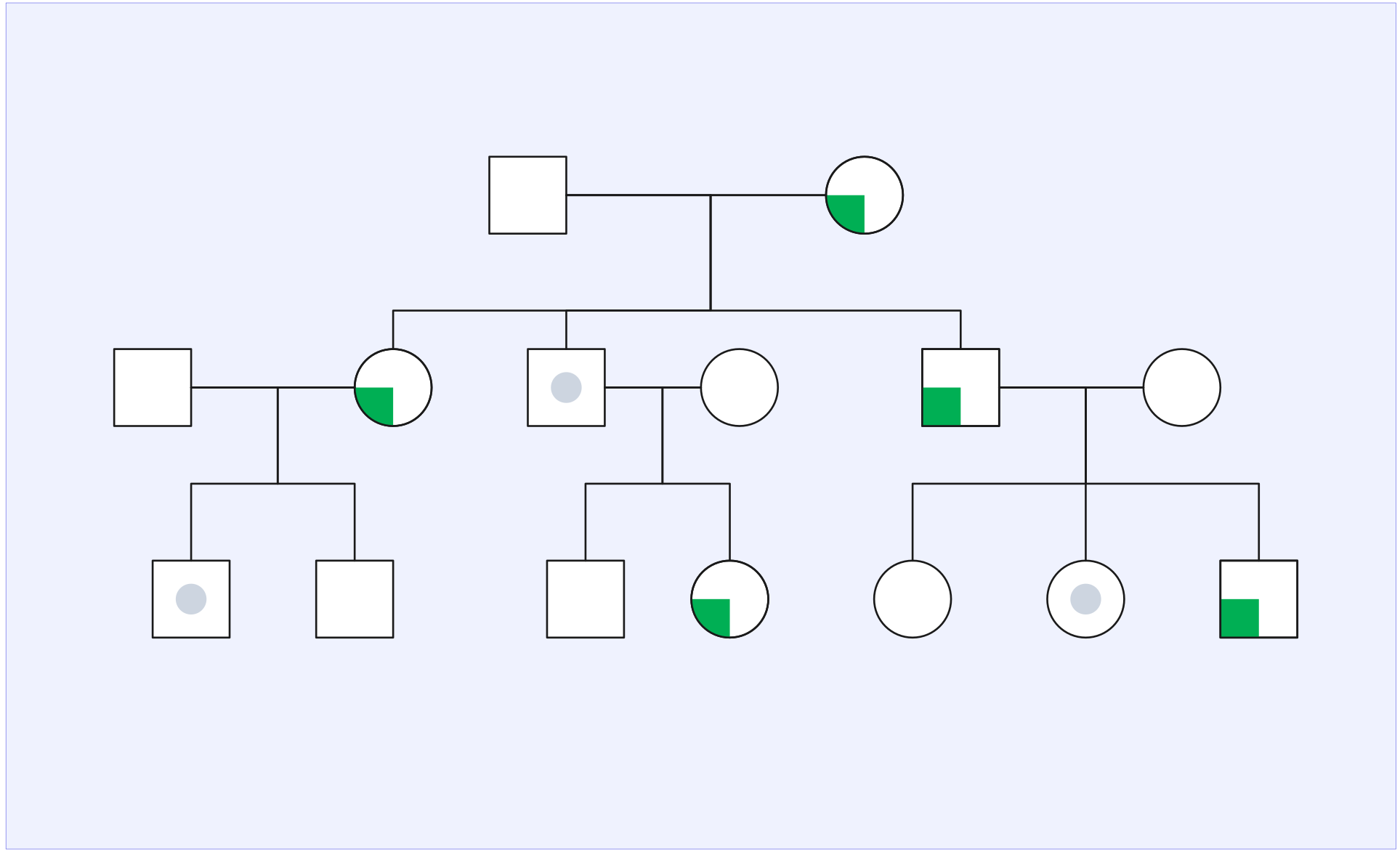
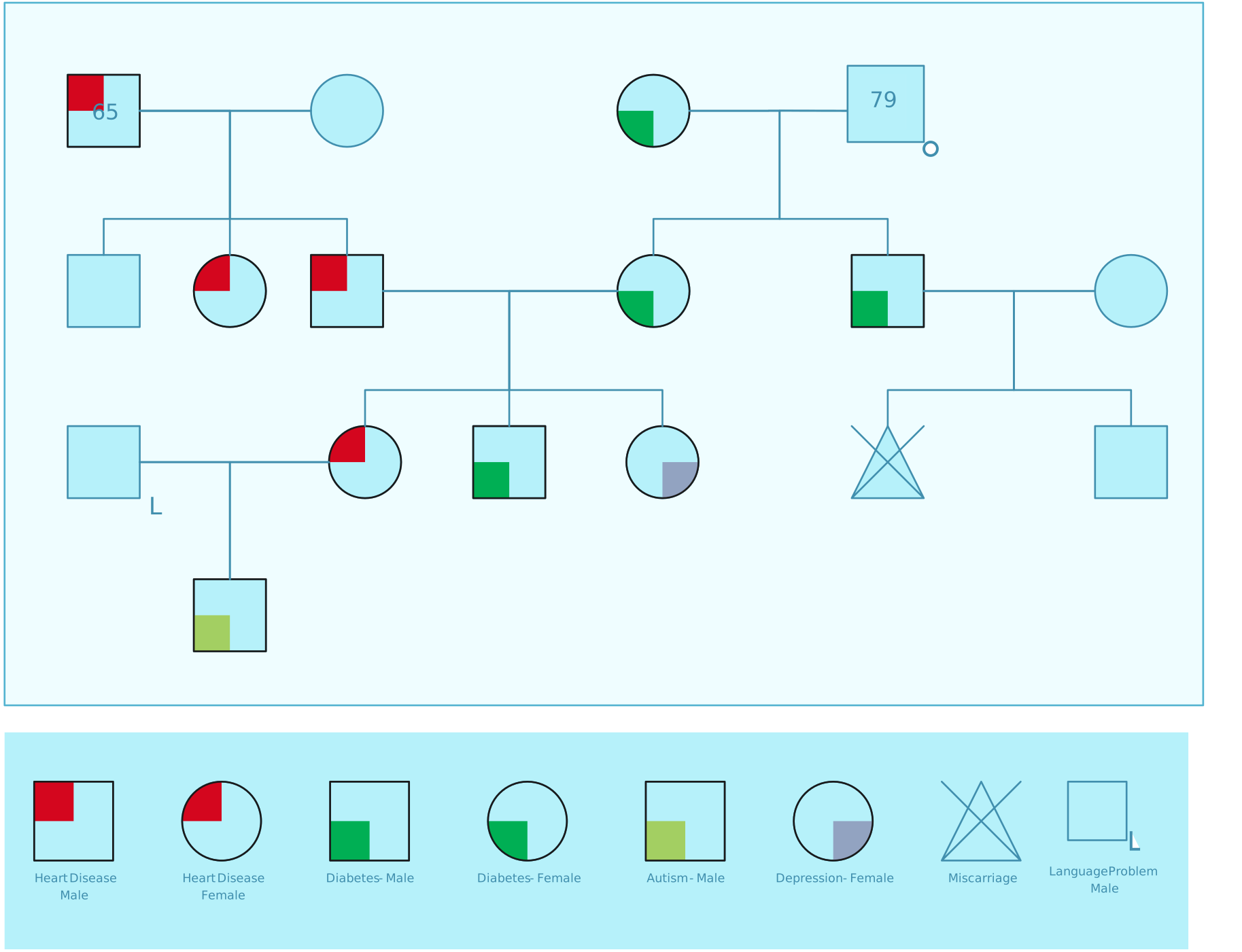
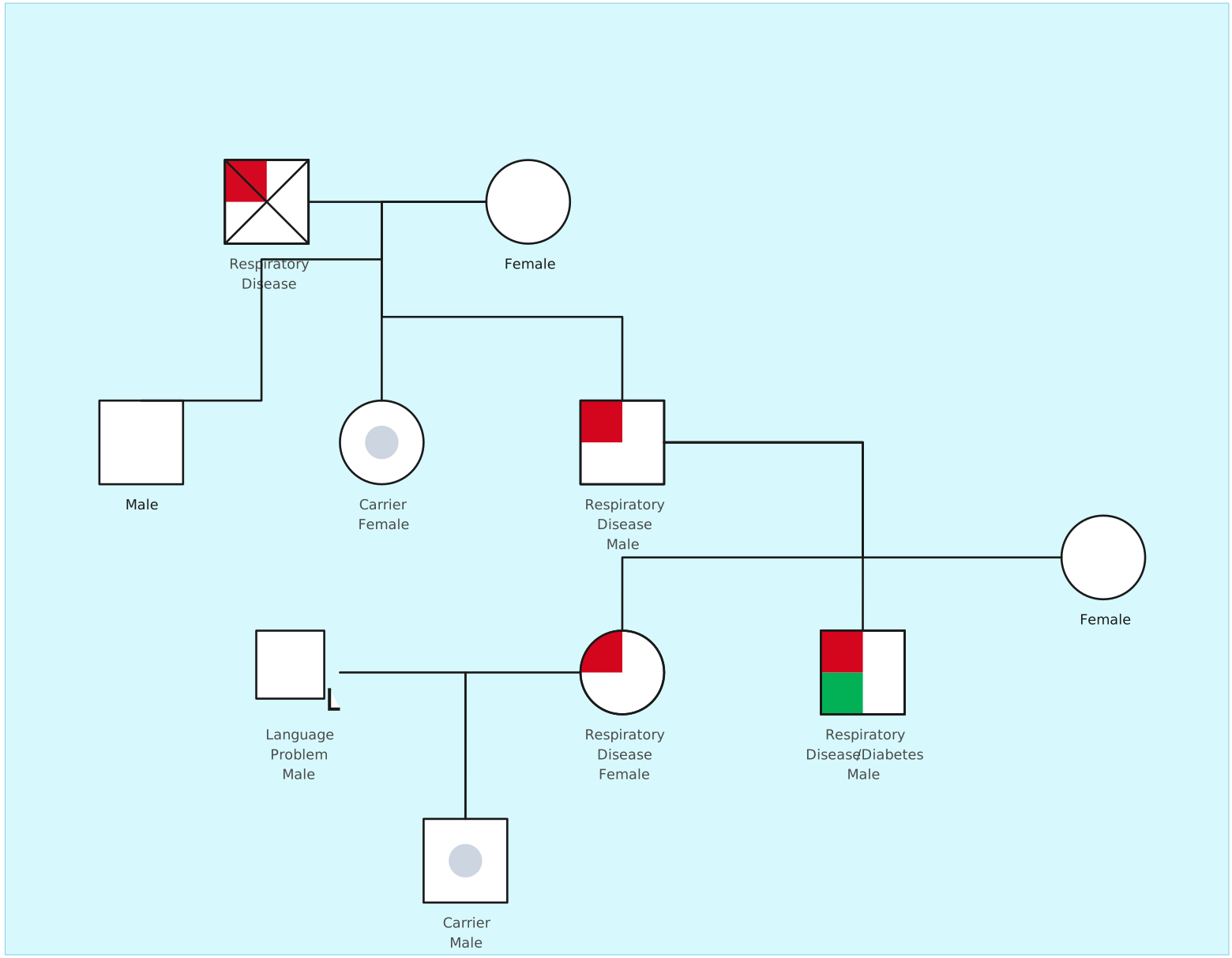
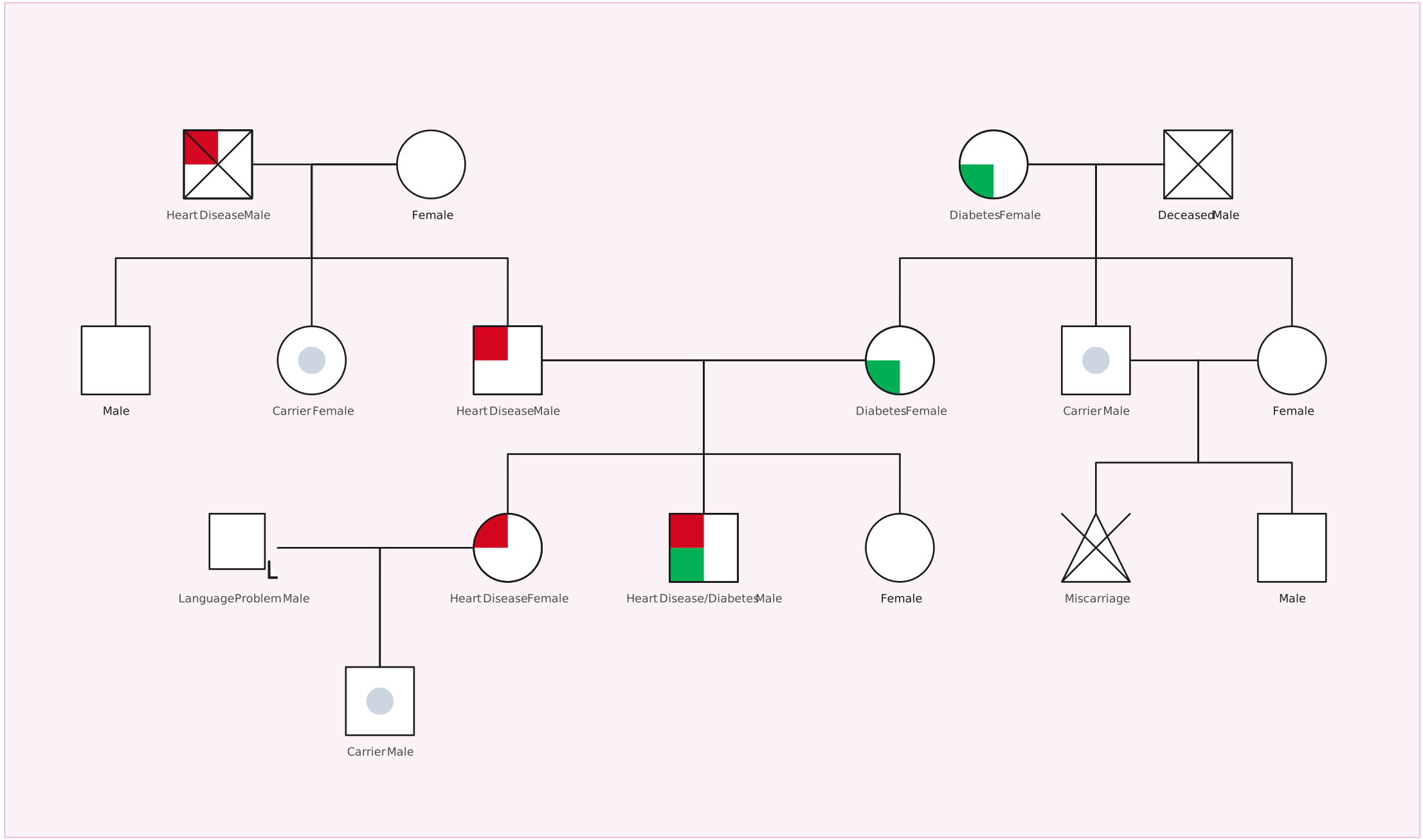
The evolution from paper-based sketches to professional family diagramming is a vital step toward clinical excellence in the modern age. As we have discussed, utilizing a clinical-grade genogram platform is not merely about aesthetic clarity; it is about ensuring the integrity of a patient’s diagnostic narrative. By integrating standardized McGoldrick/Gerson notation, advanced marker tracking, and automated reporting, you reclaim the mental bandwidth necessary for deep analysis and empathetic patient connection. It is time to leave behind the limitations of fragmented data and embrace a workflow that matches the complexity of modern genetics.
Helpful Resources
Discover what is a genogram and how it works. This guide covers its definition, history, uses, key benefits, and limitations.
Discover 10 genogram examples in therapy to visualize family relationships, emotional patterns, and medical histories.
Explore 7 family genogram examples with free templates to map medical history, emotional dynamics, and modern family structures.
Resources
Butler, J.F. (2008). The Family Diagram and Genogram: Comparisons and Contrasts. The American Journal of Family Therapy, 36(3), pp.169–180. doi:https://doi.org/10.1080/01926180701291055.