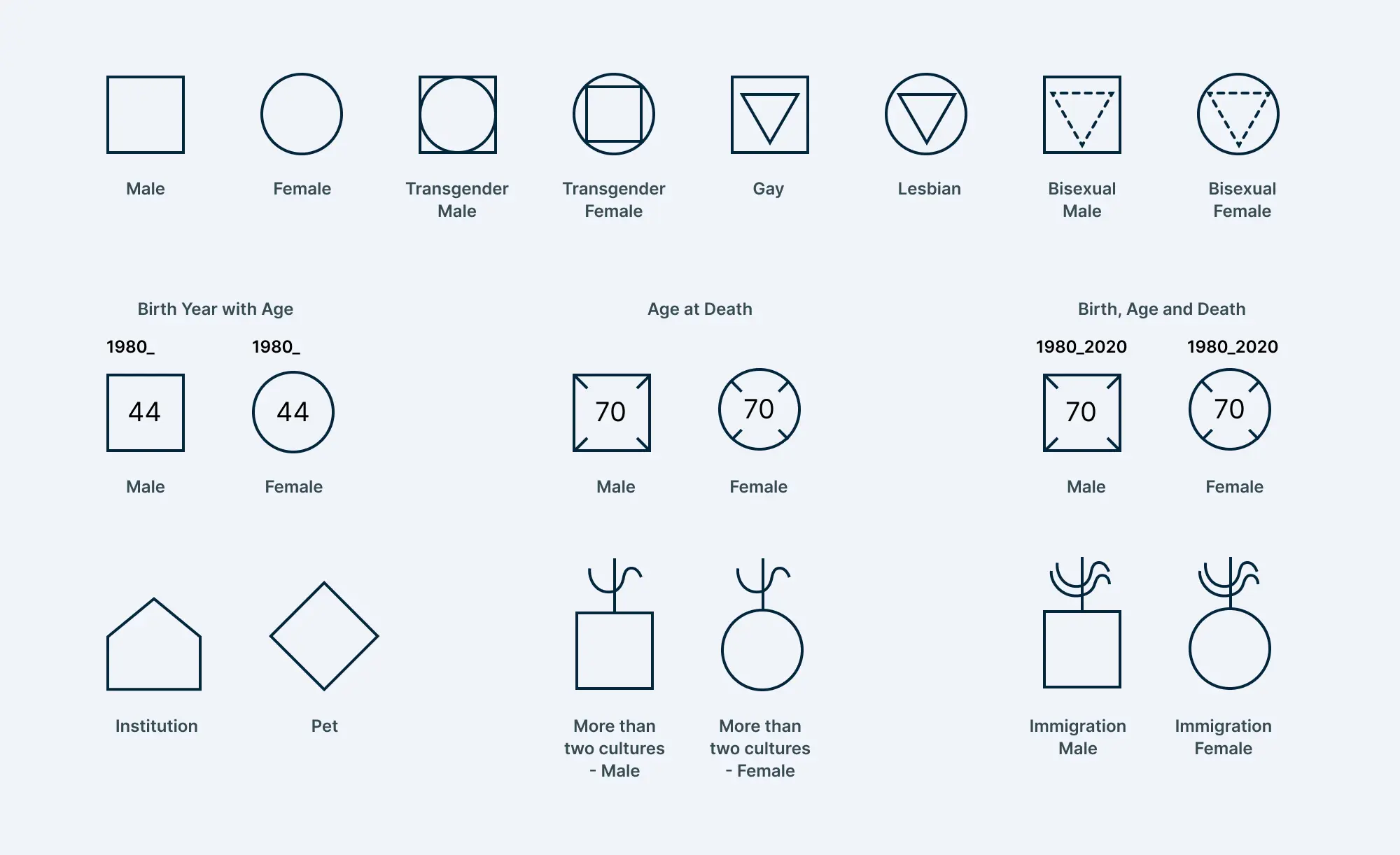
Genogram symbols make it easier to understand family structures, relationships, emotional dynamics, and health patterns at a glance. The most widely used genogram notation is based on the McGoldrick-Gerson-Petry format, outlined in Genograms: Assessment and Treatment, 4th edition, by Monica McGoldrick, Randy Gerson, and Sueli Petry. This guide walks you through the commonly used person symbols and relationship lines, explains how to tell similar symbols apart, and shows you how to use a legend so your genogram can be interpreted correctly.
Note: While McGoldrick, Gerson, and Petry’s format is one of the most widely followed references for genogram notation, symbols can vary across therapy, healthcare, genealogy, social work, education, and digital tools. Always include a legend when using custom symbols, colors, icons, or field-specific markers.
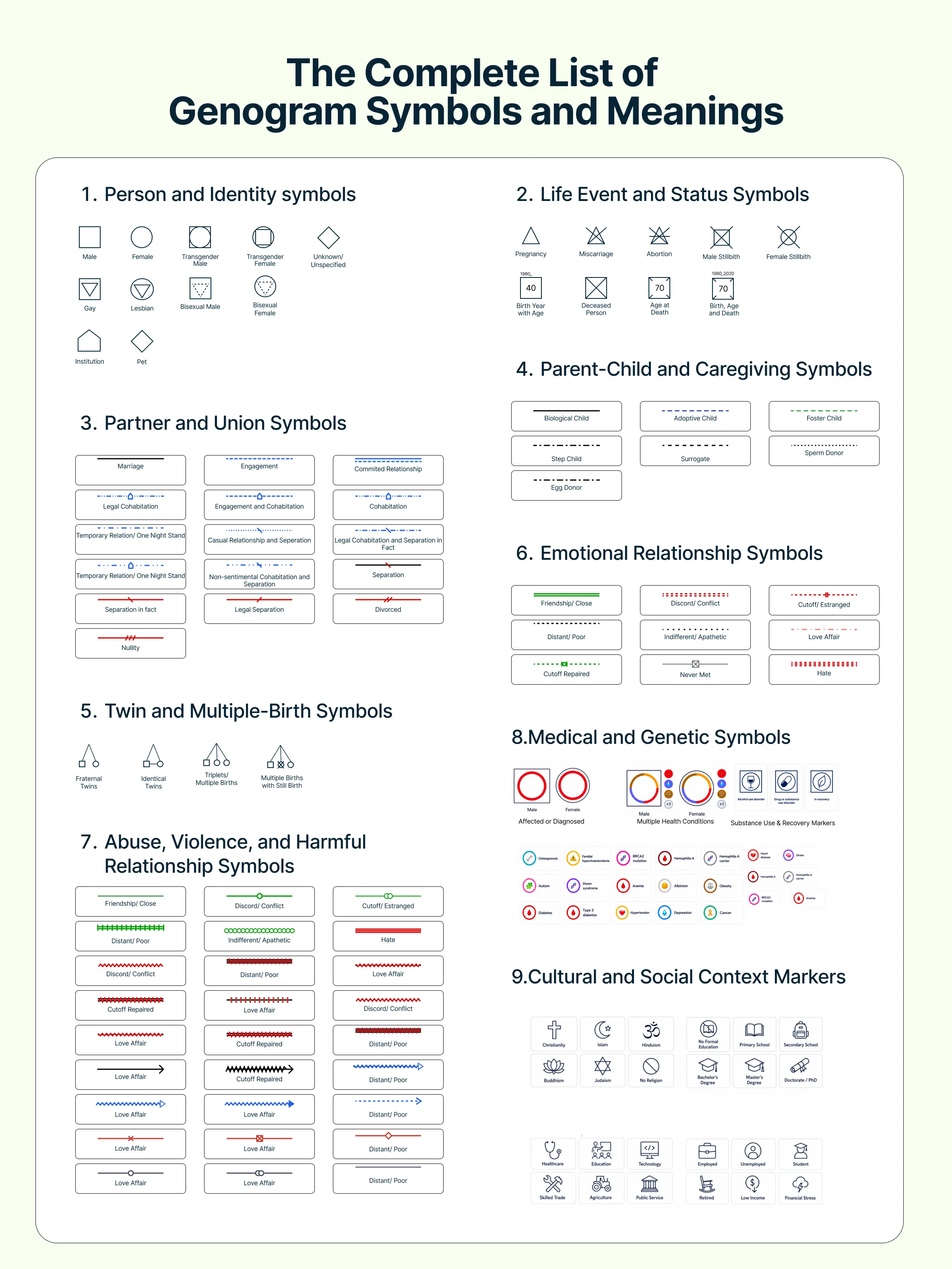
What Are Genogram Symbols
Genogram symbols are commonly used visual representations for mapping family structure, relationships, medical history, emotional patterns, and social context. Some symbols, such as squares, circles, partner lines, parent-child lines, and death markers, are widely recognized across genogram systems. Others, such as cultural icons, health markers, substance-use indicators, and expanded relationship types, should be defined clearly in the genogram legend.
What Is a Genogram Legend and Why You Should Use it
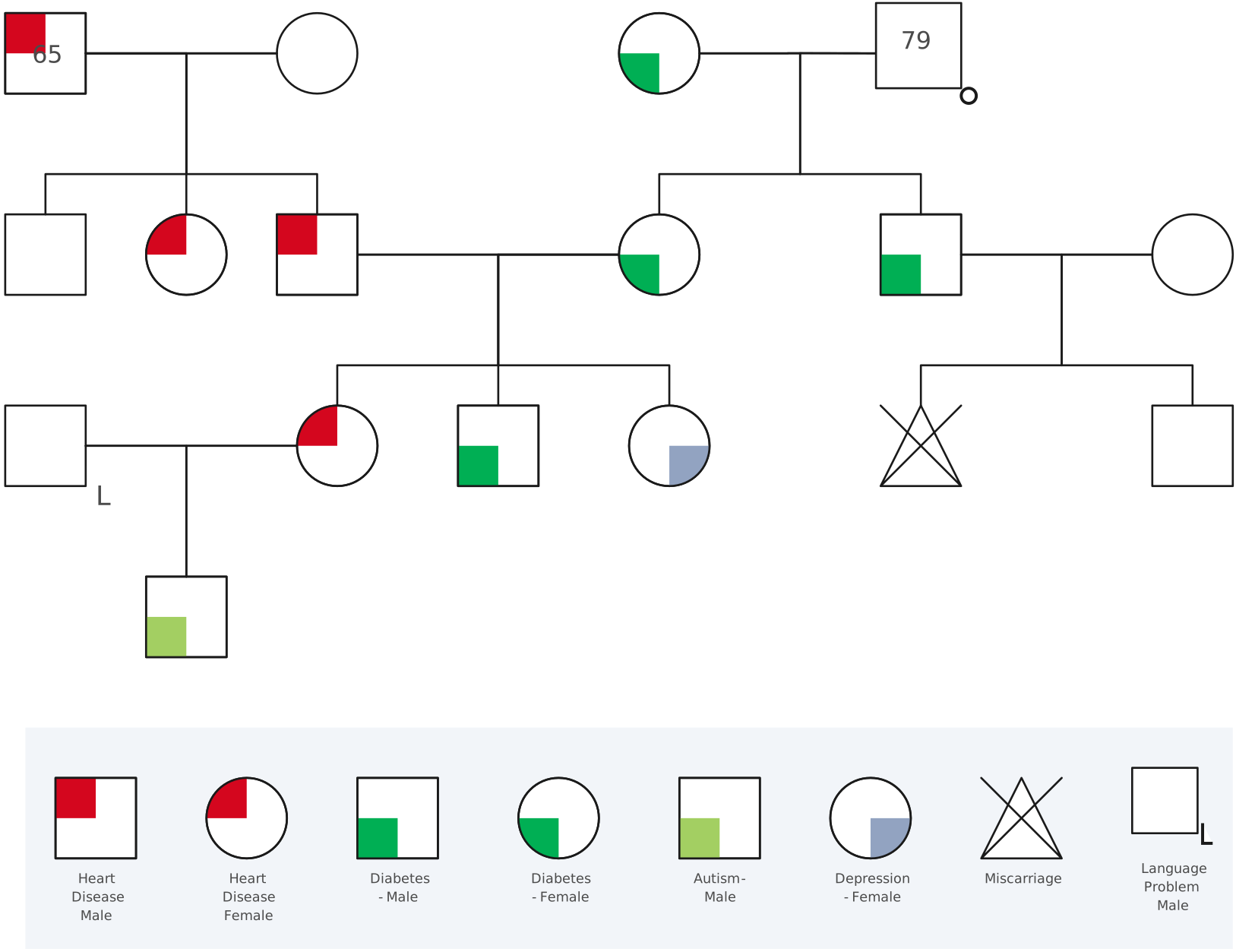
A genogram legend or genogram key is a list of symbols which explain their meaning, context, and use-case in a genogram. The genogram legend, similar to a map key, helps interpret the various elements, such as gender symbols (squares for males, circles for females), relationship lines (marriage, divorce, etc.), and other markers like emotional connections or medical conditions. It ensures that the genogram is easy to understand and accurately conveys the intended information.
For example;

The Complete List of Genogram Symbols and Their Meanings
1. Person and Identity Symbols
Person symbols represent the people included in a genogram. The most widely recognized shapes are a square for a male and a circle for a female. Additional shapes can represent transgender identities or other identity information.
Basic person symbols
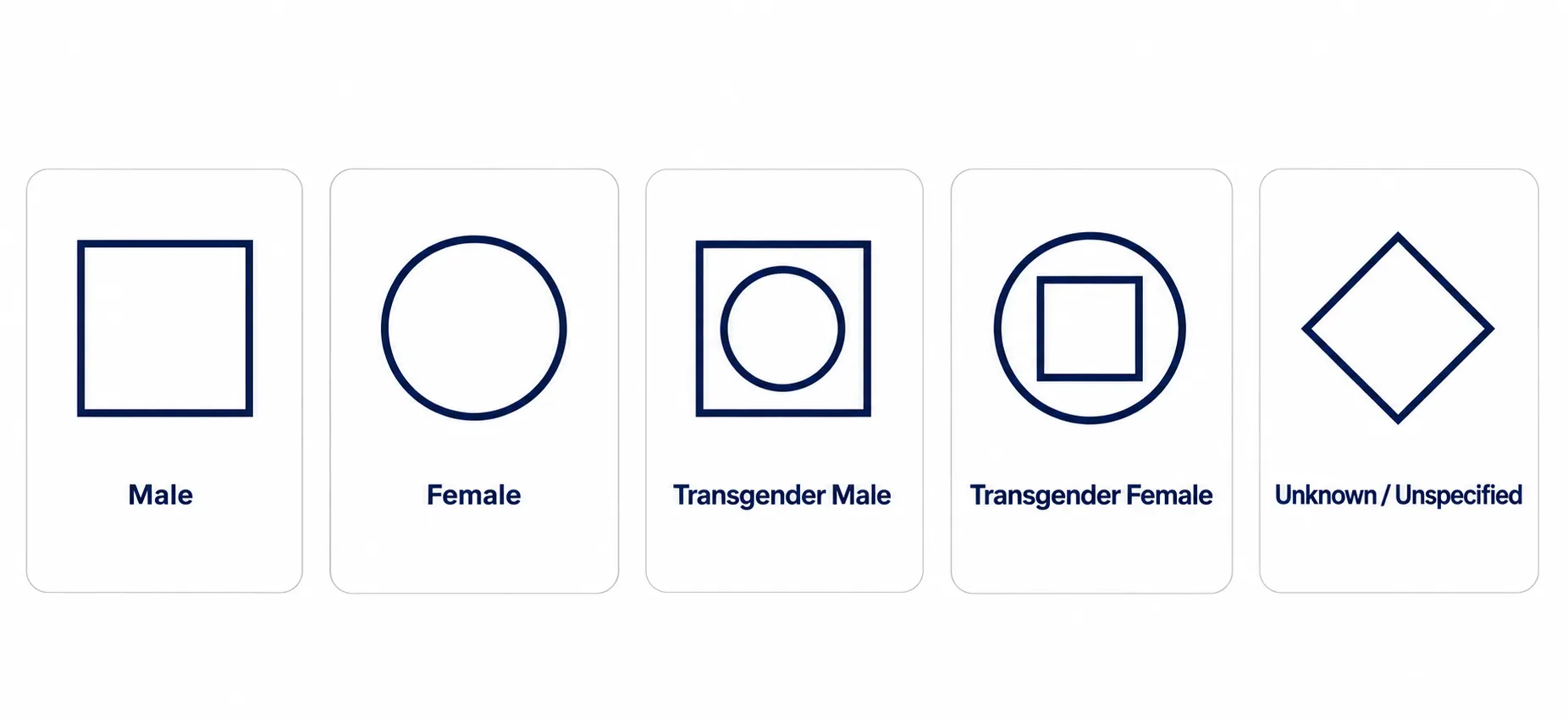
| Symbol Name | Meaning |
| Male | Represents a male family member. |
| Female | Represents a female family member. |
| Transgender male | Represents a transgender man. |
| Transgender female | Represents a transgender woman. |
| Unknown or unspecified gender | Used when sex or gender is unknown or not recorded |
Note: Gender-identity notation is not completely uniform across genogram systems. Record the person’s identity respectfully, avoid inferring identity from appearance or family reports, and define any less widely recognized symbol in the legend.
Sexual orientation markers
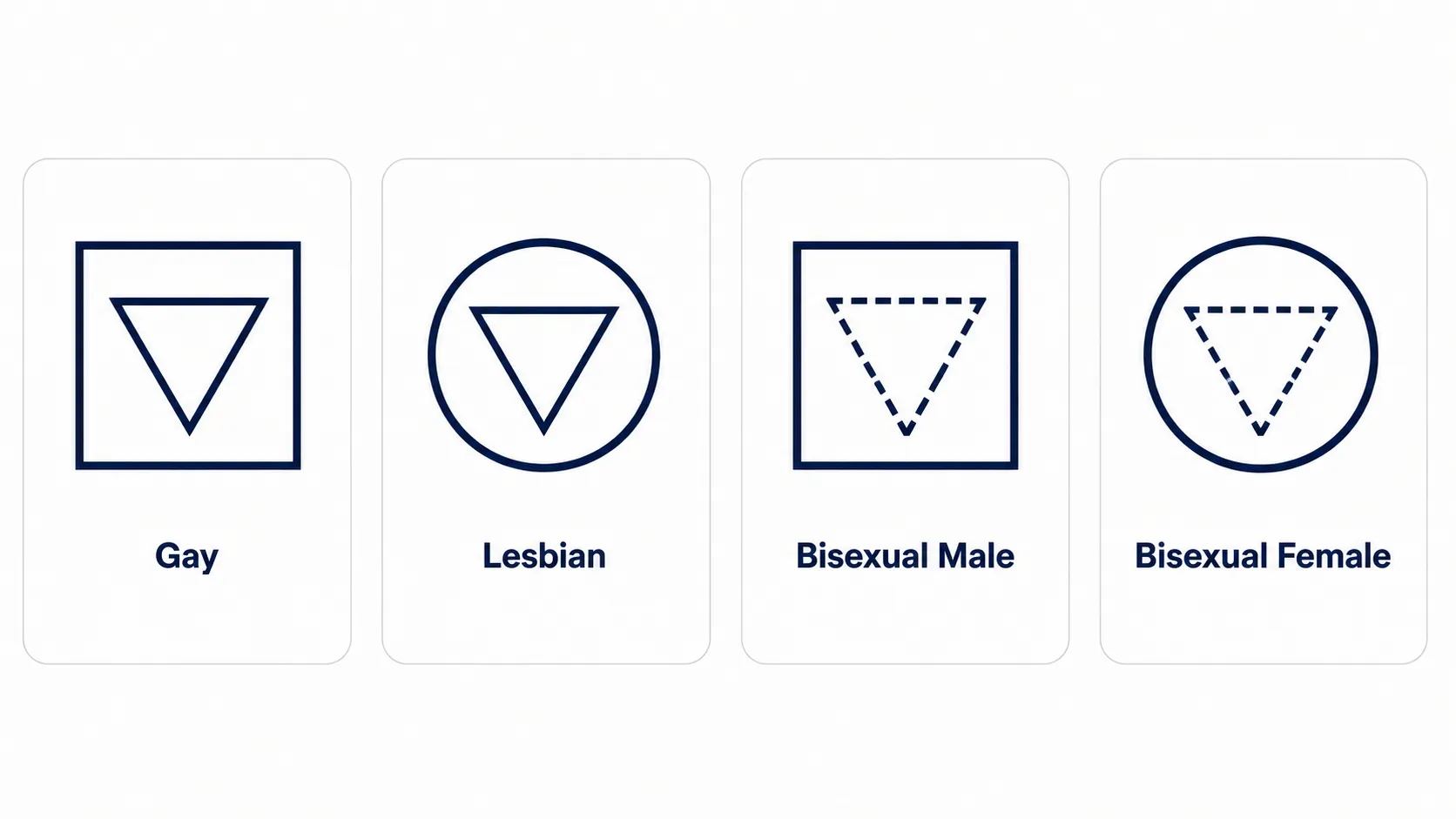
| Name | Meaning |
| Gay | Represents a gay male. |
| Lesbian | Represents a lesbian female. |
| Bisexual male | Represents a bisexual male. |
| Bisexual female | Represents a bisexual female. |
Note: Sexual orientation symbols are not interpreted consistently across all genogram systems, so include them in the legend whenever they are used.
Other people and entities
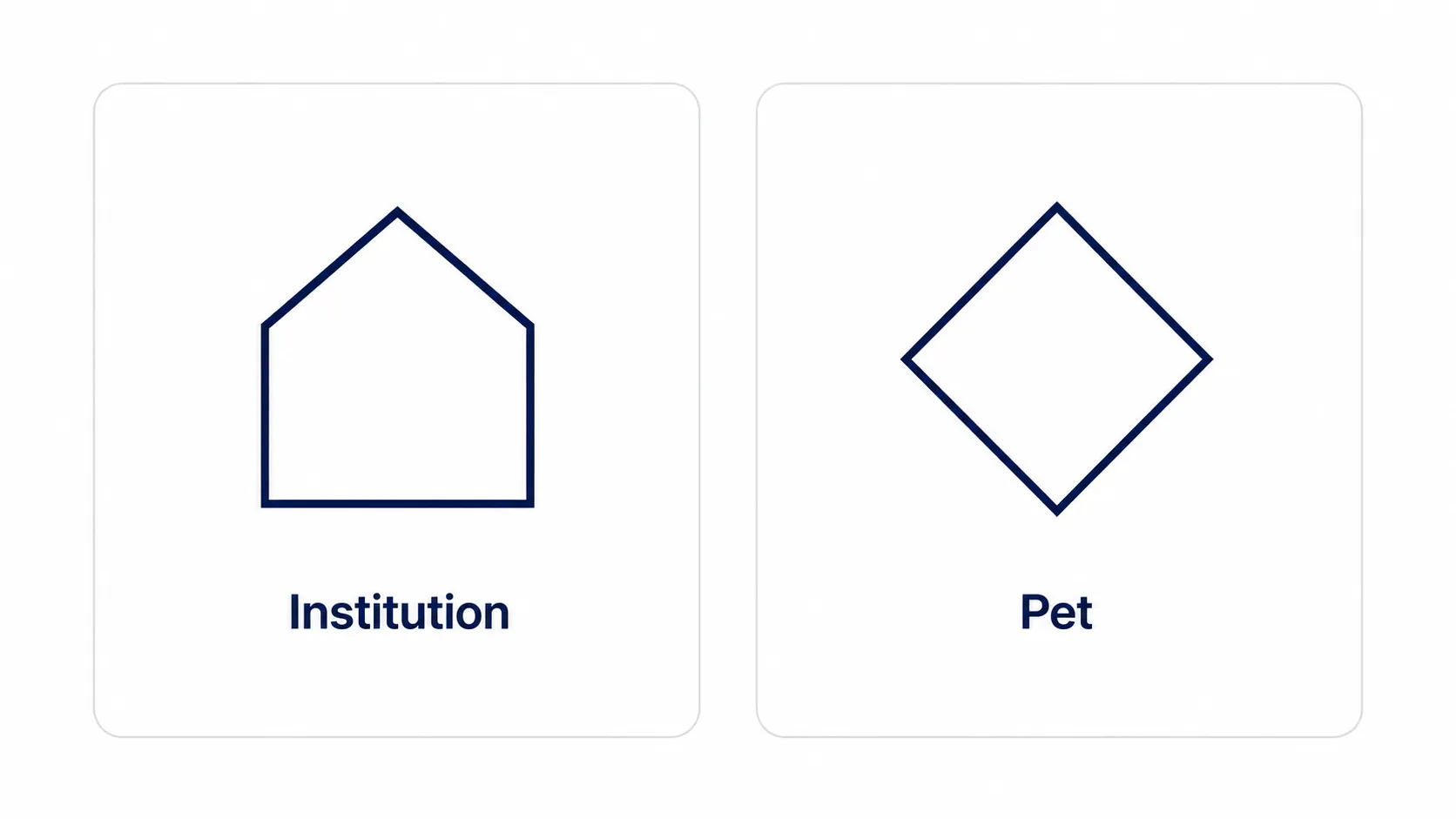
| Name | Meaning |
| Institution | Represents an institution that plays a role in the family system. |
| Pet | Represents a pet or companion animal. |
2. Life Event and Status Symbols
Life event and status symbols add important details about a person’s age, birth, death, pregnancy, and pregnancy outcomes. Dates are usually placed above or beside the person symbol, while age may appear inside it.
Age and Life-Status Symbols
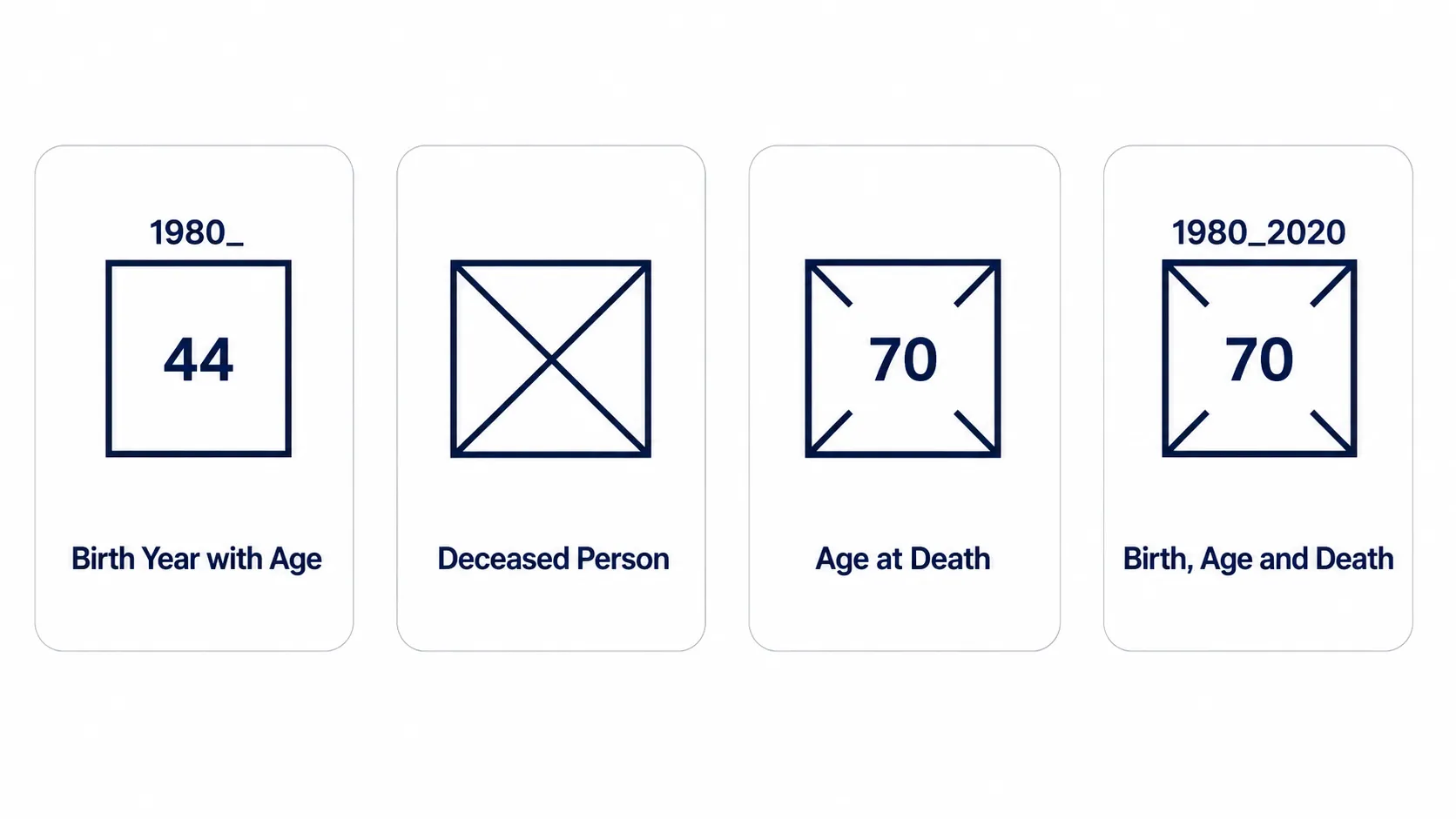
| Symbol name | Meaning |
| Birth year with age | Shows the person’s birth year and current age. |
| Deceased person | An X through the person symbol shows that the person has died. |
| Age at death | Shows how old the person was when they died. |
| Birth, age, and death | Shows the person’s birth year, death year, and age at death. |
Pregnancy and Pregnancy-Outcome Symbols
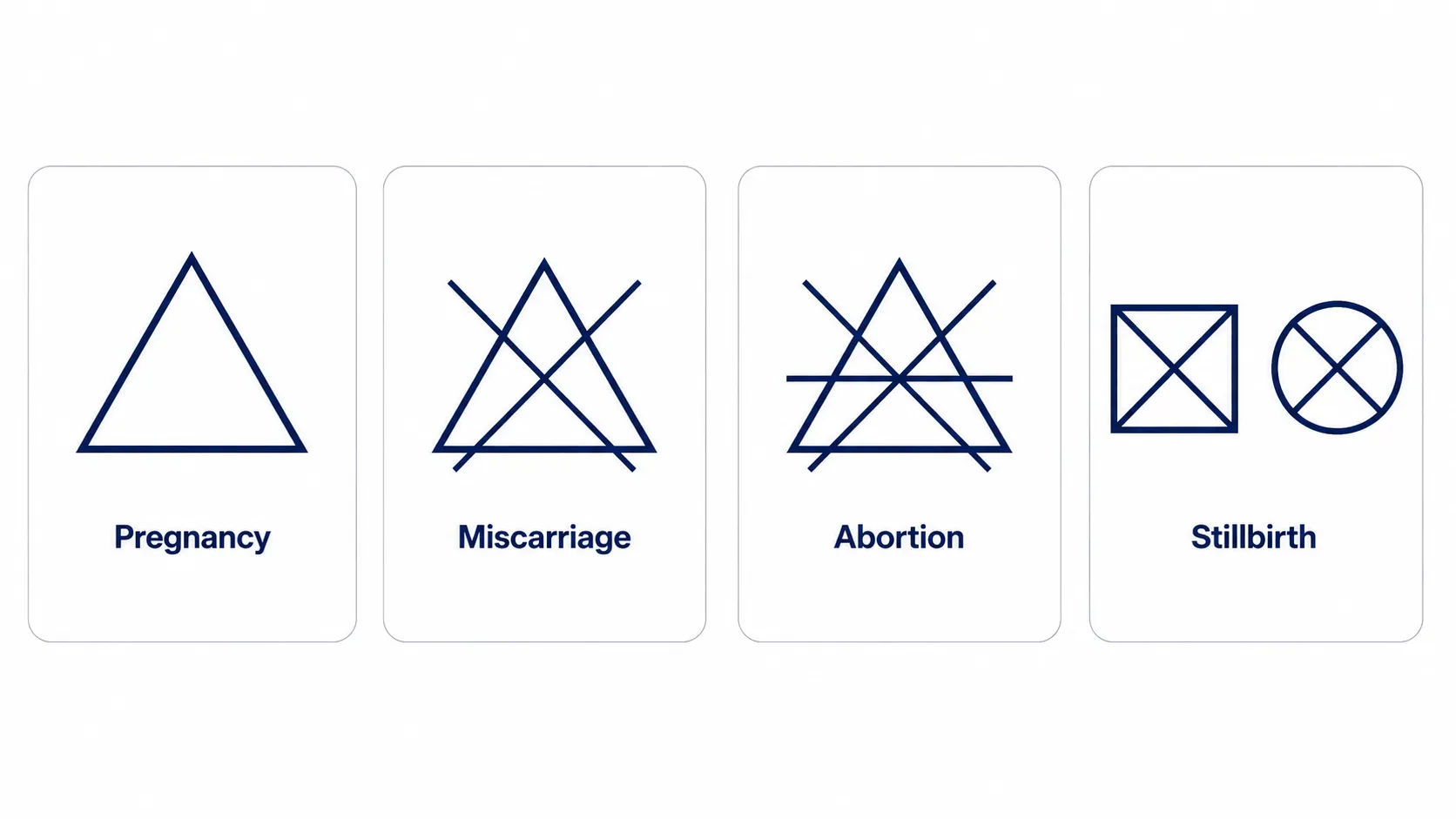
| Symbol name | Meaning |
| Pregnancy | Represents a current pregnancy. |
| Miscarriage | Represents a pregnancy that ended in miscarriage. |
| Abortion | Represents a pregnancy that was intentionally terminated. |
| Stillbirth | Represents a baby who was stillborn. |
Note: Pregnancy and pregnancy-loss symbols can vary between genogram systems. Include them in the legend so readers can interpret them correctly.
3. Partner and Union Symbols
Partner and union symbols show how two people are or were connected. The line between the two person symbols indicates the type or status of the relationship.
Formal and Committed Unions
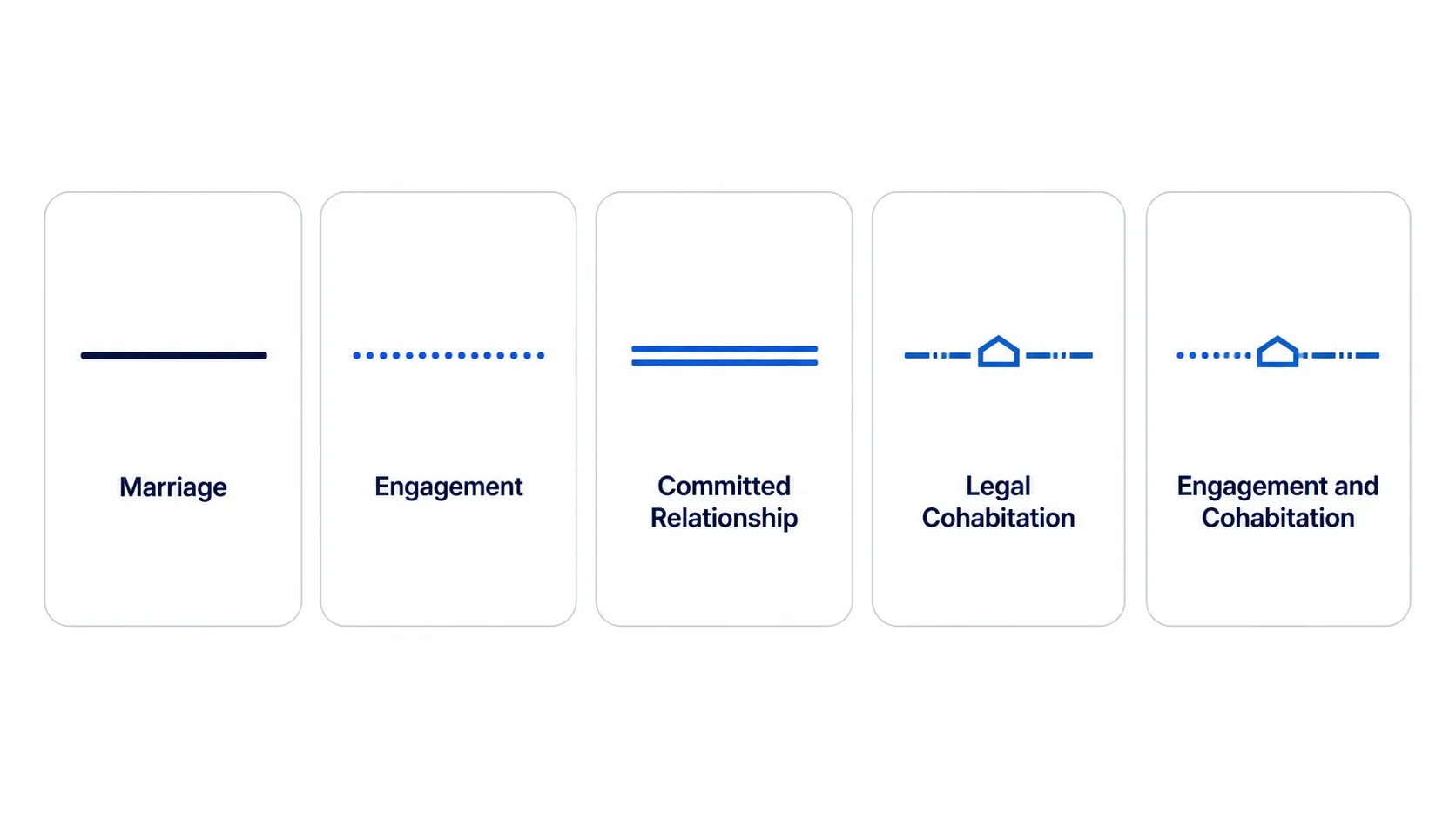
| Symbol name | Meaning |
| Marriage | Represents two people who are married. |
| Engagement | Represents two people who are engaged. |
| Committed relationship | Represents a long-term committed partnership. |
| Legal cohabitation | Represents a legally recognized cohabiting relationship. |
| Engagement and cohabitation | Represents two people who are engaged and living together. |
Cohabiting and Informal Relationships
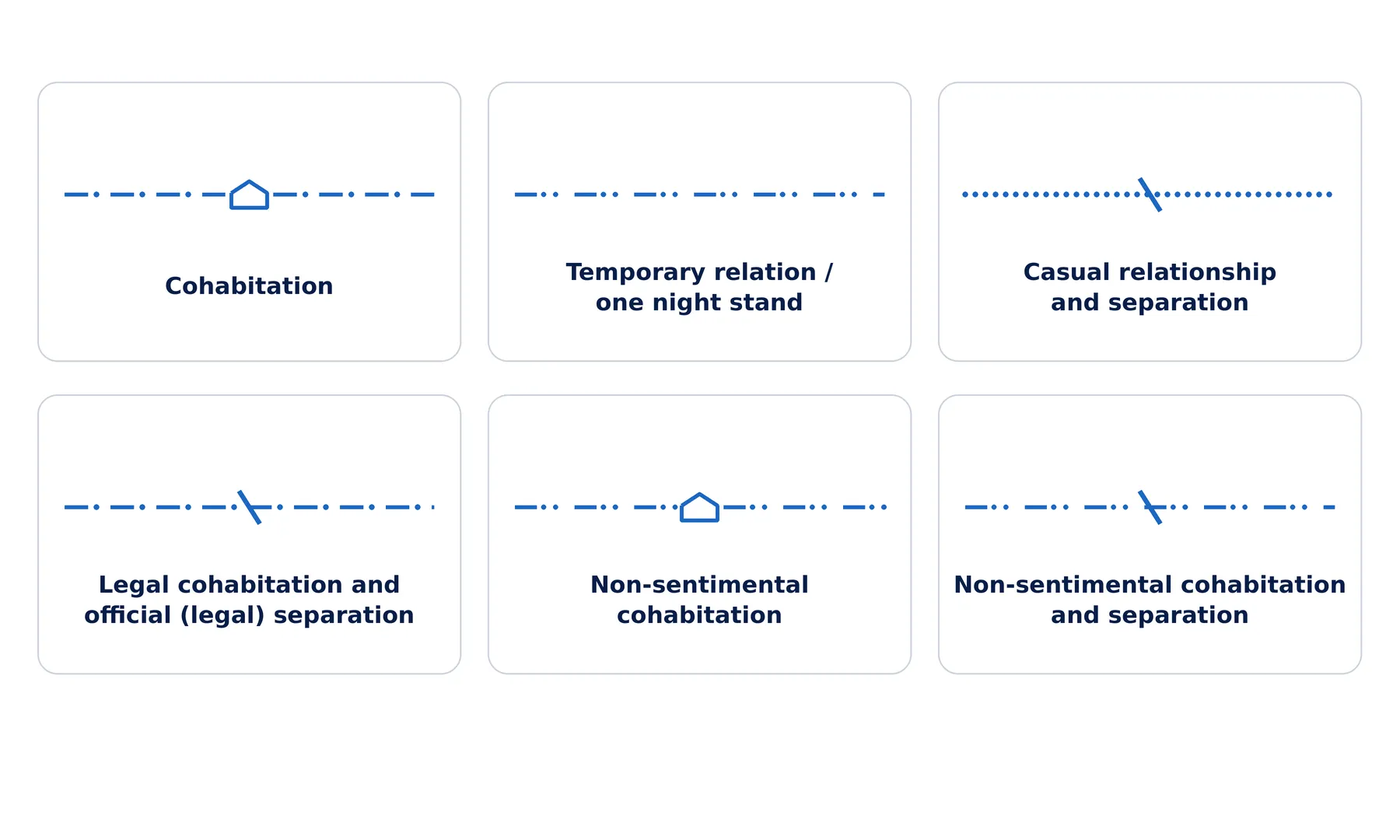
| Symbol name | Meaning |
| Cohabitation | Represents partners who live together without being married. |
| Temporary relation / one night stand | Represents a temporary or short-term relationship. |
| Casual relationship and separation | Represents a casual or non-committed relationship that has ended in separation. |
| Legal cohabitation and official (legal) separation | Represents a legal cohabitation relationship that has ended in official legal separation. |
| Non-sentimental cohabitation | Represents a cohabiting relationship without a romantic or emotional bond. |
| Non-sentimental cohabitation and separation | Represents a non-sentimental cohabiting relationship that has ended in separation. |
Separated and Ended Unions
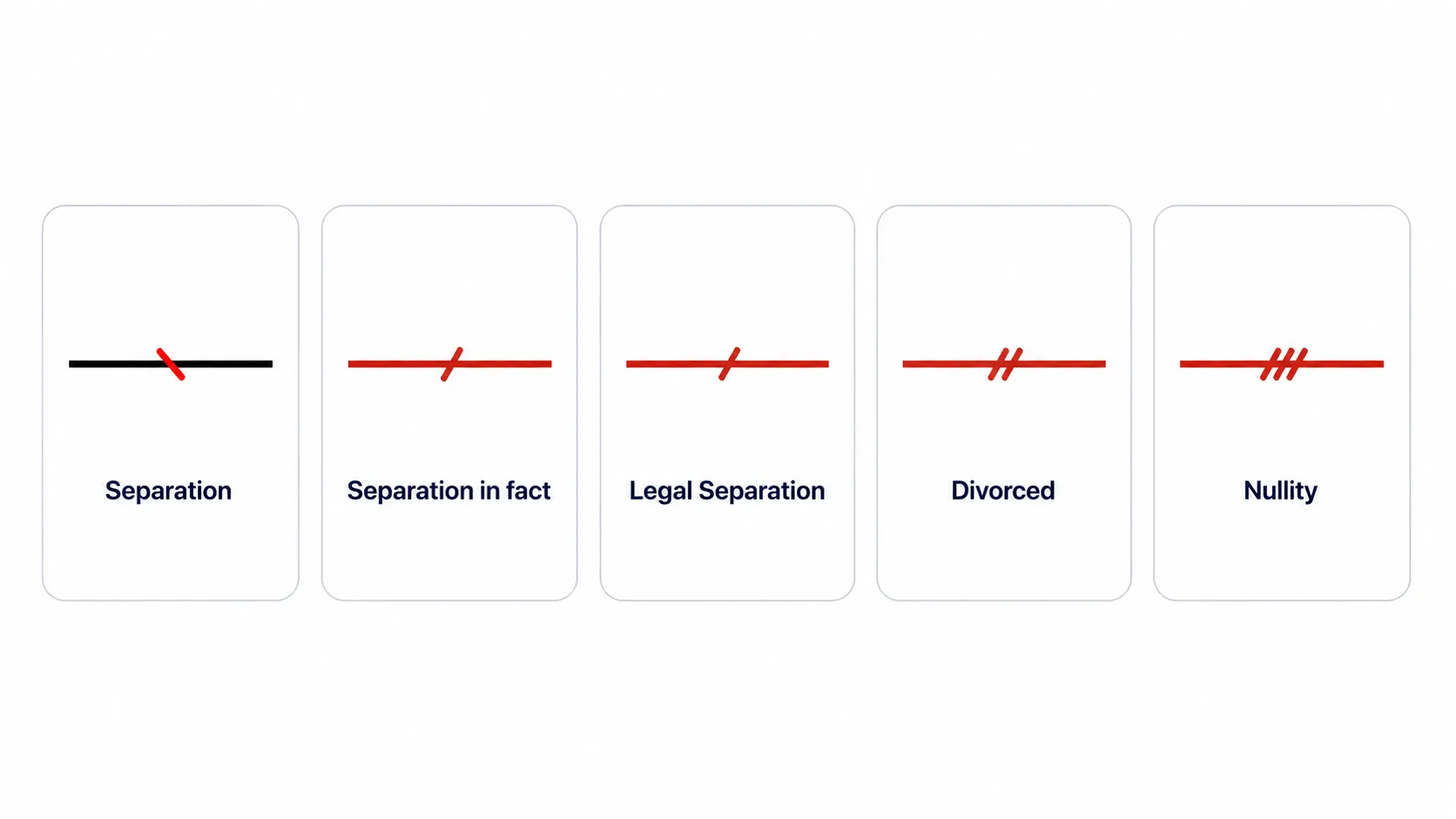
| Symbol name | Meaning |
| Separation | Represents partners who are no longer together. |
| Separation in fact | Represents partners who are separated in practice but may not be legally separated. |
| Legal separation | Represents a formally recognized legal separation. |
| Divorce | Represents a legally ended marriage. |
| Nullity | Represents a marriage or union declared legally invalid. |
4. Parent-Child and Caregiving Symbols
Parent-child and caregiving symbols show how a child is connected to a parent, caregiver, or reproductive contributor. Different line styles help distinguish biological, adoptive, foster, step, and donor-related relationships.
Parent-Child Relationships
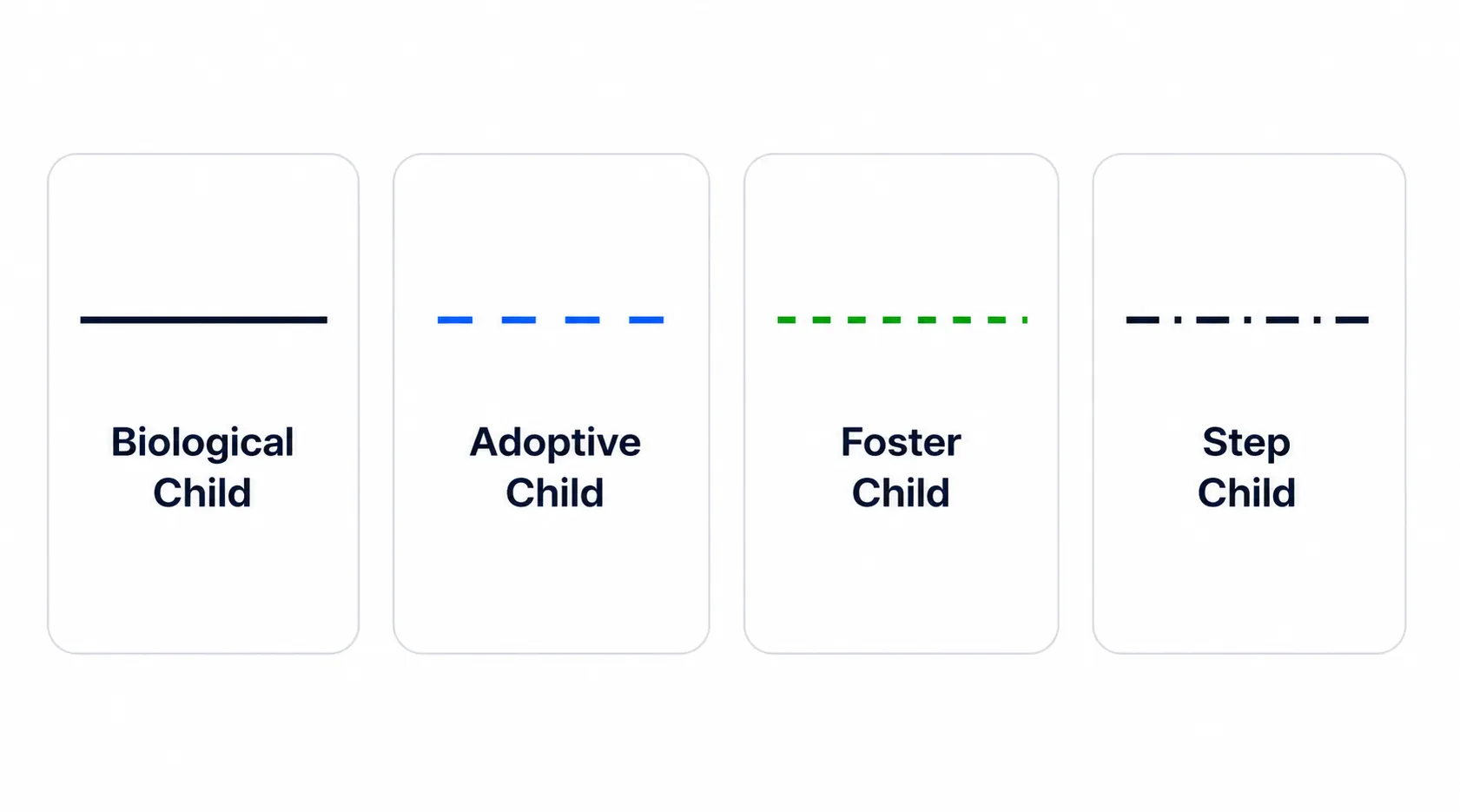
| Symbol name | Meaning |
| Biological parent-child relationship | Shown with a solid vertical line. Represents a biological connection between a parent and child. |
| Adopted child | Shown with long dashes. Represents a legal adoptive relationship between a parent and child. |
| Foster child | Shown with short dashes. Represents a foster-care relationship between a caregiver and child. |
| Step child | Shown with a dash-dot pattern. Represents the relationship between a stepparent and stepchild. |
Reproductive and Donor Relationships
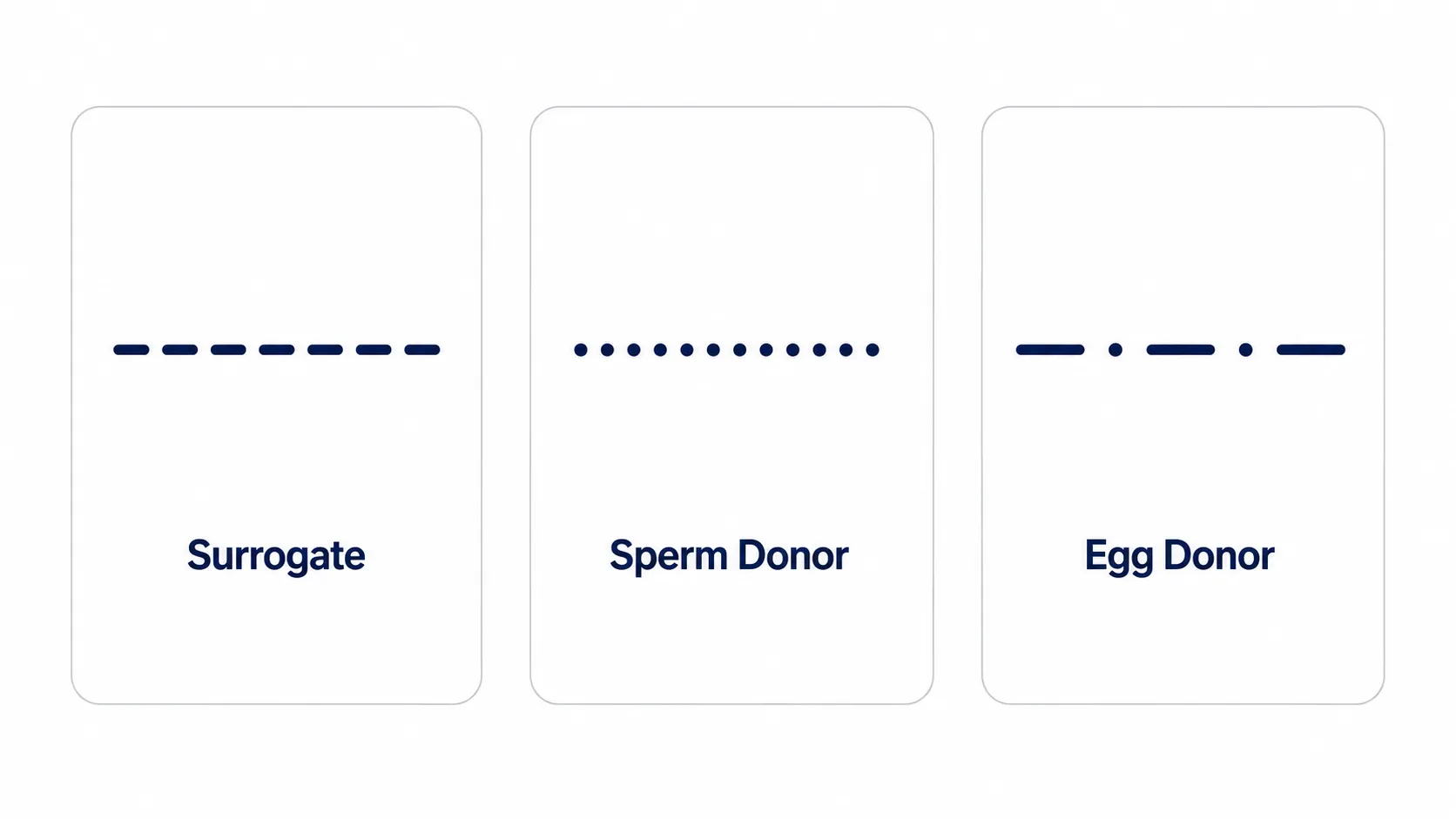
| Symbol name | Meaning |
| Surrogate | Shown with medium dashes. Represents a surrogate relationship. |
| Sperm donor | Shown with a dotted line. Represents a sperm donor relationship. |
| Egg donor | Shown with a dotted line. Represents an egg donor relationship. |
Note: The parent-child, donor, and surrogate line styles shown here are the conventions used in this guide. Some genogram systems use different line styles for adoption, foster care, step relationships, surrogacy, or donor relationships, so always define these connectors in the legend.
5. Twin and Multiple-Birth Symbols
Twin and multiple-birth symbols show that two or more children were born from the same pregnancy. Their child lines branch from a single shared point, while an additional connecting line distinguishes identical twins from fraternal twins.
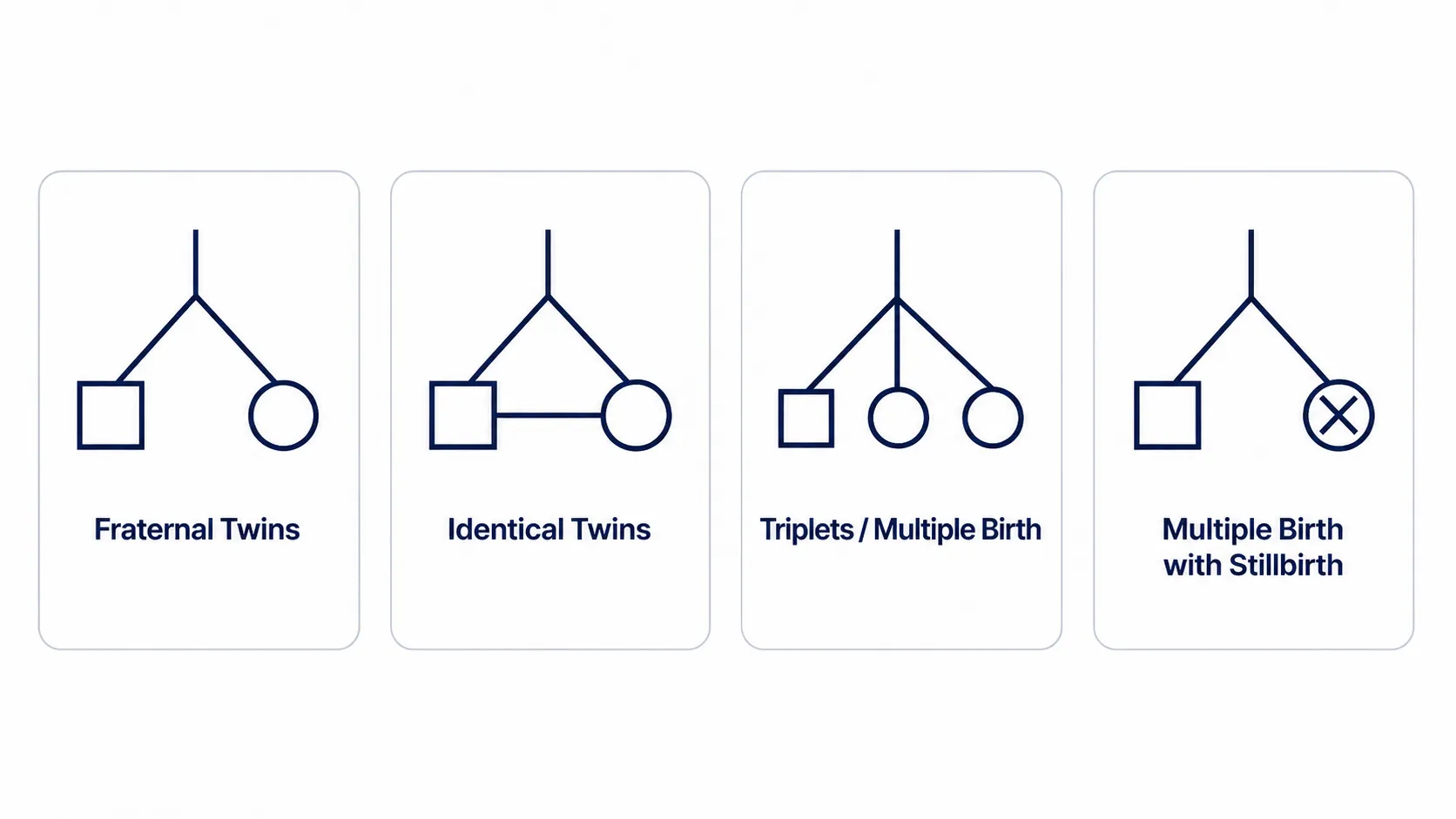
| Symbol name | Meaning |
| Fraternal twins | Two child lines branch from the same point without a line connecting them. Represents non-identical twins. |
| Identical twins | Two child lines branch from the same point and are joined by a horizontal line. Represents identical twins. |
| Triplets or other multiple births | Three or more child lines branch from the same shared point. Represents children born from the same pregnancy. |
| Multiple birth with pregnancy loss or stillbirth | Uses the shared multiple-birth connection together with the appropriate miscarriage, stillbirth, or deceased-person symbol for the affected child. |
Note: Place all children from the multiple birth at the same generational level. Use the horizontal connecting line only when the twins or multiples are known to be identical.
6. Emotional Relationship Symbols
Emotional relationship symbols show the quality of the connection between two people rather than their legal or biological relationship. They can represent support, closeness, distance, estrangement, conflict, fusion, distrust, and other interpersonal dynamics.
Emotional Relationships
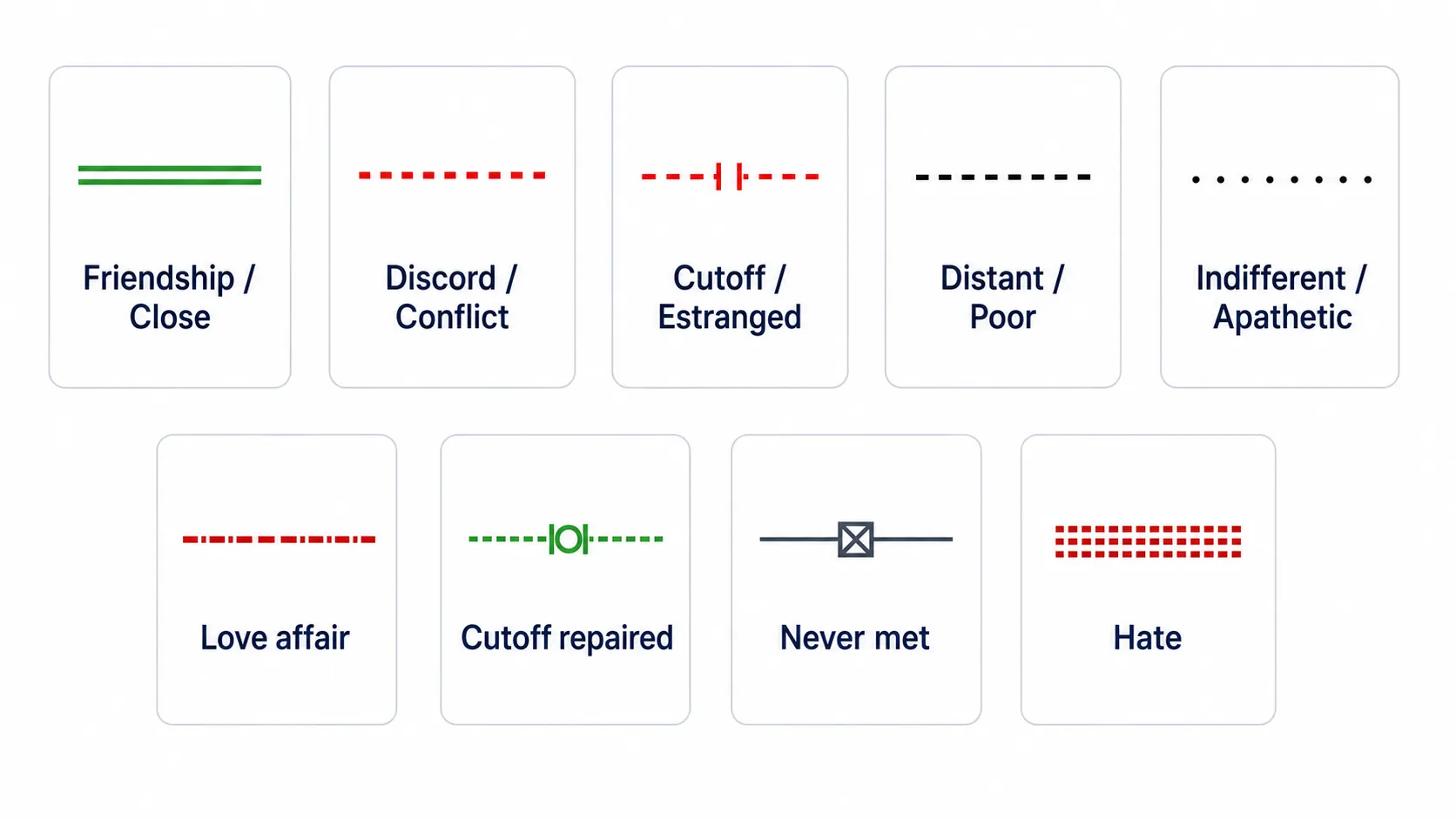
| Symbol name | Meaning |
| Friendship / Close | Represents a close, supportive friendship. |
| Discord / Conflict | Represents recurring disagreement, tension, or conflict. |
| Cutoff / Estranged | Represents a relationship in which contact or communication has ended. |
| Distant / Poor | Represents limited contact or a weak emotional connection. |
| Indifferent / Apathetic | Represents little emotional involvement, interest, or concern. |
| Love affair | Represents a romantic or intimate relationship outside a primary partnership. |
| Cutoff repaired | Represents a previously estranged relationship in which contact has resumed. |
| Never met | Represents two related people who have never met or interacted directly. |
| Hate | Represents intense dislike, anger, or resentment. |
Harmony Emotional Relationships
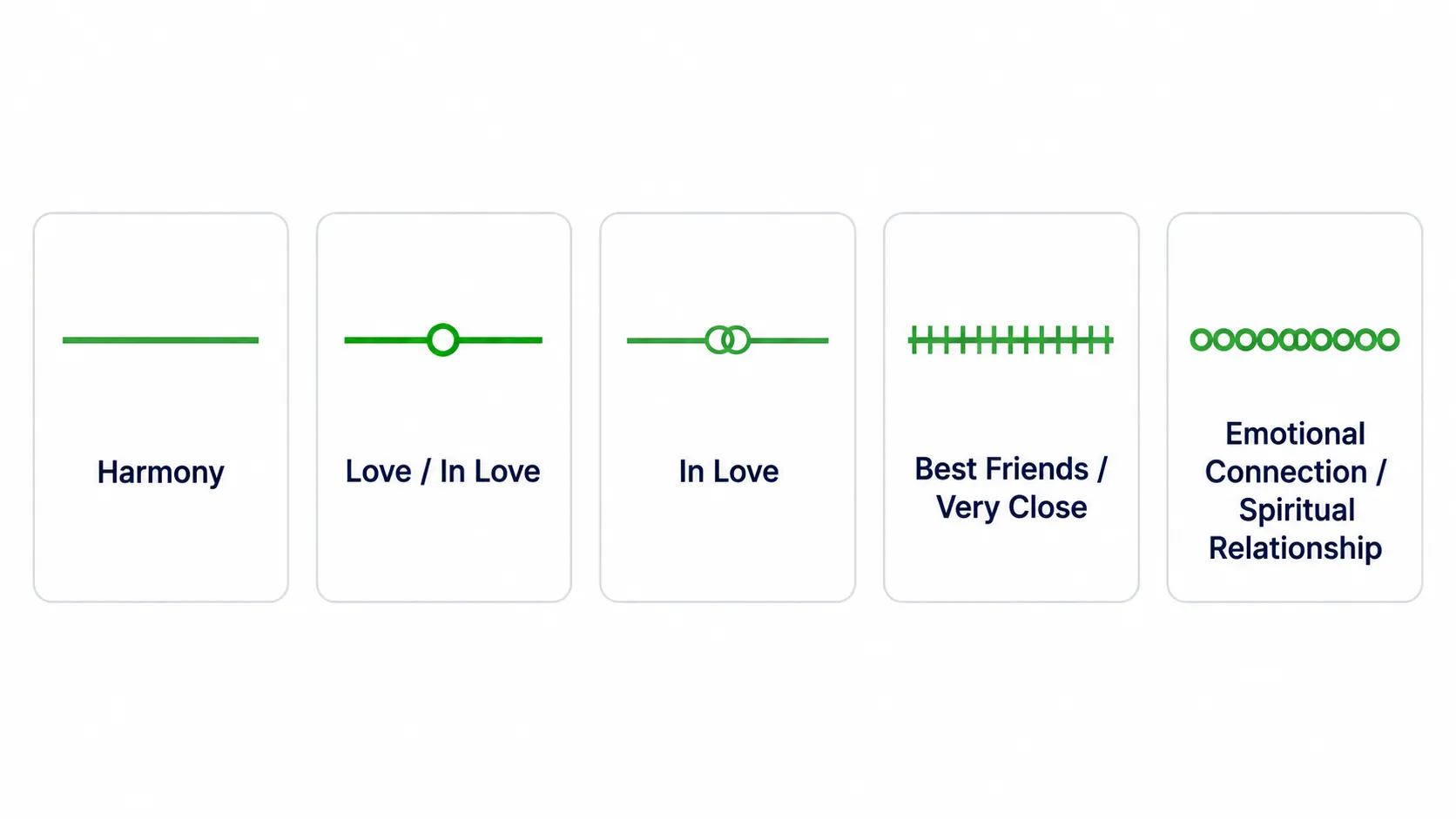
| Symbol name | Meaning |
| Harmony | Represents a balanced, respectful, and supportive relationship. |
| Love / In Love | Represents a loving or romantic connection. |
| In Love | Represents a deeply affectionate romantic relationship. |
| Best Friends / Very Close | Represents a very close, trusting, and supportive bond. |
| Emotional Connection / Spiritual Relationship | Represents a deep emotional or spiritual connection. |
Hostile Emotional Relationships
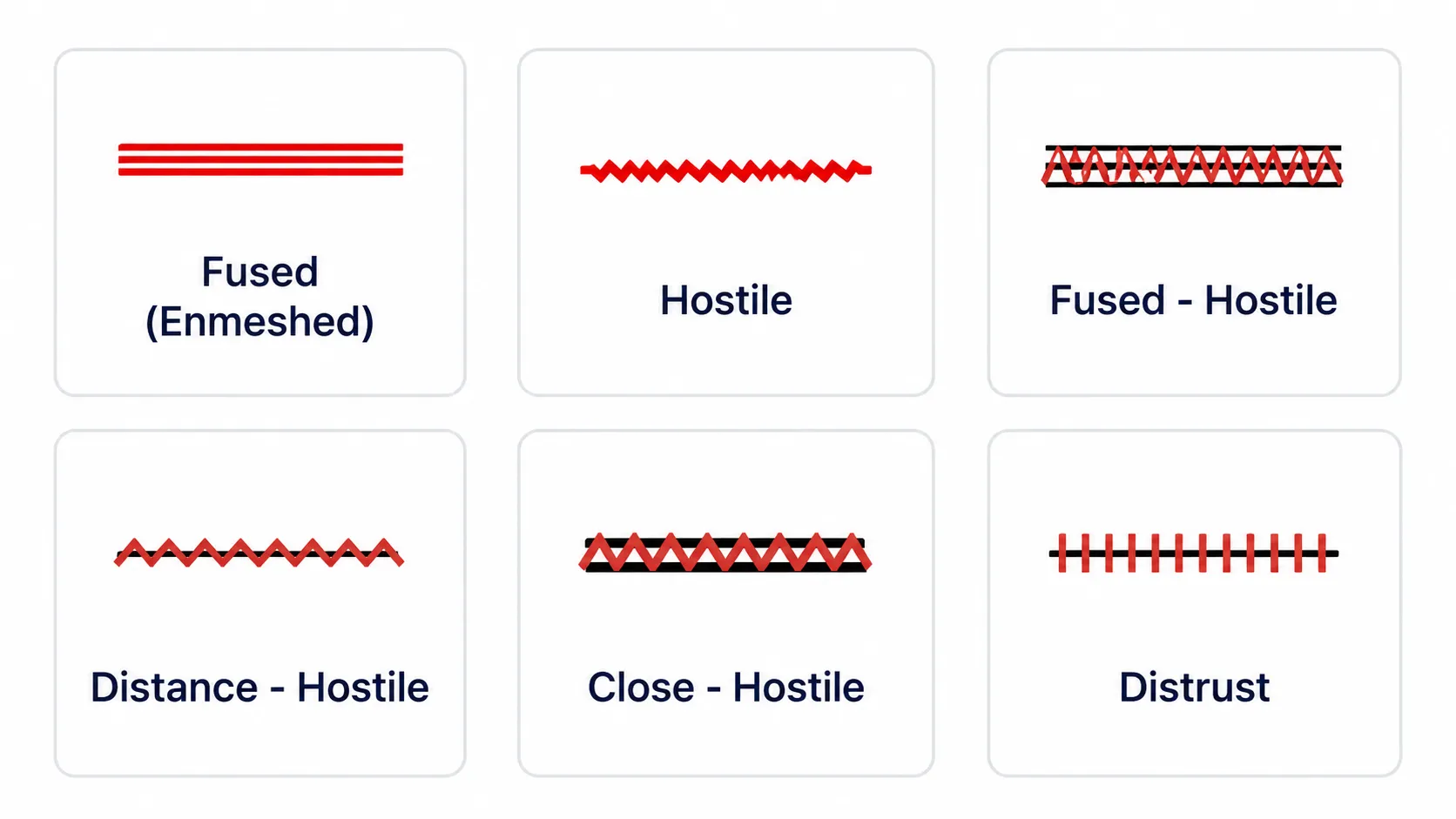
| Symbol name | Meaning |
| Fused (Enmeshed) | Represents an overly close relationship with blurred personal boundaries. |
| Hostile | Represents continuing anger, resentment, or antagonism. |
| Fused–Hostile | Represents an enmeshed relationship that also includes frequent hostility or conflict. |
| Distance–Hostile | Represents emotional distance combined with unresolved hostility. |
| Close–Hostile | Represents emotional closeness combined with recurring conflict or tension. |
| Distrust | Represents suspicion or a lack of trust between two people. |
Note: Emotional relationship lines are added alongside structural connections such as marriage or parenthood. This allows a genogram to show both how two people are related and what their relationship is like.
7. Abuse, Violence, and Harmful Relationship Symbols
These symbols show harmful, abusive, violent, neglectful, controlling, or one-sided relationship dynamics. Directional arrows indicate when the behaviour or attention moves from one person toward another.
Violence and Focus Relationships
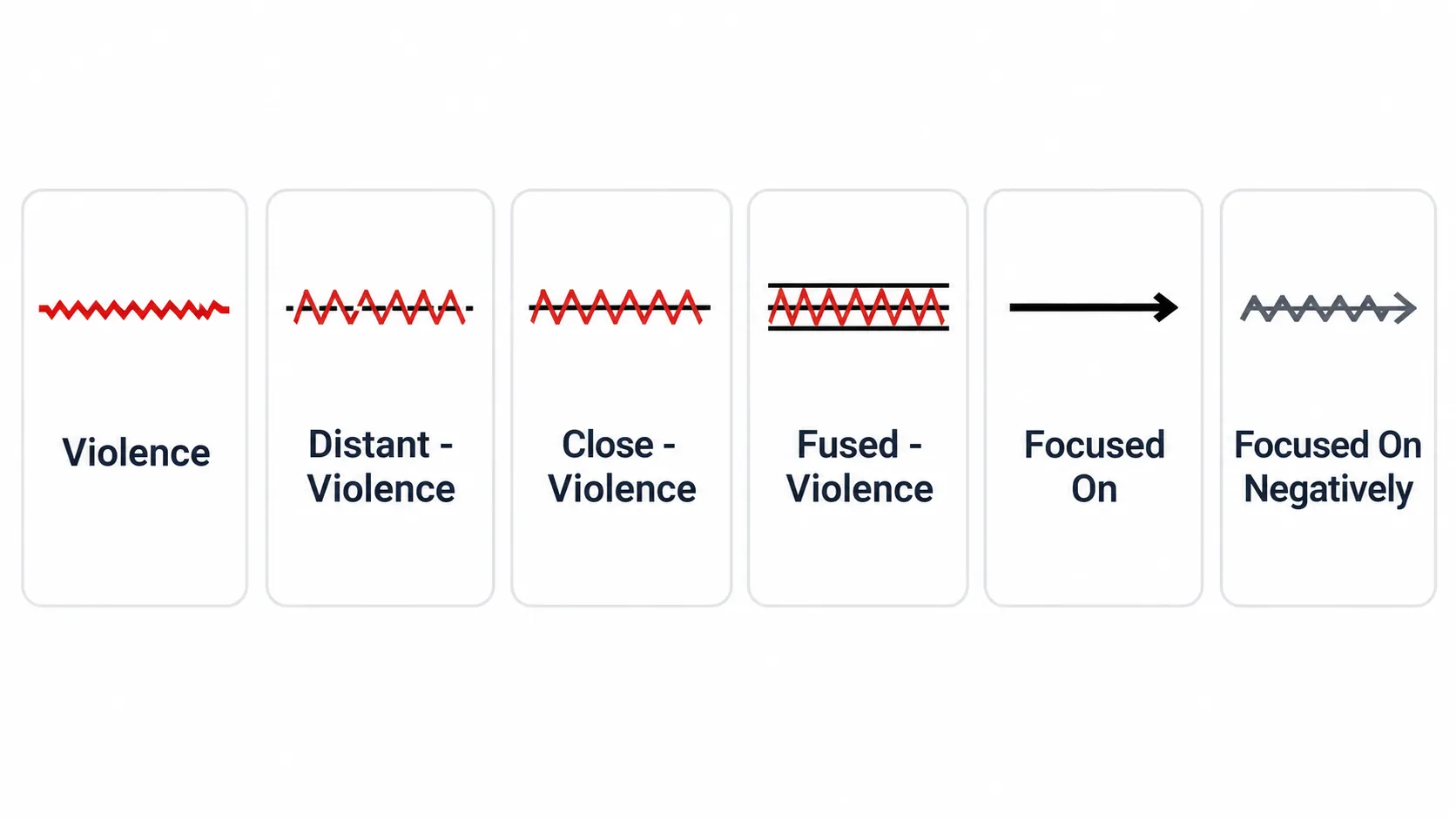
| Symbol name | Meaning |
| Violence | Represents physical aggression or violent behaviour between two people. |
| Distant–Violence | Represents violence in a relationship that also involves emotional or physical distance. |
| Close–Violence | Represents violence within a relationship where the people remain emotionally close or highly connected. |
| Fused–Violence | Represents an enmeshed relationship with blurred boundaries that also includes violence. |
| Focused On | Represents one person directing significant attention, pressure, concern, or expectations toward another. |
| Focused On Negatively | Represents one person directing blame, criticism, hostility, or other negative attention toward another. |
General Abuse Relationships
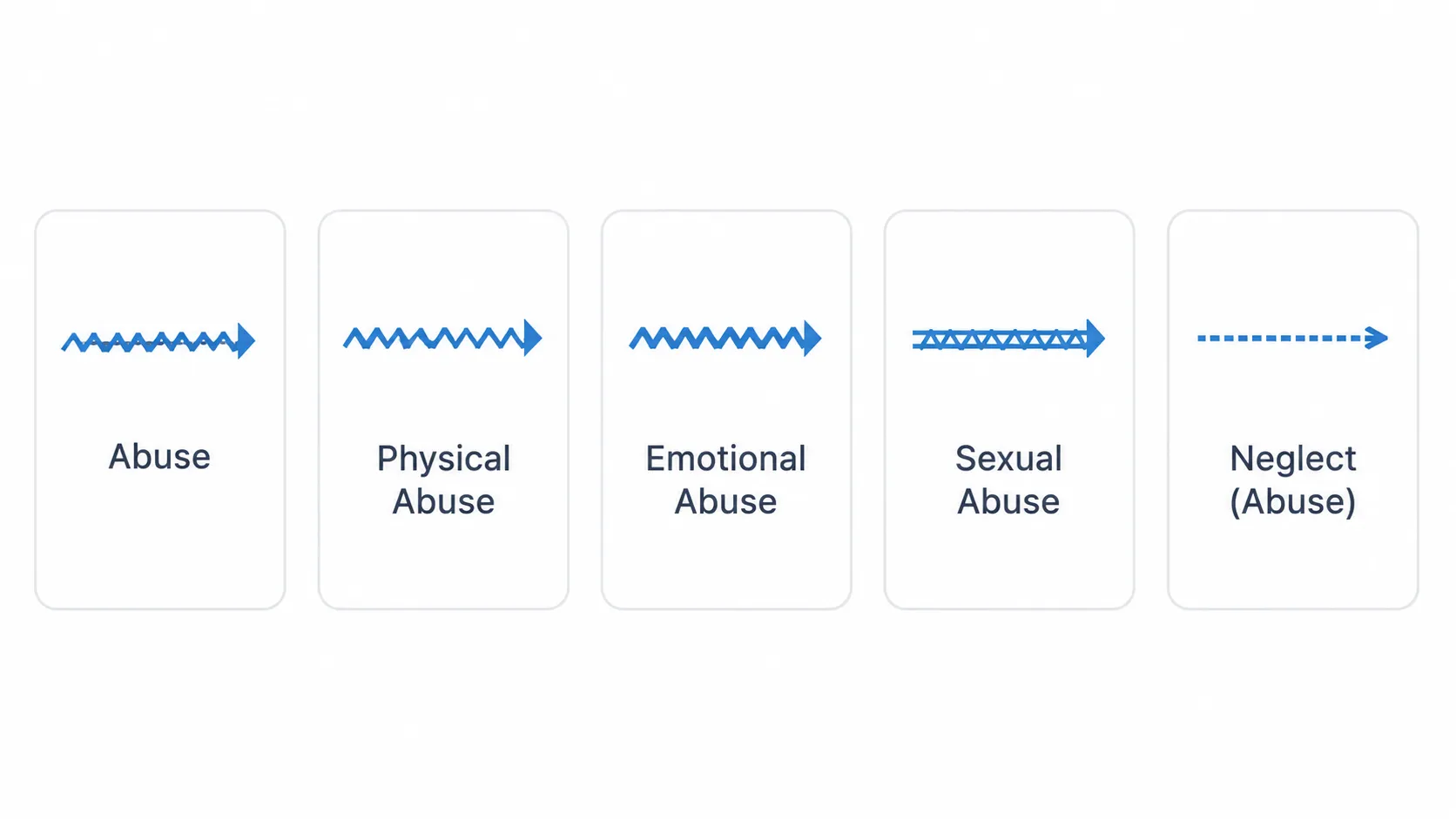
| Symbol name | Meaning |
| Abuse | Represents a general abusive relationship when the specific form of abuse is not identified. |
| Physical Abuse | Represents physical harm, assault, or the use of physical force against another person. |
| Emotional Abuse | Represents behaviour that causes emotional or psychological harm. |
| Sexual Abuse | Represents sexual harm, coercion, exploitation, or abuse. |
| Neglect (Abuse) | Represents a failure to provide necessary care, protection, support, or basic needs. |
Manipulative and Controlling Relationships
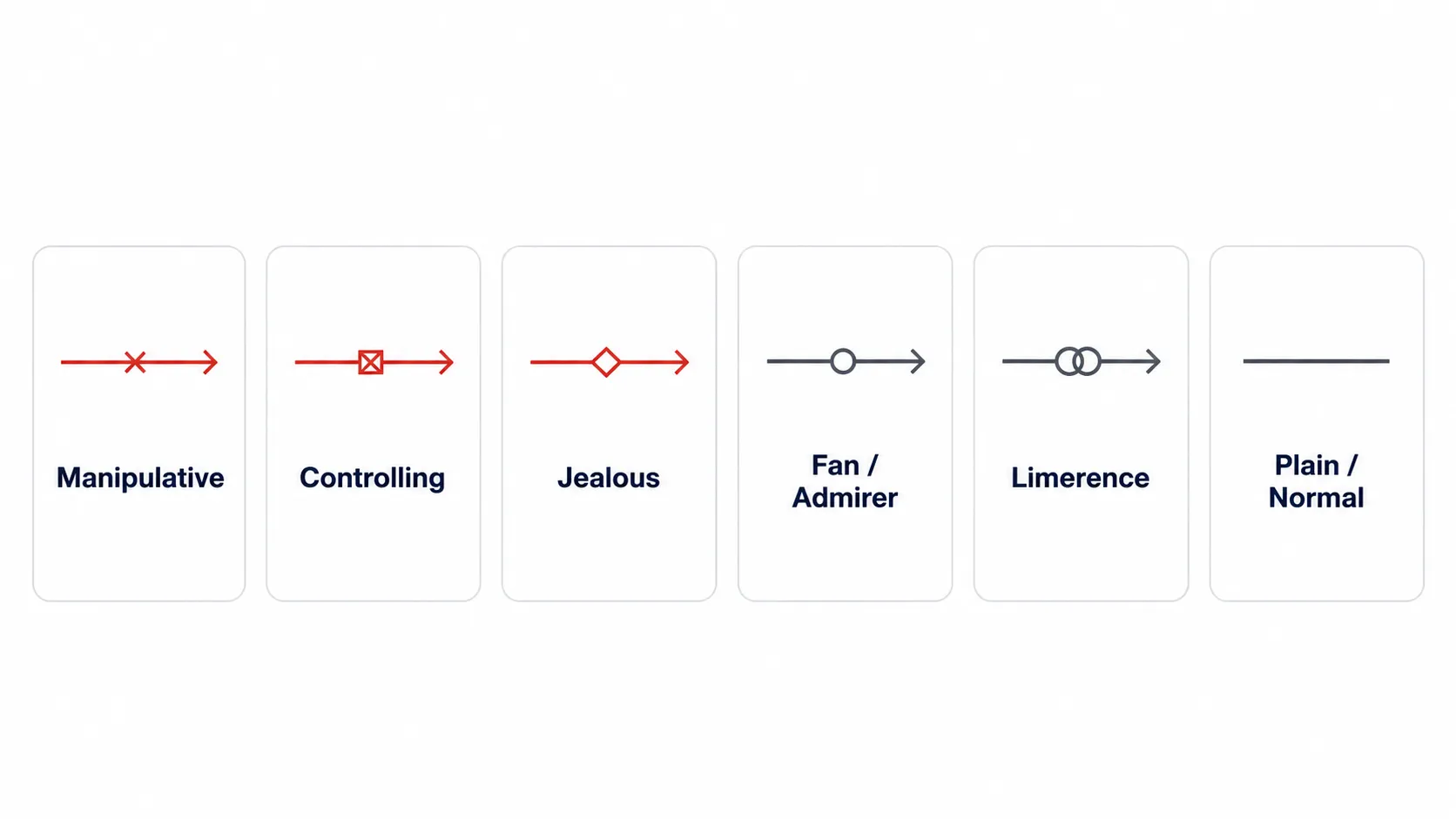
| Symbol name | Meaning |
| Manipulative | Represents one person attempting to influence or control another through deceptive, coercive, or emotionally manipulative behaviour. |
| Controlling | Represents one person restricting, directing, or dominating another person’s choices or behaviour. |
| Jealous | Represents persistent jealousy, possessiveness, or suspicion directed toward another person. |
| Fan / Admirer | Represents strong admiration or attention directed from one person toward another. |
| Limerence | Represents an intense and often obsessive romantic fixation on another person. |
| Plain / Normal | Represents a neutral directional connection without an additional harmful or emotional pattern. |
Note: Arrows should be used when the behaviour, harm, control, or attention moves primarily in one direction. Avoid showing abuse or violence as mutual unless the available information clearly supports that interpretation.
8. Medical and Genetic Symbols
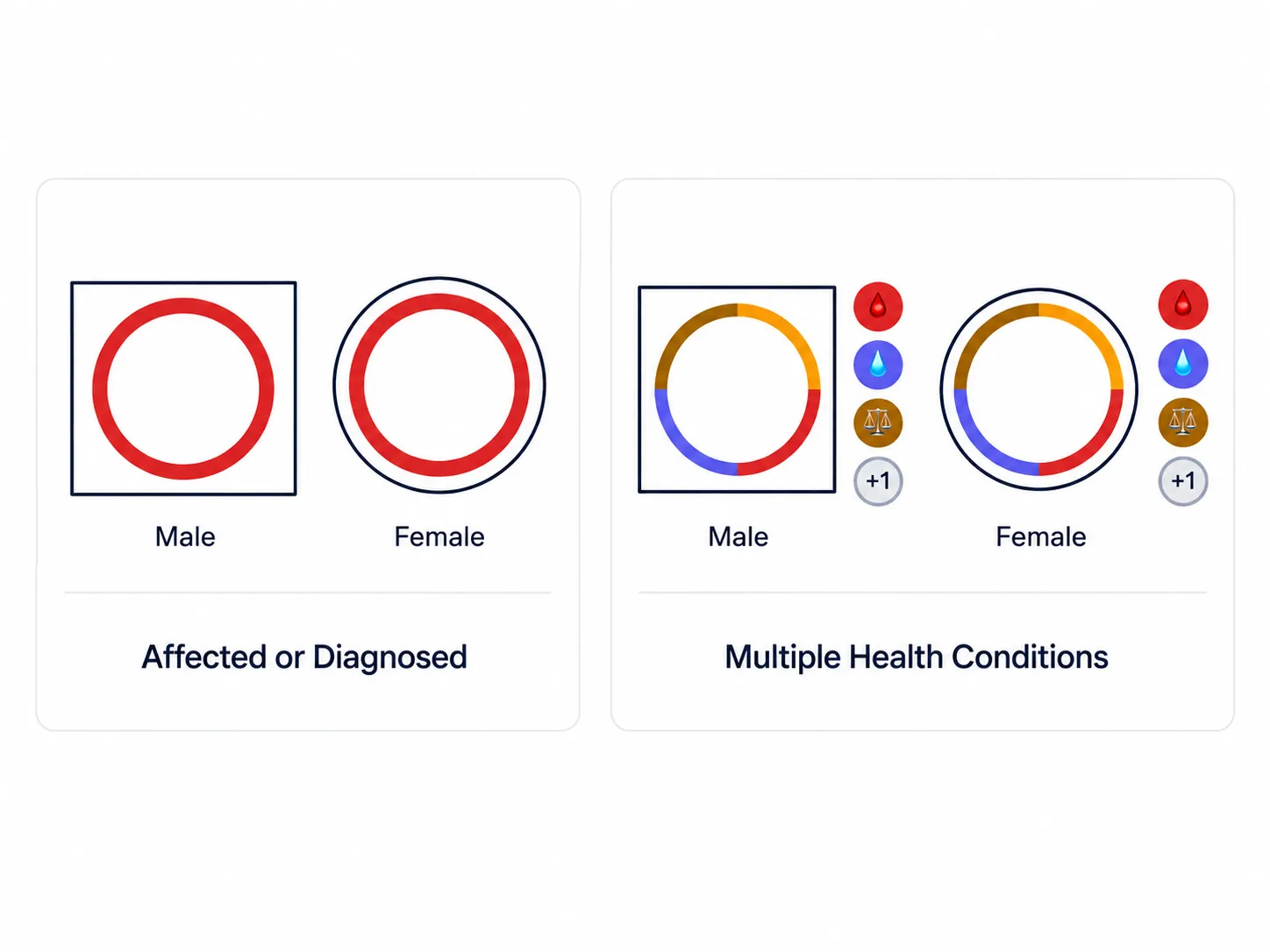
Medical and genetic symbols show health conditions, inherited traits, genetic test information, substance-use patterns, and causes of death across a family. Shading, internal markers, labels, and notes can be added to a person symbol to record these details.
Health Condition Symbols
| Symbol name | Meaning |
| Affected or diagnosed | A colored ring and condition icon identify a person with the health condition defined in the legend. |
| Multiple health conditions | A segmented ring and multiple condition icons show that the person has more than one recorded health condition. |
Health Conditions
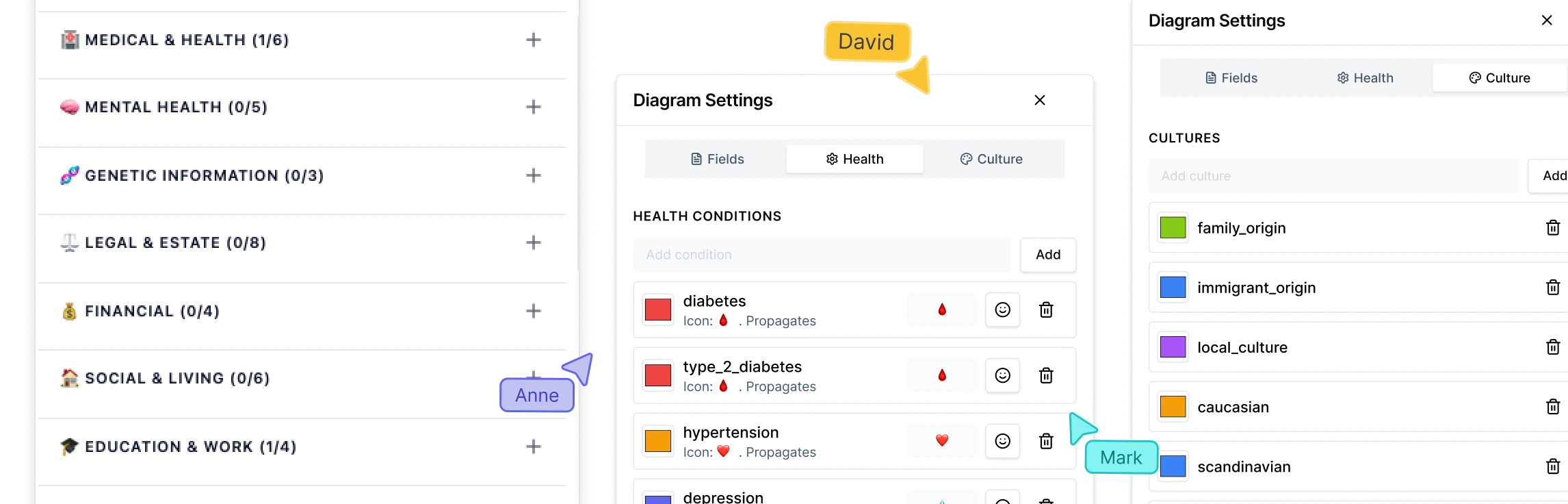
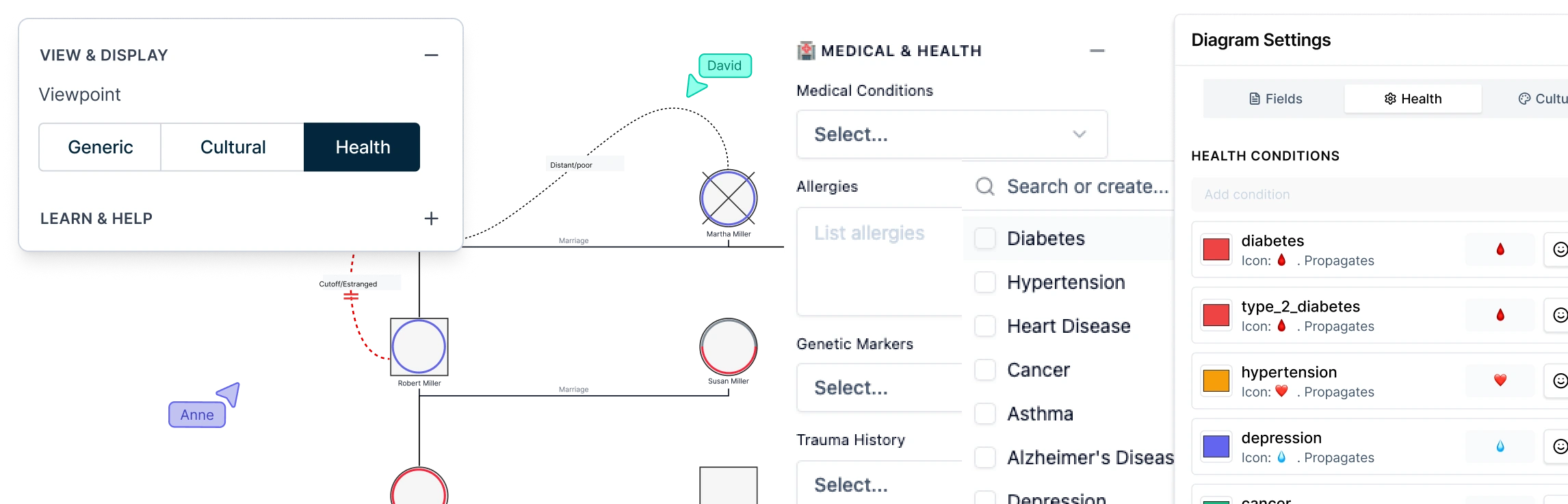
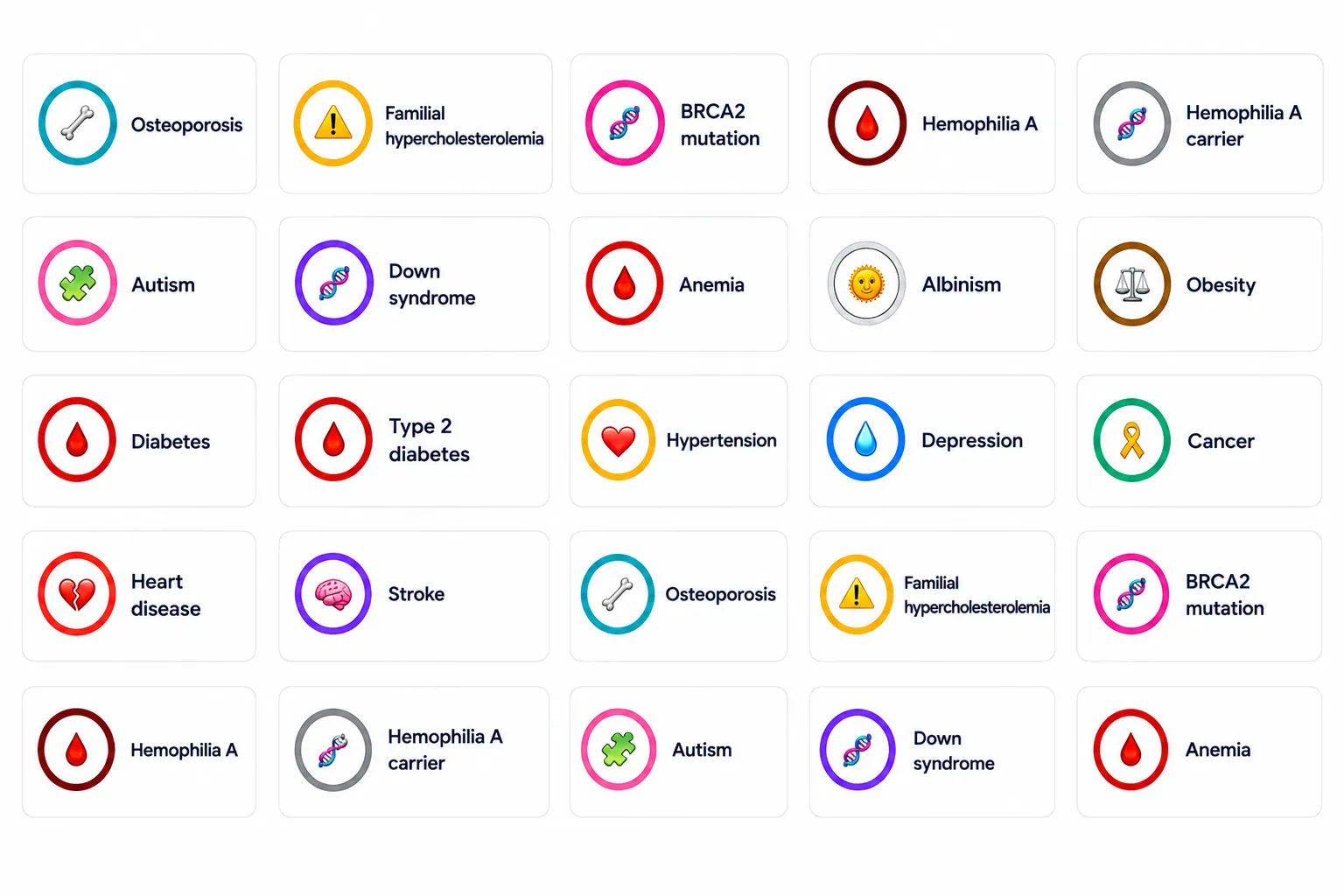
Medical or health conditions are usually shown by adding a color, fill, icon, or marker to a person’s symbol. Use a different marker for each condition and explain every color or icon in the genogram legend. When a person has multiple conditions, divide the marker into sections or display several condition icons beside the symbol.
Substance Use and Recovery Markers
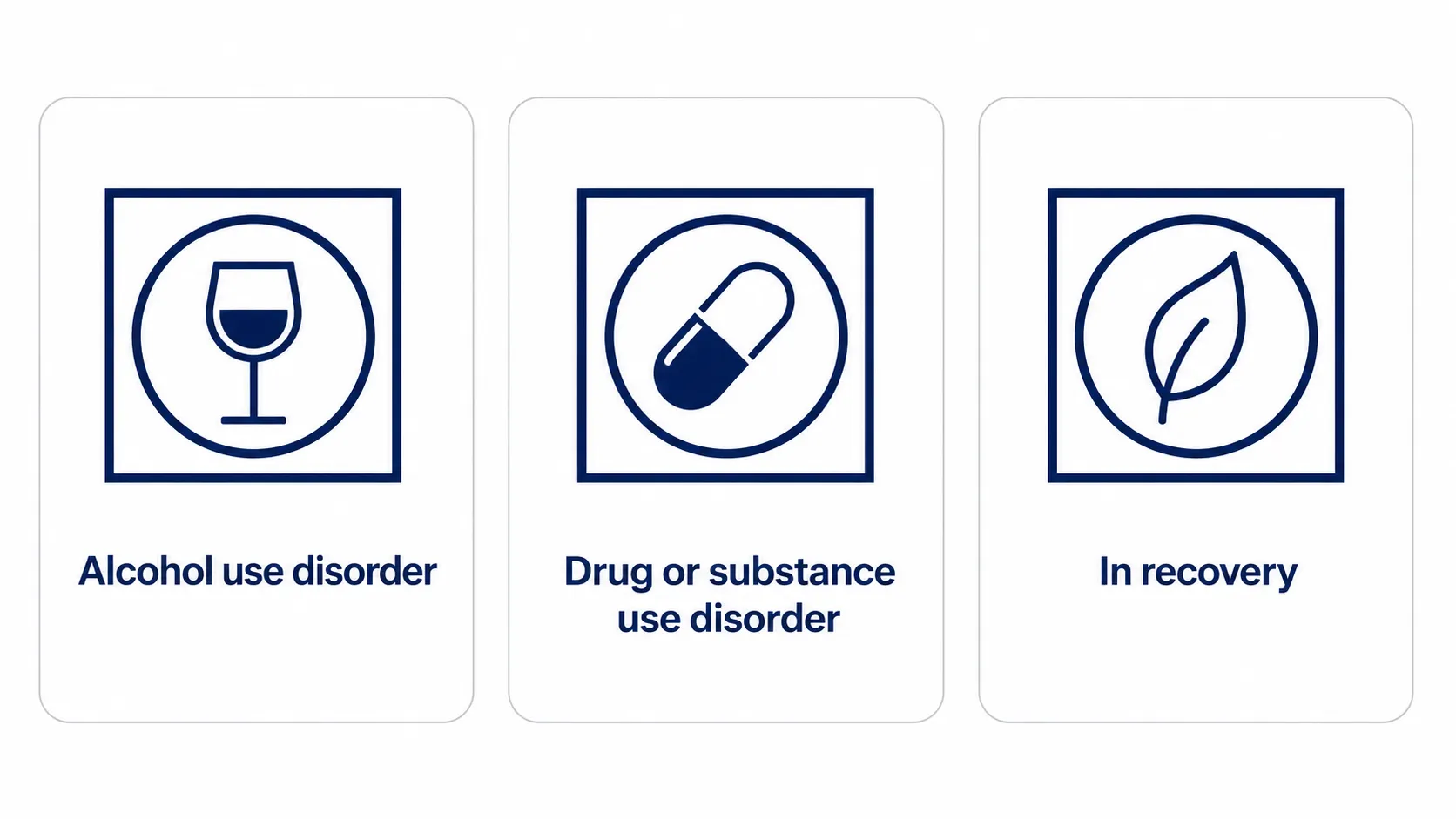
Because these are not standardized medical pedigree symbols, add them to the legend so readers know exactly what each icon means.
| Symbol name | Meaning |
| Alcohol use disorder | Represents a documented pattern of harmful or dependent alcohol use. |
| Drug or substance use disorder | Represents a documented pattern of harmful or dependent drug use. |
| Suspected substance use | Indicates that substance use is suspected but has not been confirmed. |
| In recovery | Represents a person who is recovering from a substance-use or other health condition. |
| Co-occurring health and substance-use conditions | Represents a person with both a physical or mental health condition and a substance-use problem. |
Note: Condition-specific colors, substance-use markers, and recovery symbols are not interpreted consistently across every genogram system. Define each color, fill pattern, abbreviation, and custom marker in the legend.
9. Cultural and Social Context Markers
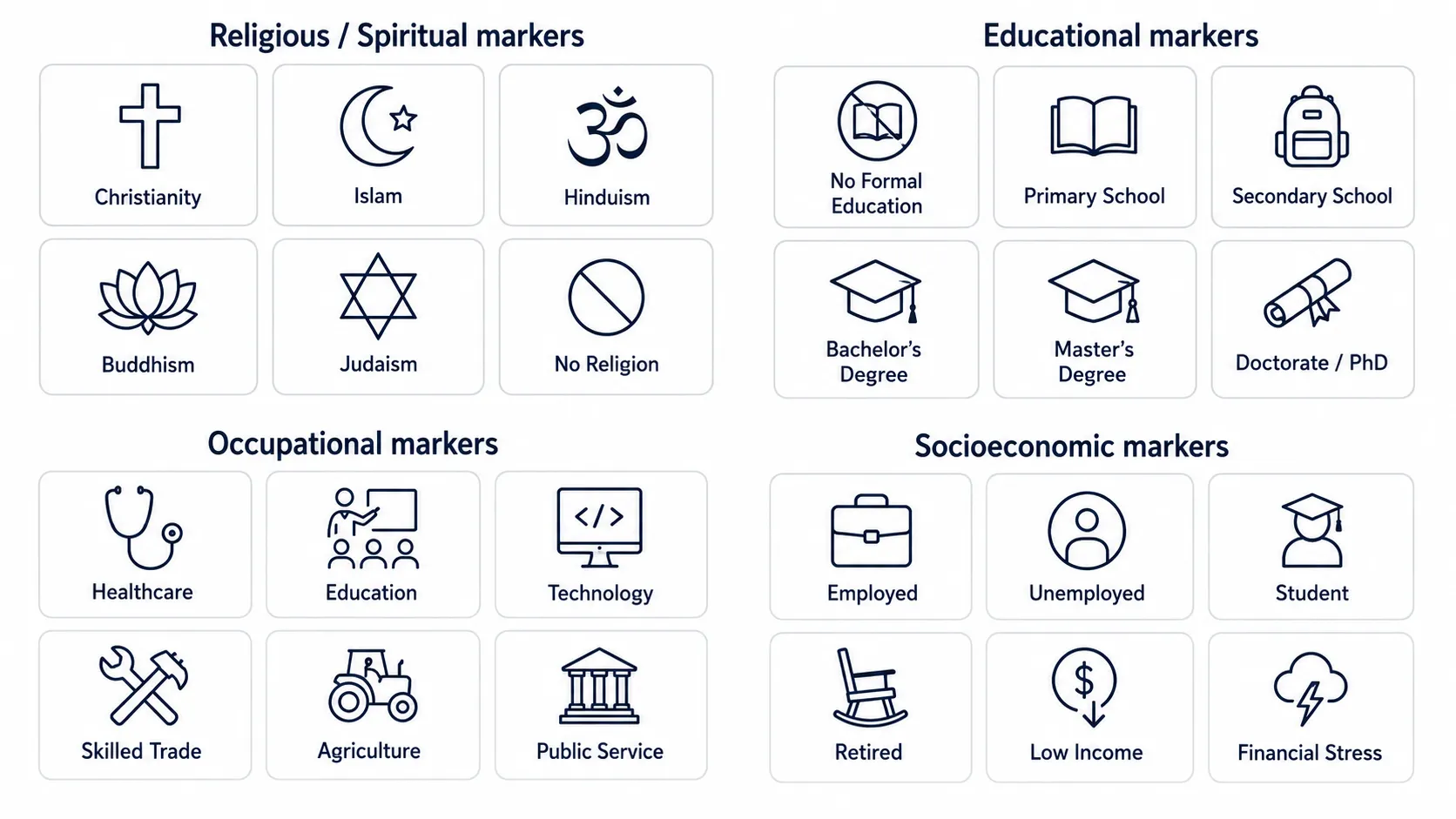
Contextual markers add cultural, social, historical, and practical information that may shape a person’s identity or family experience. These details can be shown using colors, icons, short labels, or fields attached to the person symbol.
| Marker name | Meaning |
| Cultural heritage or ethnicity | Records the cultural, ethnic, national, or ancestral background relevant to the family history. |
| Migration or immigration | Shows that a person or family moved between countries, regions, or communities. Include the place and date when known. |
| Language | Records languages spoken, preferred language, or language changes across generations. |
| Religion or spirituality | Identifies religious affiliation, spiritual traditions, or changes in belief across the family. |
| Occupation | Records a person’s profession, employment, or important work history. |
| Education | Shows educational background, qualifications, or changes in access to education. |
| Legal or residency status | Records relevant citizenship, residency, immigration, guardianship, or other legal information. |
| Socioeconomic context | Records details such as income, housing, social class, unemployment, or financial hardship when relevant. |
| Military service | Identifies military service, deployment, or service-related experiences. |
| Major cultural or historical event | Records events such as displacement, war, discrimination, colonization, or community trauma that affected the family. |
| Community connection | Shows links to cultural groups, religious institutions, community organizations, or support networks. |
Note: Unlike basic person and relationship symbols, these markers do not have one universal visual form. Define every color, icon, abbreviation, or label in the genogram legend so readers understand how the contextual information is represented.
The McGoldrick–Gerson Genogram Format
Many of the most widely recognized genogram conventions come from the format developed and popularized by Monica McGoldrick and Randy Gerson, later expanded with Sueli Petry. Their approach created a more consistent visual language for mapping family structure, important dates, emotional relationships, health information, and patterns across generations.
The format commonly includes:
- squares and circles for people,
- horizontal lines for partner relationships,
- vertical lines for parent-child relationships,
- an X through a person symbol to indicate death,
- birth, death, marriage, separation, and divorce dates,
- line styles that show closeness, conflict, distance, cutoff, fusion, and other relationship dynamics,
- and notes or markers for health, cultural, social, and historical context.
The McGoldrick–Gerson format provides a useful foundation rather than a fixed list covering every possible family identity or circumstance. Modern genograms may include additional symbols for gender identity, reproductive relationships, legal arrangements, cultural context, health conditions, and other relevant information.
When adding symbols beyond the commonly recognized notation, include a legend and use them consistently throughout the genogram.
Helpful Resources
Discover what is a genogram and how it works. This guide covers its definition, uses, key benefits, advantages and disadvantages of genograms and limitations—perfect for personal insight or professional use.
Learn how to show how people in a family are connected and how they relate to each other emotionally and socially.
Learn Creately's 1–5 shortcut system for adding relatives, relationship shortcuts, and ways to move around the canvas fast so you can keep the conversation flowing.
Learn how to use Creately's AI genogram maker to generate genograms from text descriptions or clinical notes.
Discover Creately's AI Genogram Tool which helps you generate genograms instantly with AI using your notes, and refine with quick-add tools.
Resources
Butler, J.F. (2008). The Family Diagram and Genogram: Comparisons and Contrasts. The American Journal of Family Therapy, 36(3), pp.169–180. doi:https://doi.org/10.1080/01926180701291055.
Rempel, G.R., Neufeld, A. and Kushner, K.E. (2007). Interactive Use of Genograms and Ecomaps in Family Caregiving Research. Journal of Family Nursing, 13(4), pp.403–419. doi:https://doi.org/10.1177/1074840707307917.