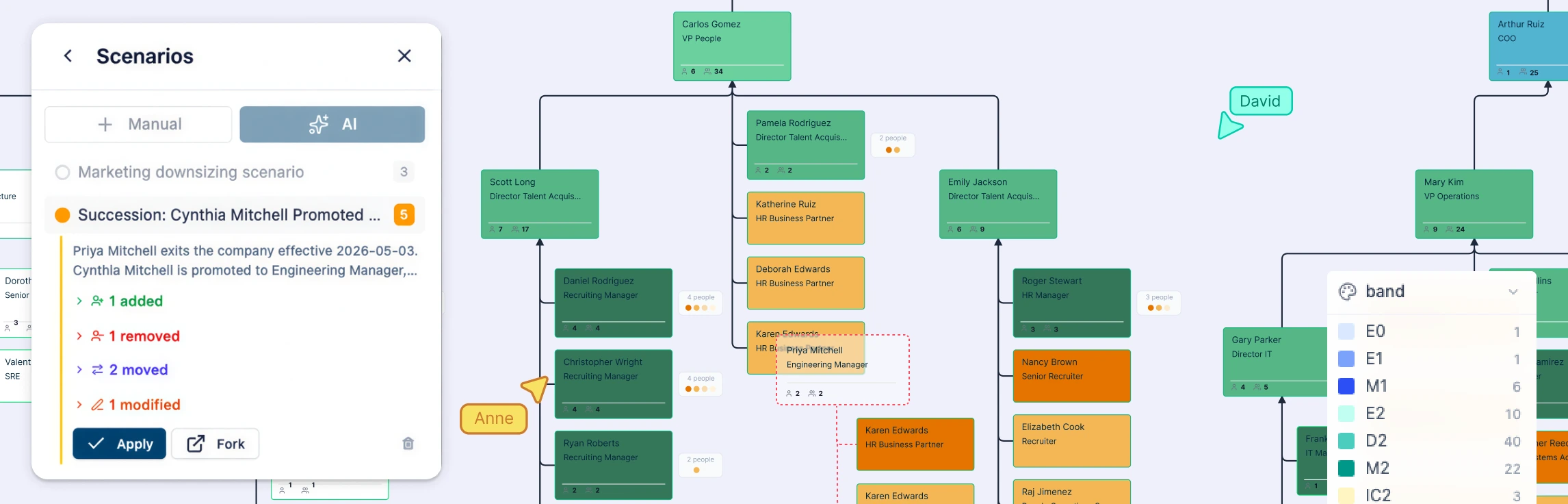
Mergers and acquisitions rarely fail because the deal logic is wrong—they fail during integration. Unclear reporting lines, overlapping roles, ambiguous authority, and misaligned structures make it difficult for leaders to execute even the strongest strategies. An org chart, when used correctly, becomes one of the most effective tools for managing this complexity.
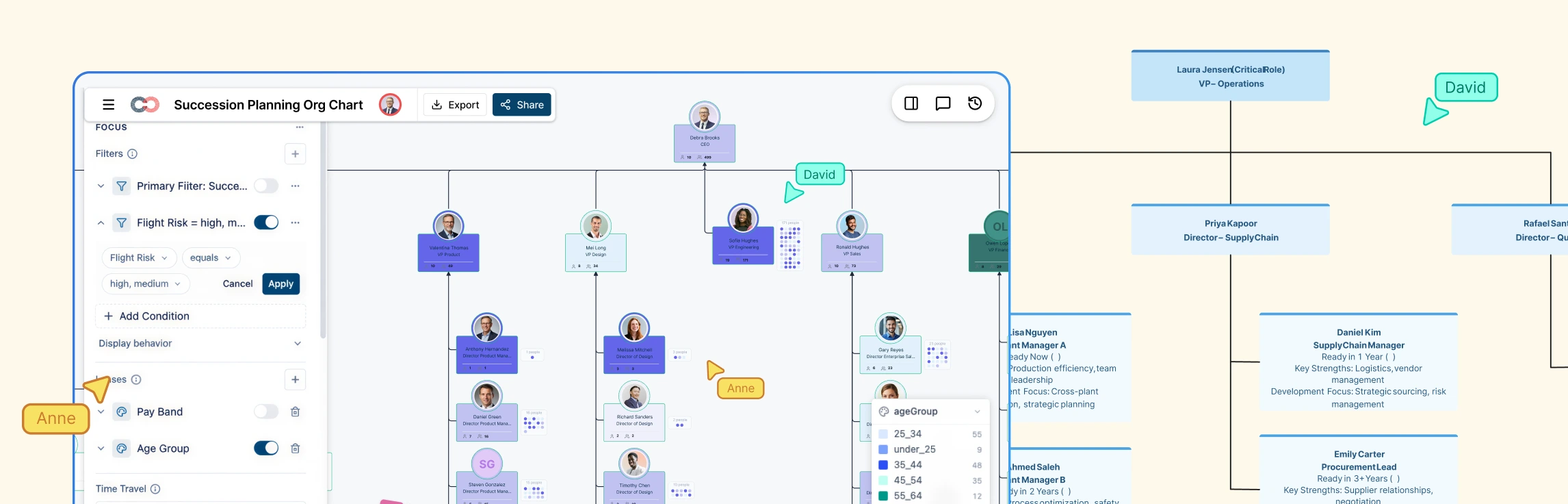
Leadership transitions rarely fail because they’re unexpected. They fail because organizations can’t clearly see who’s ready, where the gaps are, and what happens if a key leader leaves. This guide explains how succession planning org charts help HR leaders, People Ops teams, and executives move beyond scattered spreadsheets and static diagrams. You’ll learn when to use them, what problems they solve, and how to build one step‑by‑step. Finally, we’ll cover best practices to follow when using org charts for succession planning, pitfalls to avoid, and how to turn succession planning into an ongoing decision system, not a once‑a‑year exercise.
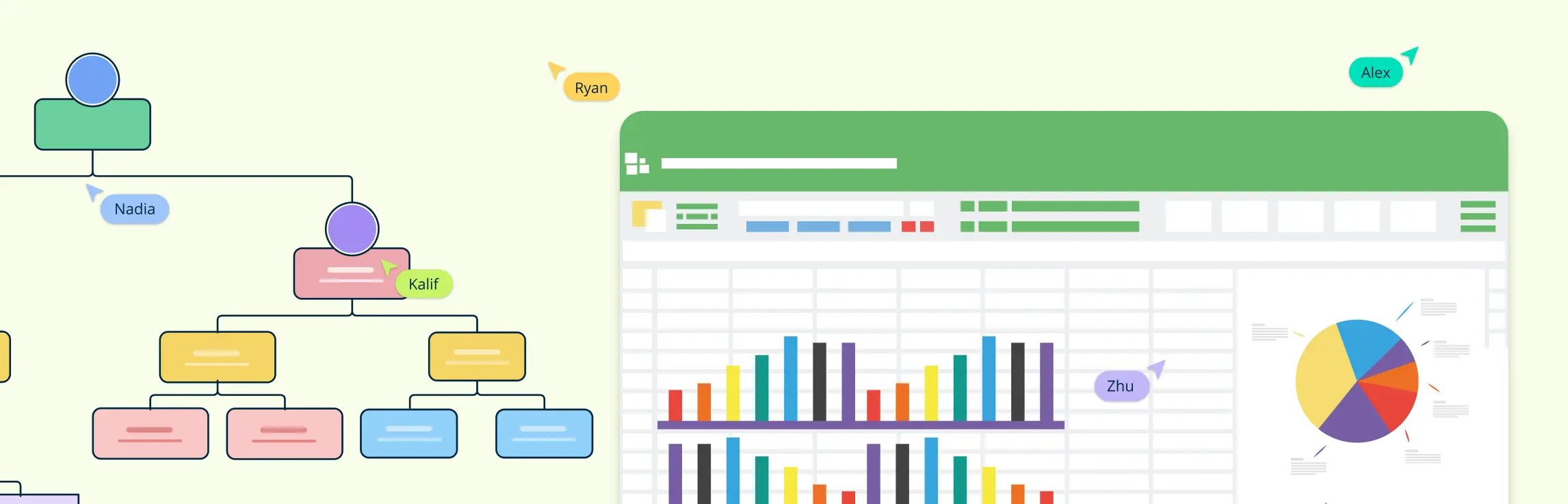
Spreadsheets have long been a crucial tool for managing data, with programs like Microsoft Excel, Google Sheets, and Apple Numbers offering robust features for organizing structured information. One of the key uses of spreadsheets is creating organizational charts —visual diagrams that represent a company’s hierarchy, roles, relationships, and reporting structures. While org charts were traditionally drawn by hand or using basic software, modern spreadsheet tools, combined with specialized org chart software like Creately, Visio, or Lucidchart, have streamlined this process, making it faster, more accurate, and adaptable.
HR managers in companies have been using organizational chart software for decades to fulfil a very basic but significant function. These managers have used org charts to form the modus operandi of a company, where questions of “Who is Who?” and “Who does What?” are answered. Organizational behavioral experts are aware of the issues that arise when lines are vague when it comes to job roles and responsibilities. Org charts need to be properly used to define the function and role of every single individual in a company so that there is room for accountability.