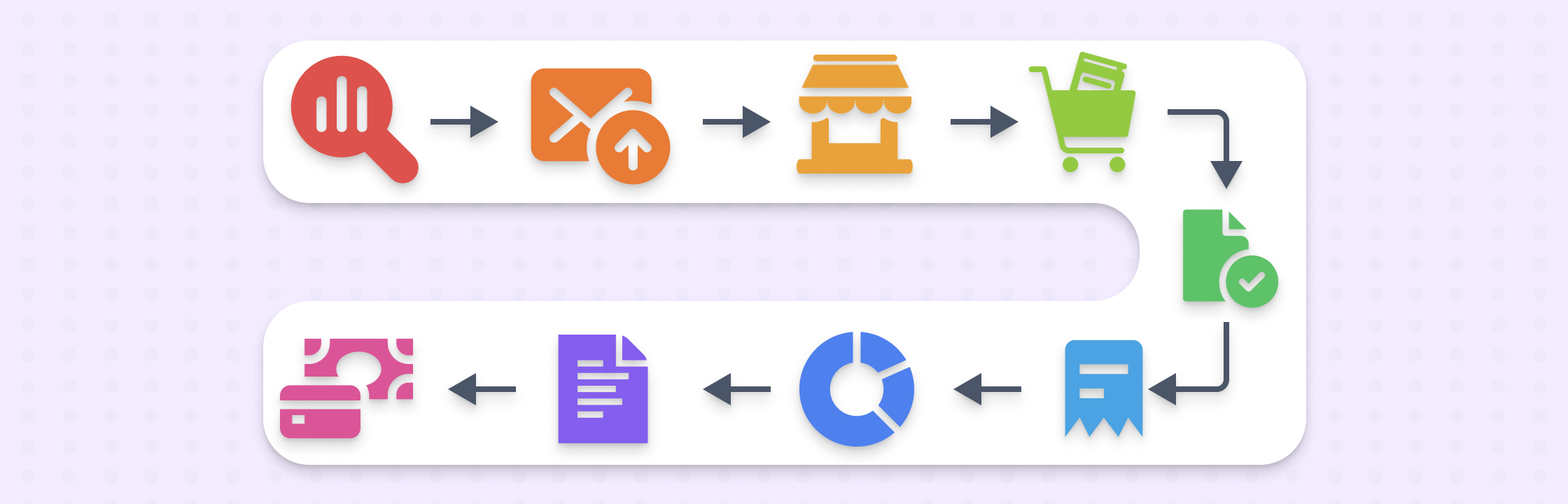
The procure-to-pay (P2P) process connects an internal purchasing need with requisition, approval, ordering, receipt, invoice validation, and supplier payment. This guide explains the core steps, the roles and controls involved, practical improvement ideas, and how a process flowchart can make ownership and handoffs easier to review.
Table of Contents:
- Understanding the Procure-to-Pay Process
- Key Steps in the Procure-to-Pay Process
- Best Practices for an Efficient Procure-to-Pay Process
- Visualizing the Procure-to-Pay Process
Understanding the Procure-to-Pay Process
The procure-to-pay (P2P) process is how organizations purchase and pay for the goods and services they need to operate. For most companies, it starts when a need is identified and ends when the supplier is paid.
P2P is narrower than source-to-pay, which may also include strategic sourcing, supplier selection, and contract management. The exact P2P scope varies by organization, industry, policy, and purchasing system, so define the start and end points before mapping it.
A well-designed procure-to-pay process can help teams:
- Make purchasing policies, controls, and responsibilities easier to follow.
- Standardize requisitions, purchase orders, receipts, and invoice-handling rules where appropriate.
- Route requests through the required budget, procurement, security, legal, or other reviews.
- Maintain traceability between the approved request, purchase order, receipt or service confirmation, invoice, and payment.
- Identify exceptions, duplicate work, missing information, and delayed handoffs.
Optimization does not automatically reduce cost or establish compliance. Define the problem, preserve required controls, test changes, and monitor the result. When avoidable administrative work is reduced safely, procurement and finance teams may have more capacity for sourcing, contract management, supplier performance, risk, and analysis.
Key Steps in the Procure-to-Pay Process
The process commonly begins when a purchasing need is identified—before requisition approval—and continues through ordering, receipt or service confirmation, invoice validation, and payment. The sequence and required controls vary, but the map should make ownership, decision criteria, supporting records, exceptions, and handoffs visible.
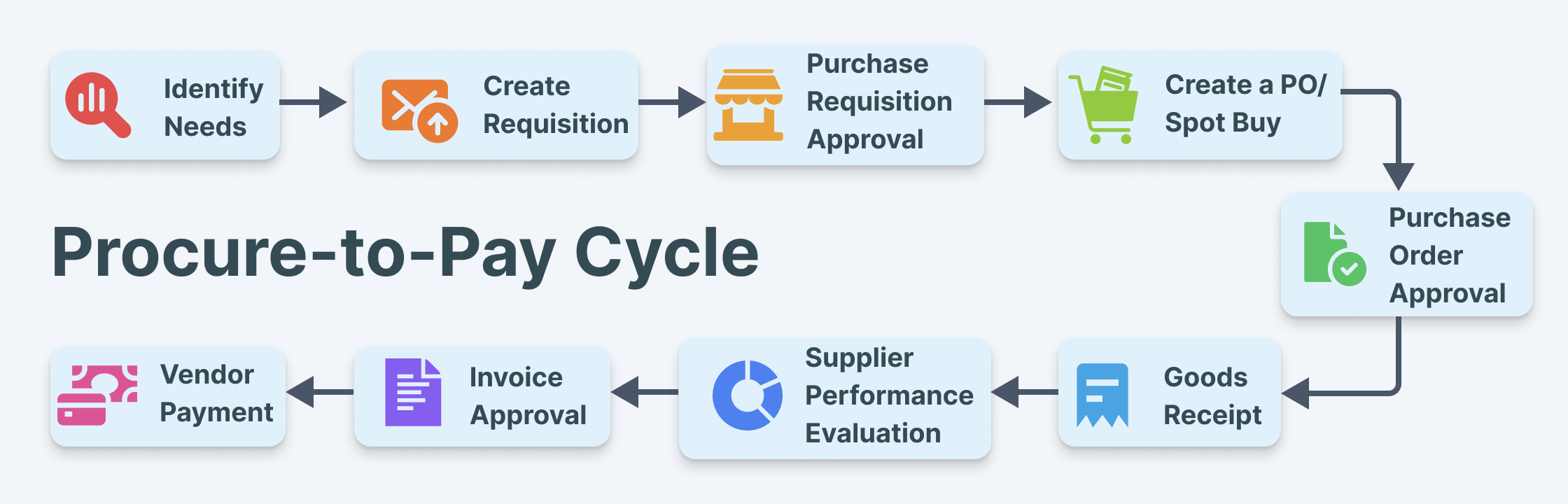
Identify Needs
An internal requester defines the goods or services needed, the business purpose, quantity or scope, required date, specifications, and available budget information. Emergency or unplanned needs may follow a controlled exception path rather than bypassing policy.
Create Requisition
The requester records the need in the organization’s designated purchasing system or form. Required information may include specifications, quantity or scope, budget, cost center, suggested supplier, supporting documents, and business justification.
Purchase Requisition Approval
The requisition follows the reviews required by policy. These may depend on spend, category, contract status, data or security risk, legal terms, funding source, or organizational role. Approval confirms authorization under the applicable policy; it does not guarantee that every upstream requirement has been satisfied.
Create a PO/Spot Buy
After approval and any required supplier or contract checks, an authorized buyer creates the purchase order or follows the approved non-PO or spot-buy route. The order should state the supplier, items or scope, quantities, prices, delivery terms, payment terms, and other applicable conditions.
Purchase Order Approval
Where policy requires it, the purchase order is reviewed for accuracy and authorization before it is issued to the supplier. The approval path should reflect spend, category, contract, and risk rather than adding the same review to every purchase.
Goods Receipt
The receiving team records what was delivered and notes quantity, condition, date, and discrepancies. For services, the responsible owner may confirm completion or acceptance instead of creating a physical goods receipt.
Supplier Performance Evaluation
Supplier performance evaluation may occur after a delivery or as part of a periodic supplier-management process rather than as a mandatory step in every P2P transaction. Use agreed measures such as delivery, quality, service, responsiveness, risk, and contract performance, and document the evidence behind the evaluation.
Invoice Approval
Accounts payable validates the invoice under the organization’s controls. A purchase-order invoice may use two-way or three-way matching against the PO and receipt or service confirmation. Exceptions, non-PO invoices, taxes, duplicates, and discrepancies should follow documented review and resolution paths before approval.
Vendor Payment
After approval, the authorized finance or treasury process schedules and releases payment according to agreed terms, cash-management rules, segregation-of-duties controls, sanctions or fraud checks where applicable, and the approved payment method. Record the payment and reconcile it in the relevant financial systems.
Best Practices for an Efficient Procure-to-Pay Process
To optimize your procure-to-pay (P2P) process, focus on implementing best practices. Some of the key things you can do include:
Standardize and Centralize
Standardize repeatable steps, decision criteria, required information, and exception paths where this reduces error or risk. Maintain policies, supplier records, contracts, transactions, and financial evidence in their designated systems of record. Use the process map as a shared guide to how those systems and responsibilities connect—not as a replacement for them.

Automate Where Possible
Consider automation for stable, well-understood, repetitive work such as routing, matching, reminders, or scheduling. Define access controls, exception handling, auditability, monitoring, and human review first. Automating a poorly understood process can reproduce errors or control gaps at greater scale.
Improve Supplier Relationships
Set clear expectations for ordering, delivery, invoicing, contacts, escalation, and performance. Use a communication and review cadence proportionate to supplier importance and risk. Clear expectations support coordination, but they do not guarantee accurate invoices or delivery quality.
Streamline Approvals
Document approval thresholds, roles, evidence, delegation, segregation of duties, and exception paths. Remove duplicate or unclear reviews only after confirming that required financial, legal, security, procurement, and regulatory controls remain effective.
Measure and Monitor
Track measures that match the improvement objective, such as requisition-to-PO time, touchless or matched-invoice rate, exception rate, approval time, duplicate-payment rate, on-time payment, and days payable outstanding. Interpret metrics together: for example, a change in payment timing may affect cash, discounts, supplier experience, and agreed terms differently.
Visualizing the Procure-to-Pay Process
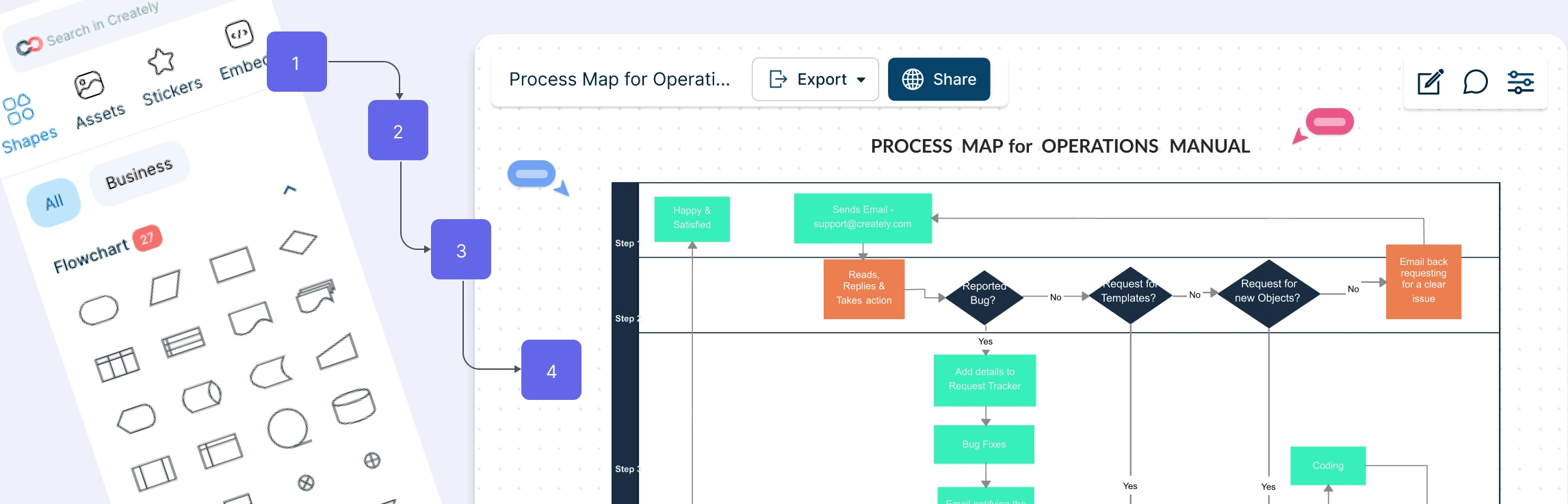
A process map makes the designed workflow visible, but it does not identify the cause of a problem by itself. Compare the map with transaction data, observations, audit findings, and stakeholder feedback to investigate delays, exceptions, duplicate work, unclear ownership, and weak handoffs.
Use Creately’s process mapping software to document the P2P flow with flowchart or BPMN notation, swimlanes, decision points, and connected subprocesses. Add structured details such as owners, status, duration, systems, and tags to relevant steps, and use real-time editing, threaded comments, and @mentions for contextual feedback.

Link to Approved Vendors:
Link a relevant process step to the authoritative approved-supplier register or procurement policy where access controls permit. The map provides context and a route to the record; the supplier system remains responsible for accuracy, approval status, and the current version.
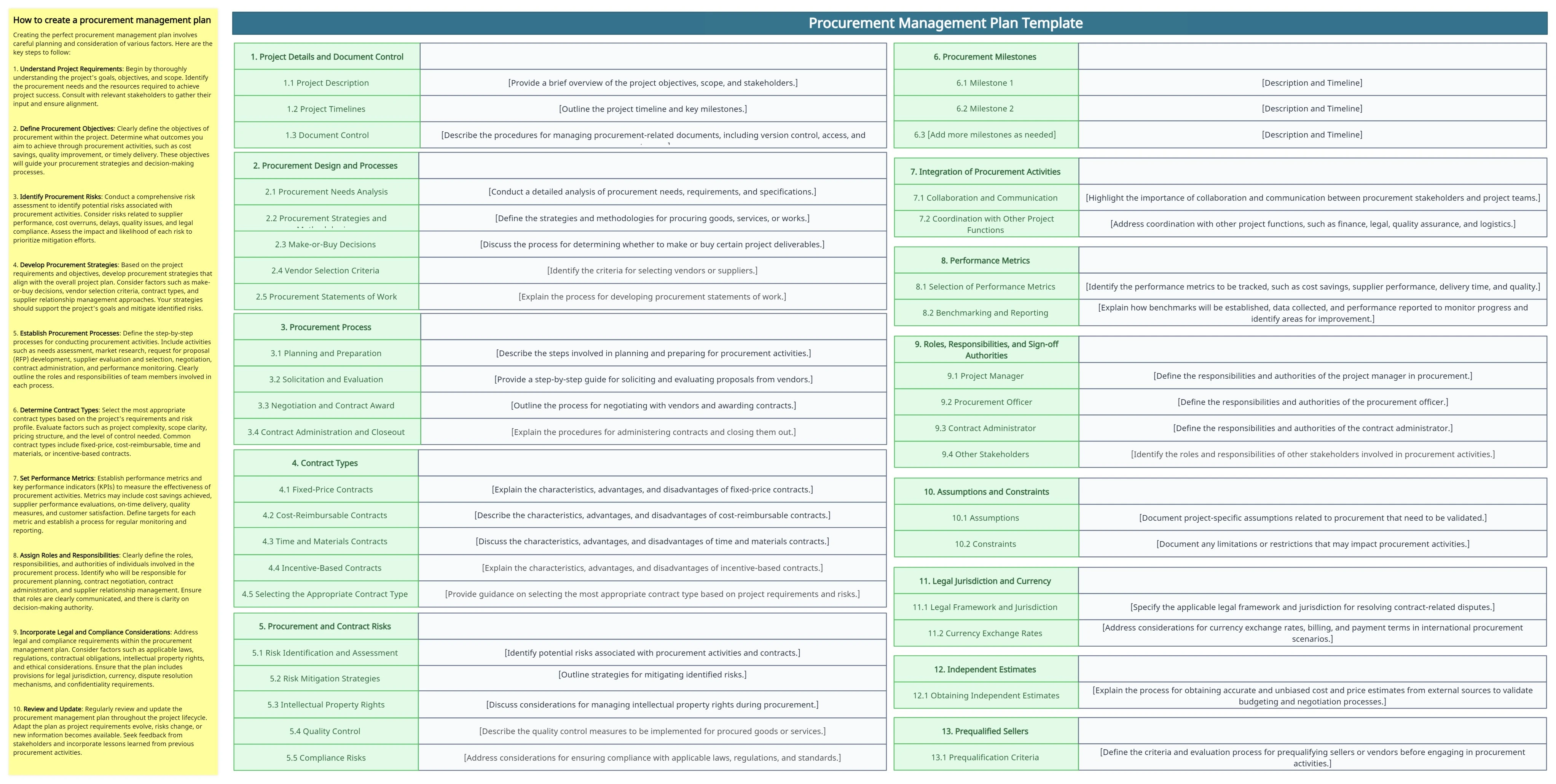
Use this procurement management plan template to document procurement roles, requirements, and governance.
Link to Internal Forms:
Connect steps to the authoritative requisition form, quote request, purchasing guidance, or work instruction. Owners should maintain the source document and access permissions in the designated system. A link from the map helps people find the material but does not guarantee that it is current or that the process is compliant.
Track Status:
Use structured process details to document who owns a step, which system supports it, and the status of the maintained process documentation. Comments and @mentions can support collaborative review, while the accountable owner incorporates agreed changes. Keep live requisition, approval, invoice, payment, and task status in the procurement, finance, or work-management system responsible for that transaction.
Treat the P2P map as living documentation with a named owner and a review cadence based on risk and change frequency. When policies, systems, roles, controls, or handoffs change, review the map with affected stakeholders and record the agreed update. Measure whether each process change improves the selected outcome without weakening required controls or shifting friction elsewhere.