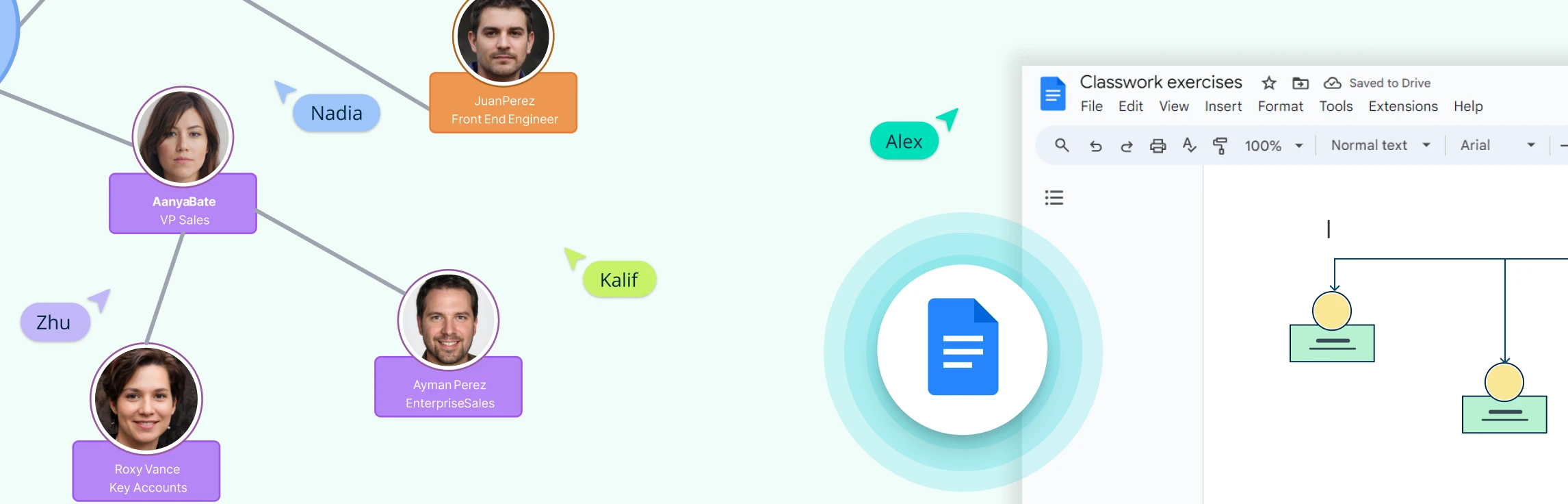
What is a Hierarchical Structure?
The hierarchical organizational structure is a traditional model in which authority, responsibility, and communication flow through clearly defined levels, from top management down to individual contributors. Each employee reports to a single supervisor, creating a pyramid-shaped chain of command that supports control and accountability. This structure is one of the most widely used frameworks for organizing teams and business operations.
To understand how hierarchical relationships are visually represented through charts, read what is an organizational chart guide.
Characteristics of the Hierarchical Structure Diagram
A hierarchical structure diagram visually defines how authority, communication, and responsibilities are organized within an institution or company. It uses a top-down format, often shaped like a pyramid or tree, to show how leadership and reporting flow from senior executives to frontline employees. A hierarchical management structure diagram will have the following characteristics.
1. Clear Chain of Command
Each employee or role reports to a single supervisor, forming well-defined reporting lines.
2. Top-Down Decision Flow
Authority and directives move downward from higher management to lower levels.
3. Distinct Levels of Management
The diagram highlights multiple layers — from executives and middle managers to operational staff.
4. Defined Roles and Responsibilities
Each position or node represents a specific role, making accountability and duties transparent.
5. Functional Grouping
Positions are often arranged by department or business unit (e.g., HR, Finance, Operations).
6. Span of Control
The number of subordinates reporting to each manager is visually represented, showing managerial workload and team size.
7. Efficient Communication Structure
Ensures information flows through formal, structured channels, minimizing confusion.
8. Scalable Design
Easily expandable as the organization grows by adding new branches or levels.
9. Organizational Clarity
Helps everyone understand their place, reporting relationships, and the hierarchy of authority.
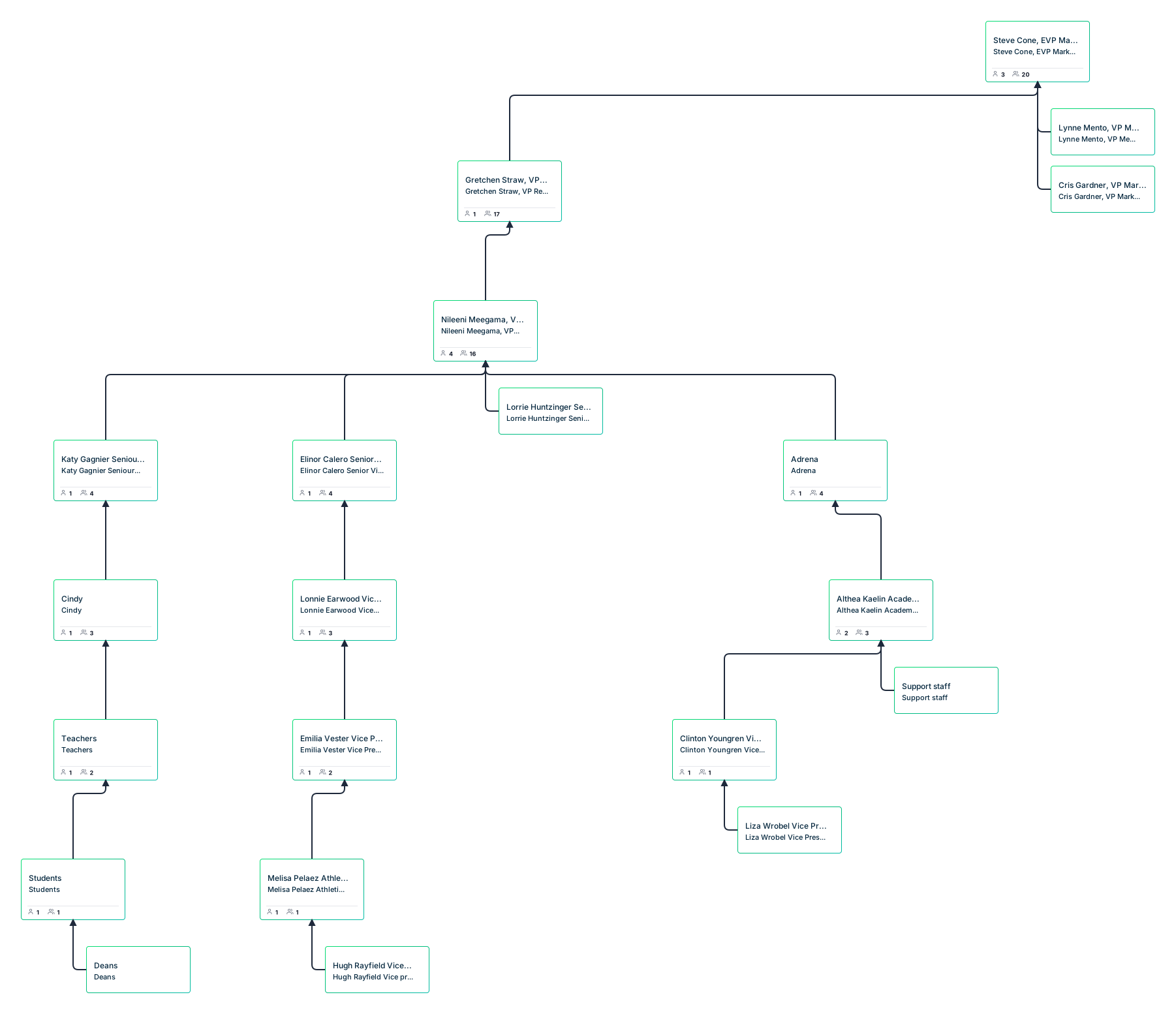
Here’s a hierarchical organizational structure diagram example that illustrates these characteristics.

How to Create a Hierarchical Org Chart
Creating a hierarchical org chart starts with identifying the structure of the organization and then arranging roles in a clear top-down format. Follow these steps to build one that is easy to read and keep updated.
Step 1: Identify the highest leadership role
Start with the top position in the organization, such as the CEO, founder, executive director, or department head. This role sits at the top of the chart and serves as the starting point for the reporting structure below.
Step 2: List direct reports under each leader
Add the people or roles that report directly to the top leader. Then continue working downward by placing each manager’s direct reports beneath them. This helps build a clear chain of command across levels.
Step 3: Group roles by department or function
Organize related roles into departments such as marketing, sales, finance, HR, or operations. Grouping roles this way makes the chart easier to follow and helps show how the organization is divided.
Step 4: Add job titles and employee names
Include the title for each position, and where needed, add the employee’s name and photo. This makes the org chart more useful for team visibility, onboarding, and internal communication.
Step 5: Connect roles with reporting lines
Use lines or connectors to show who reports to whom. Keep the reporting relationships clear and consistent so readers can quickly understand authority and team structure at a glance.
Step 6: Review and update the chart regularly
Check that the chart reflects the current organization structure, especially after hiring, promotions, or restructuring. Keeping it updated ensures it remains useful for planning, communication, and day-to-day reference.
To make this process faster and easier, Creately helps streamline each step with features such as:
- CSV import to upload employee data and auto-build the hierarchy
- Auto-layout to arrange roles into a clean, readable structure
- Quick-create connection dots to add managers and direct reports faster
- Inline editing to update names, titles, and details without opening extra menus
- Real-time collaboration to review and refine the chart with your team
- Easy sharing and exports to use the org chart for onboarding, planning, and presentations
This makes it easier to create, update, and maintain a hierarchical org chart as your organization changes.
Pros and Cons of Hierarchical Structure
A hierarchical structure offers clear control and accountability, but it can also create bottlenecks and reduce agility. The table below outlines the main pros and cons.
| Pros of Hierarchical Structure | Cons of Hierarchical Structure |
| Clear Reporting Relationships – Makes it easy to see who reports to whom, reducing confusion around authority and communication lines. | Slow Decision-Making – Multiple layers of approval can delay decisions, especially in larger organizations. |
| Improved Role Clarity – Clearly defined positions help employees understand their responsibilities and where they fit in the organization. | Reduced Flexibility – A rigid chain of command can make it harder for teams to adapt quickly to change. |
| Better Team Coordination – Helps teams see departmental structure, leadership levels, and how functions are organized. | Communication Barriers – Information often follows formal reporting lines, which can slow communication across departments. |
| Simplified Onboarding – New employees can quickly understand the company structure and identify key managers and team members. | Departmental Silos – Separating teams too strictly can reduce collaboration and encourage isolated decision-making. |
| Stronger Accountability – Clear lines of responsibility make it easier to track ownership, oversight, and performance. | Reduced Innovation – Employees at lower levels may feel less encouraged to share ideas in a top-down structure. |
| Supports Growth and Planning – The structure can be expanded as the organization grows, helping leaders plan teams and reporting lines more effectively. | Higher Maintenance – Org charts need regular updates to stay accurate during hiring, restructuring, or role changes. |
If you’re looking to build a clear, functional org chart for your own team, check out our step-by-step guide on how to create an org chart complete with examples, templates, and design tips.
Flat vs Hierarchical vs Matrix Structure: Key Differences
A flat, hierarchical, and matrix structure each organize teams in different ways. The right model depends on how much management oversight, reporting clarity, and cross-functional collaboration an organization needs.
| Aspect | Flat Structure | Hierarchical Structure | Matrix Structure |
| Structure Shape | Broad with few management layers | Tall with multiple levels of management | Grid-like, with dual reporting lines across functions and projects |
| Decision-Making | Usually faster because fewer approvals are needed | Often slower because decisions move through several levels | Can be slower or more complex because multiple managers may be involved |
| Chain of Command | Short and less formal | Clear and strictly defined | Shared between functional and project managers |
| Communication Flow | More open and direct across levels | More structured and top-down | Cross-functional, but sometimes more complicated |
| Flexibility | High, with quicker adaptation to change | Lower, due to formal structure and defined roles | High, especially for project-based and cross-functional work |
| Employee Involvement | Higher, with more autonomy and participation | More limited, especially in lower levels | Moderate to high, depending on team and reporting setup |
| Supervision Level | Lower, with fewer managers overseeing teams | Higher, with closer supervision and clearer authority | Shared supervision across more than one manager |
| Workload Distribution | Can become uneven if responsibilities are not clearly defined | Usually more structured because roles are clearly assigned | Can be harder to balance because employees may handle both functional and project work |
| Innovation and Creativity | Often stronger because employees have more freedom | Can be slower if approval-heavy processes limit idea-sharing | Strong for collaborative problem-solving, but can be affected by competing priorities |
| Best Suited For | Startups, small teams, and agile companies | Medium to large organizations with clear departments and reporting lines | Organizations managing cross-functional teams, large projects, or global operations |
To learn how flat organizational structures function in practice, check out our detailed guide on org charts with flat organizational structure.
Free Org Chart Templates to Get Started
Now that you know what is a hierarchical structure and how to visualize one, here are some hierarchical structure examples to get started.


FAQs about Org Charts with Hierarchical Structure
Who should use a hierarchical management org chart?
How can hierarchy structure org charts improve communication?
What are the main components of a hierarchical org chart?
Can a hierarchy organizational structure change as a company grows?
How do you keep a hierarchy structure diagram up to date?
Resources
Sims, Benjamin H, et al. “Hierarchical and Matrix Structures in a Large Organizational Email Network: Visualization and Modeling Approaches.” Lecture Notes in Social Networks, 1 Jan. 2014, pp. 27–43, https://doi.org/10.1007/978-3-319-12188-8_2.
Zhang, Jiawei, et al. “Organizational Chart Inference.” Proceedings of the 21th ACM SIGKDD International Conference on Knowledge Discovery and Data Mining - KDD ’15, 2015, https://doi.org/10.1145/2783258.2783266.