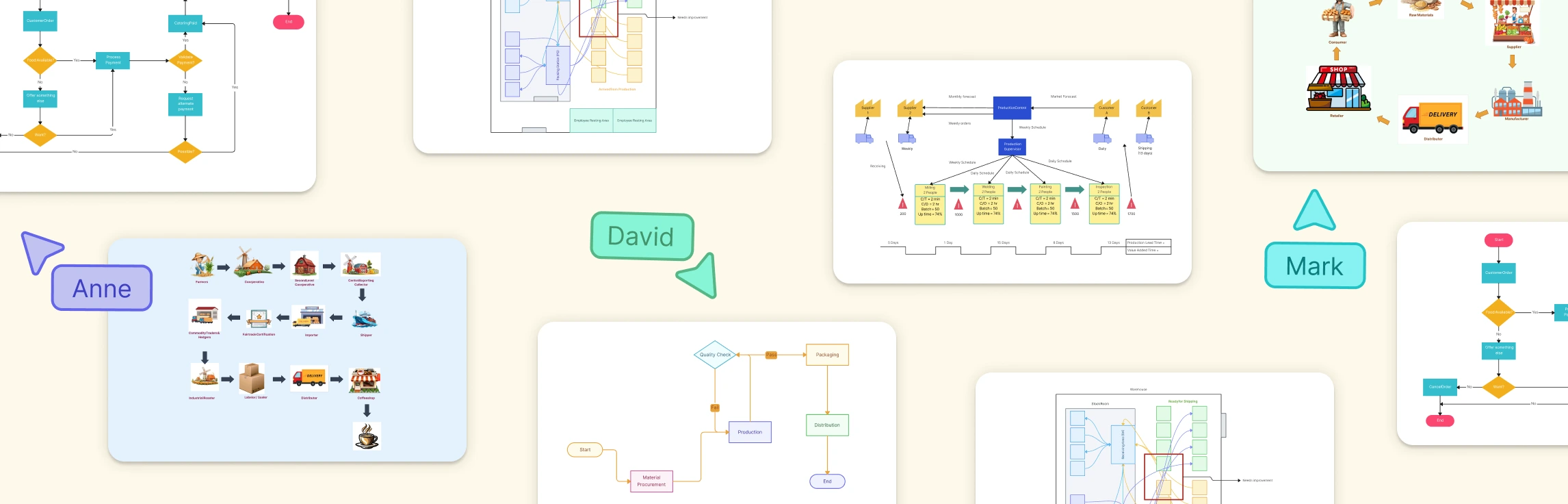
Supply chain diagram examples show how materials, information, money, and responsibilities move from suppliers to end customers. They help teams understand complex networks, clarify handoffs, and choose the right level of detail for planning or improvement. The eight examples below cover end-to-end supply chains, value streams, production workflows, order fulfillment, and physical movement through a facility.
In a value chain vs. supply chain comparison, the main difference is scope. A value chain examines how a business creates customer value and competitive advantage, while a supply chain focuses on how materials, information, and products move from suppliers to customers. Understanding the difference helps teams choose the right framework for strategy, operations, logistics, and process improvement.
A distribution network connects manufacturers to consumers, optimizing storage and transportation for efficient and cost-effective delivery. By enhancing operational efficiency, scalability, and team collaboration, a well-designed network ensures timely delivery and reduces costs. This guide highlights strategies to boost logistics efficiency and teamwork, leveraging technologies like AI to transform operations.
Supply chain mapping documents how goods, information, money, and responsibilities move across a supply network. It helps teams understand suppliers and dependencies, investigate operational risks, and coordinate improvement work. This guide explains what to include in a supply chain map, how to build one, and how to keep it useful as the network changes.
In today’s fast-paced business environment, effective logistics optimization is essential for organizations striving to enhance their operational efficiency and maintain a competitive edge. This guide aims to explore the concept of logistics optimization and provide practical insights for implementing it in your business. We will begin by exploring what logistics optimization entails delving into the numerous benefits that effective logistics optimization can offer. Next, we will outline the critical stages of logistics optimization, providing a structured approach to streamline your processes. Finally, we will introduce seven essential diagrams designed to facilitate effective logistics optimization, enabling you to visualize and implement strategies that unlock efficiency within your supply chain. Whether you are a logistics professional or a business leader, this guide will equip you with the knowledge and tools necessary to enhance your logistics operations and drive success.
Supply chain visualization uses diagrams, maps, charts, and dashboards to make complex networks easier to understand. These visuals can show how products, information, money, and responsibilities move from suppliers through production and distribution to customers. When they are based on reliable operational data, they help teams investigate bottlenecks, dependencies, risks, and performance trends. This guide explains the main visualization techniques, what each one is suited to, and how teams can use them to support supply chain decisions.
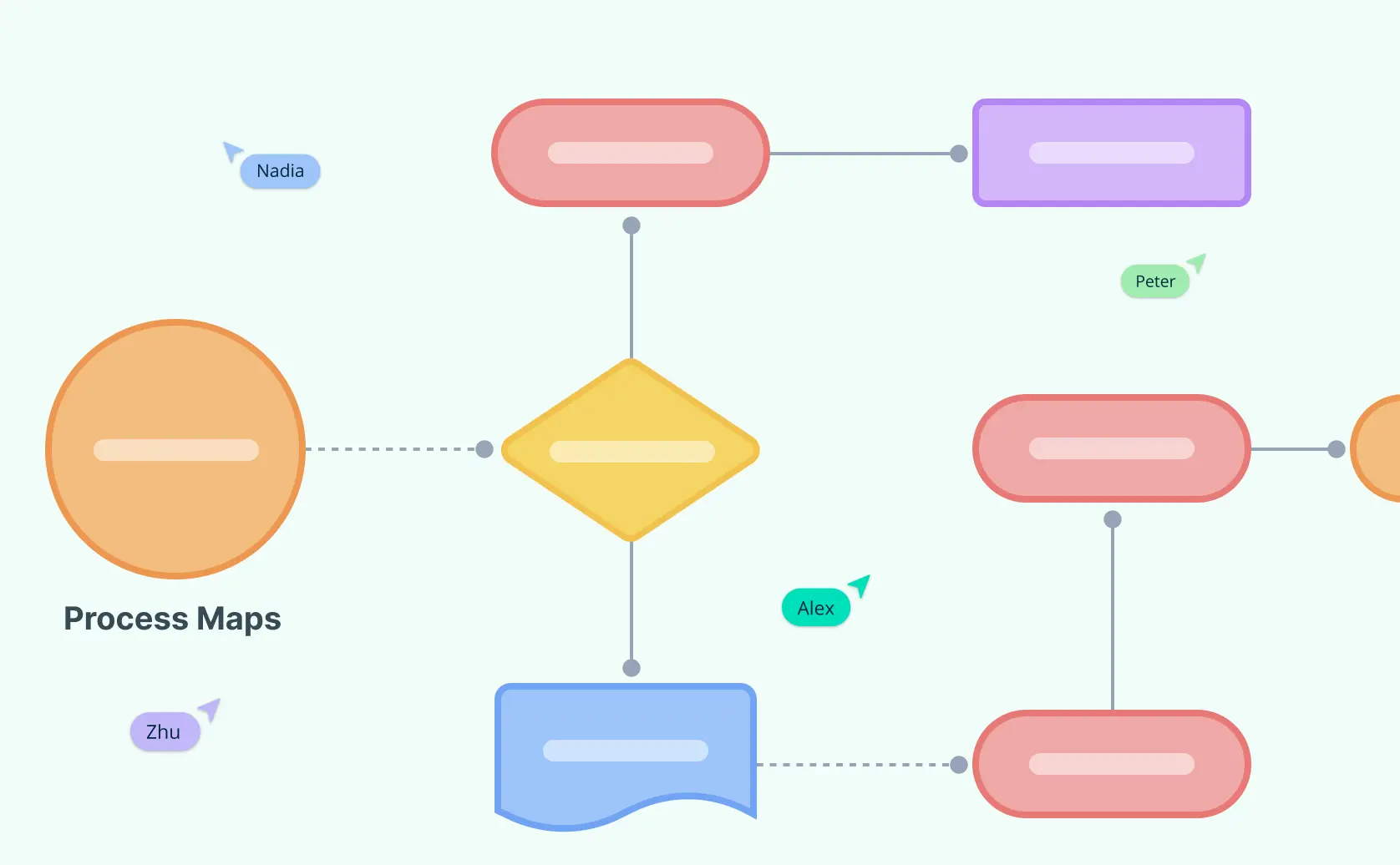
What are Process Maps? Process maps are essential tools used across various industries to visualize workflows, enabling teams to gain a comprehensive understanding of processes. They serve as visual guides that detail every step, decision point, and interaction within a process. By illustrating how tasks are connected, process maps help identify inefficiencies, streamline procedures, and enhance team collaboration.
Defining Business Processes Business processes are the structured activities or tasks implemented within an organization to produce a specific service or product. At their core, they are the backbone of organizational operations, impacting everything from workflow efficiency to product quality. Understanding these processes is pivotal as it paves the way for systematic improvements and resource optimization.
As businesses navigate an increasingly interconnected global marketplace, the ability to visualize, analyze, and optimize distribution networks has become crucial for maintaining competitive advantage. Modern distribution management requires not just efficient movement of goods, but also seamless collaboration between stakeholders, real-time adaptability, and data-driven decision-making capabilities.
Understanding Process Map vs Value Stream Map Mapping is a critical component in business process management, directly influencing the efficiency and effectiveness of operations. Two frequently used mapping tools are the process map and the value stream map, each serving distinct purposes.