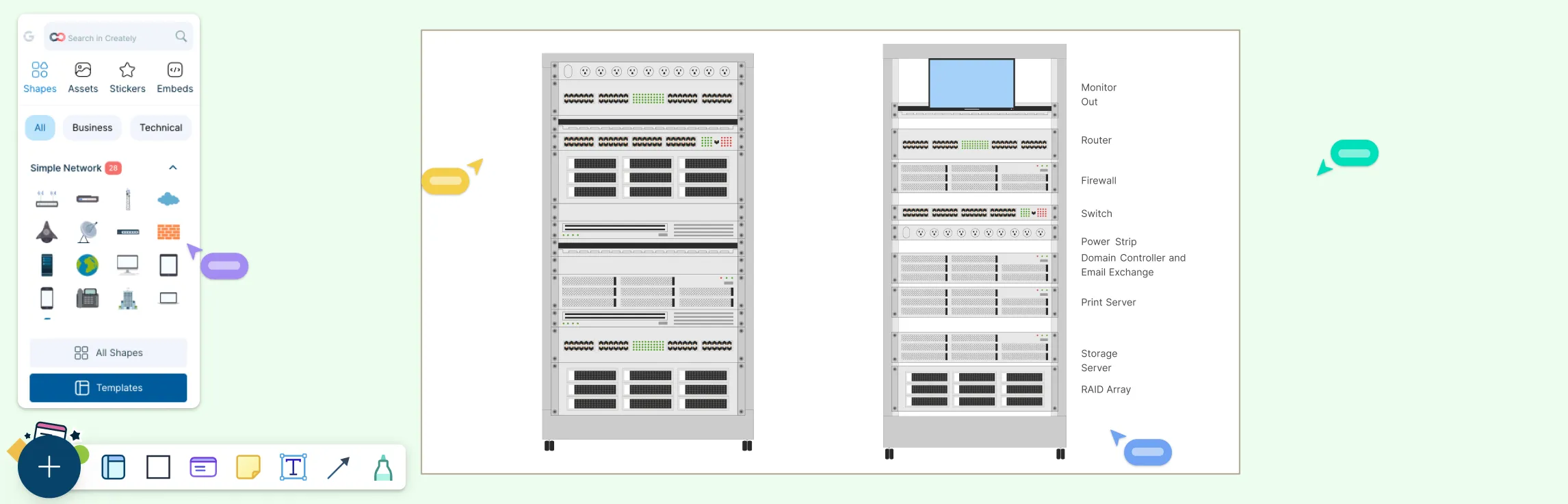
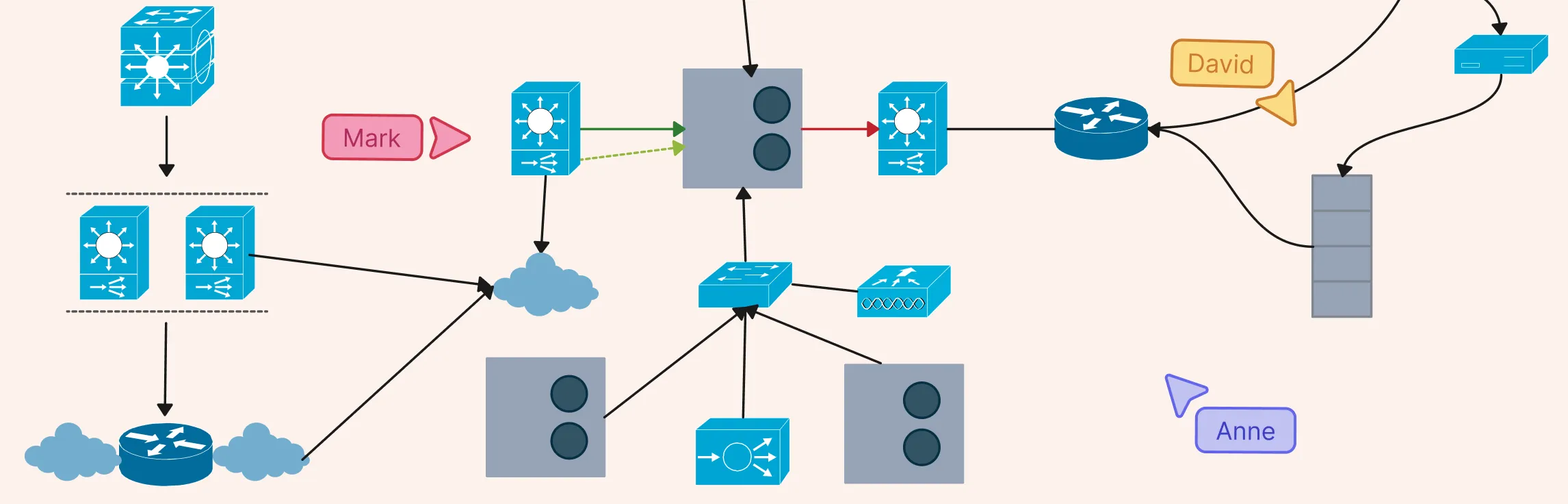
Managing servers, switches, and network gear requires clarity and precision. Whether you’re planning a new deployment, reorganizing a rack, or documenting existing infrastructure, a clear visual layout keeps everyone aligned and prevents costly mistakes. In this guide, you’ll learn how to create rack diagrams that are accurate, scalable, and easy to maintain—so you can plan smarter, troubleshoot faster, and keep your infrastructure organized.
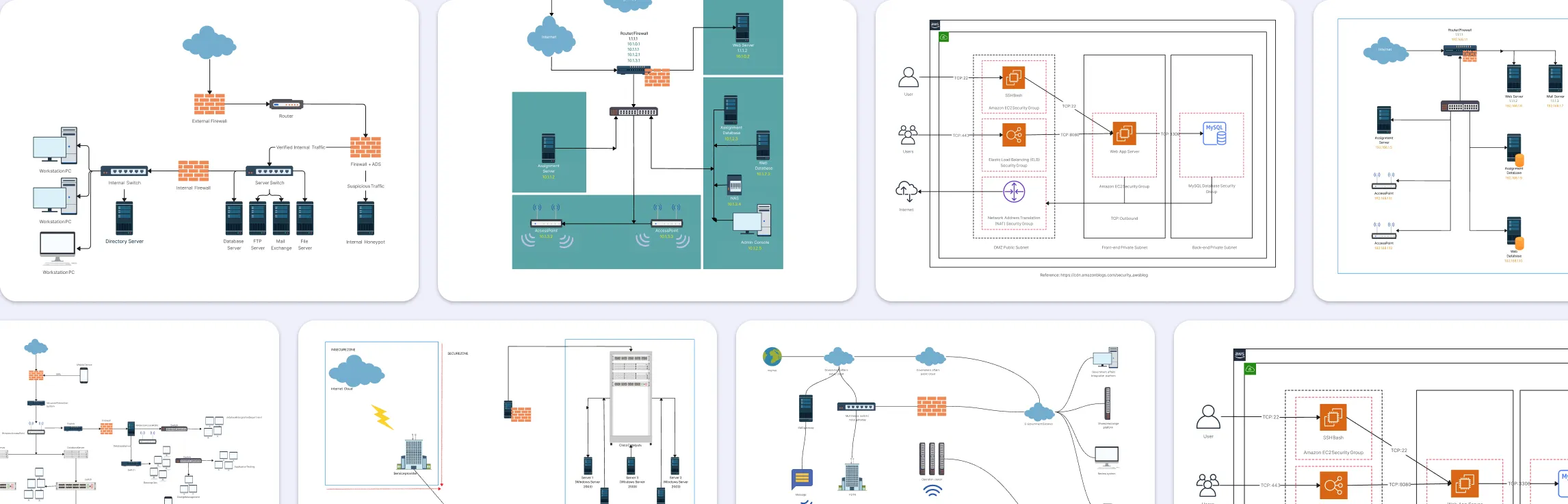
Network security diagrams help teams spot vulnerabilities, plan controls, and communicate network design clearly. Used by admins, architects, and auditors, they turn complex networks into easy-to-understand visuals. This guide showcases practical network security diagram examples and templates you can use to strengthen your network.
Network diagrams are the backbone of modern IT infrastructure work. They help teams design networks, document what’s actually deployed, troubleshoot issues faster, and explain complex setups without long meetings or guesswork. But not all diagramming tools are built for this kind of work. The right tool makes it easier to be precise, keep diagrams up to date as the network evolves, and ensure network engineers, operations, and security teams are aligned around a single source of truth. The wrong one leads to messy diagrams, outdated documentation, and costly misalignment when it matters most.
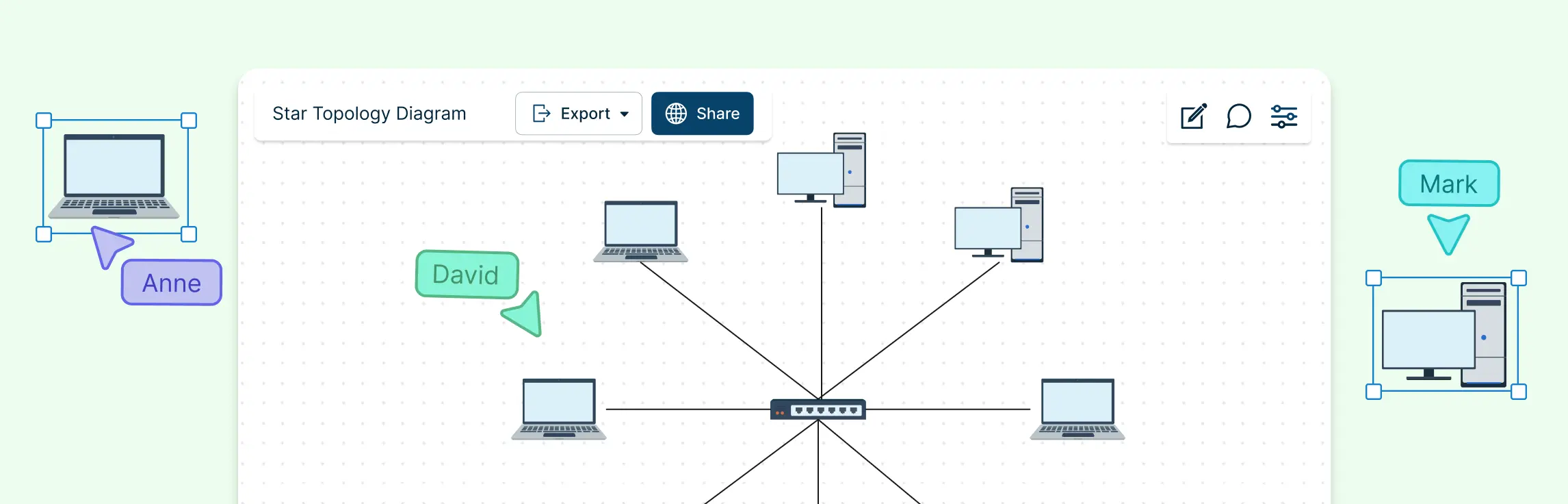
Ever stared at a messy network diagram and felt your head spin? Many teams struggle with scattered connections, confusing layouts, and endless troubleshooting, especially when networks grow beyond a few devices. That’s where a star topology comes in: a simple, organized way to connect devices with a central hub, making your network clear, manageable, and scalable. In this guide, we’ll discuss the different types of star topologies and 10 practical star topology examples that you can explore.
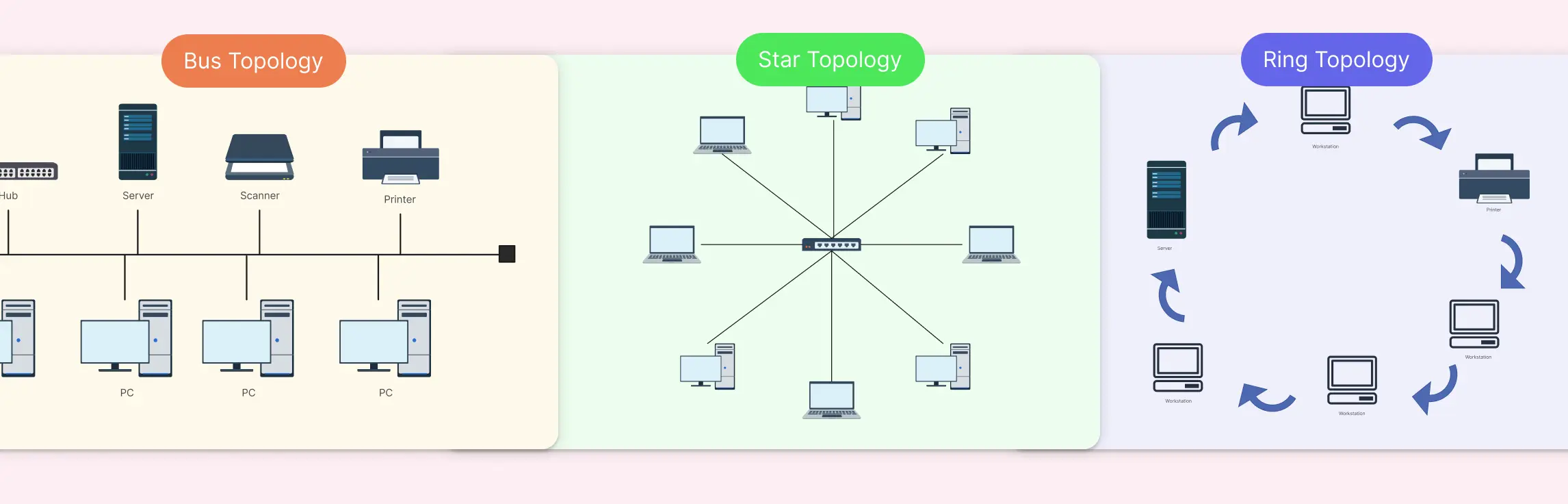
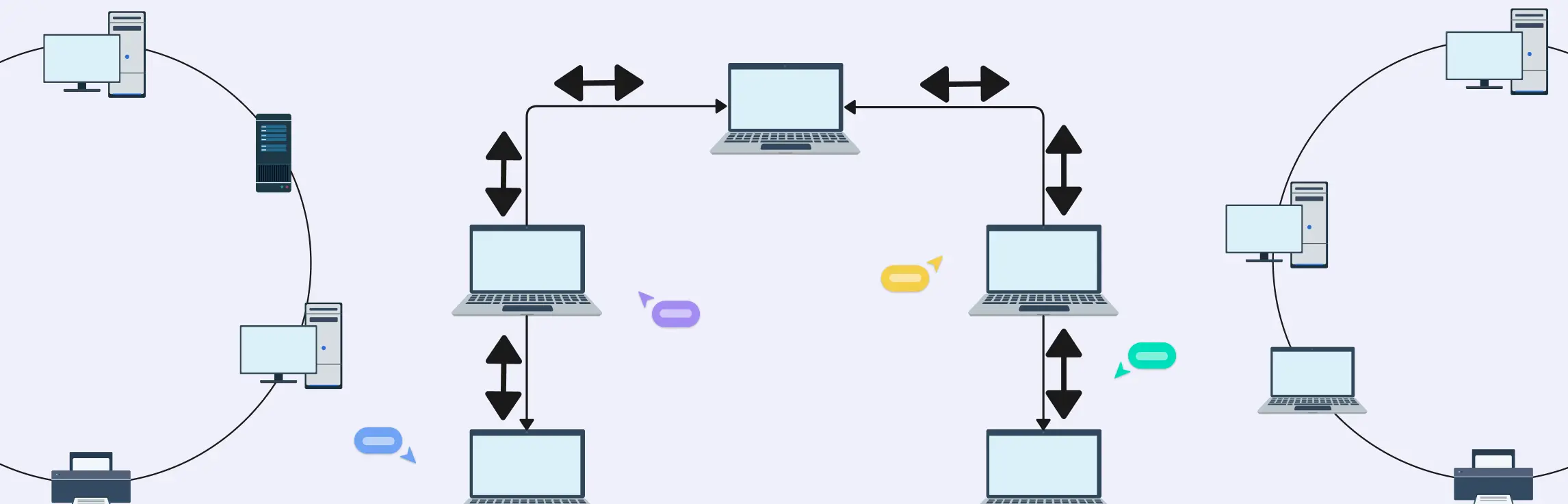
Choosing the right network topology can feel like navigating a maze; one wrong decision, and you’re stuck with slow data flow, troubleshooting headaches, and scattered team workflows. That’s exactly why comparing Bus, Star, and Ring Topology upfront can save hours of frustration and keep your network running smoothly. In this guide, we’ll break down each topology, highlight the differences, and show you practical ways to visualize your network with ready-to-use templates.
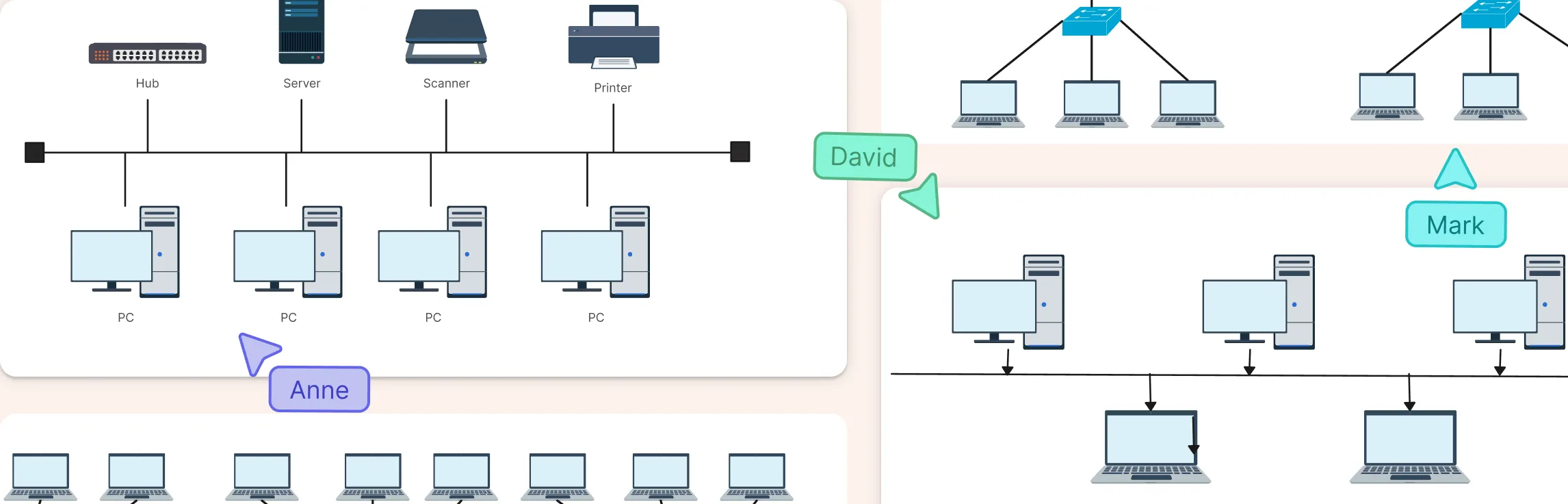
Bus topology remains one of the simplest ways to structure a network, with all devices connected along a single shared communication line. While bus topology is less common in modern enterprise networks, bus topology still appears in legacy systems, industrial environments, and specialized setups. This guide brings together practical bus topology examples to show how this layout is used across different real-world scenarios.
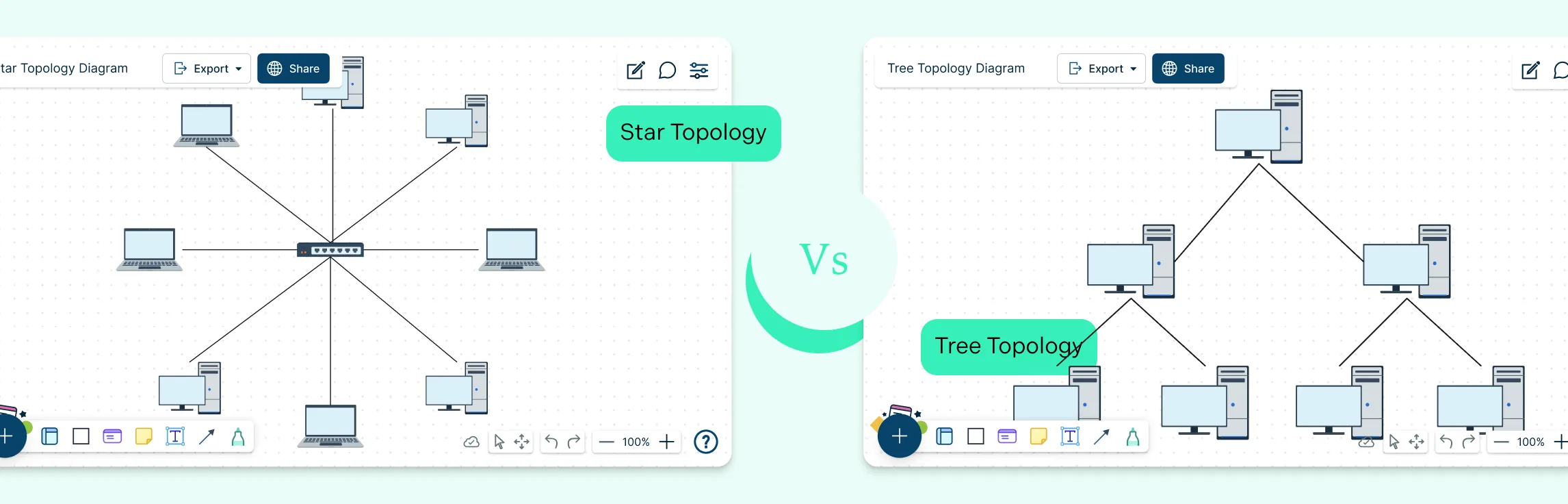
Choosing the right network topology plays a big role in how efficiently a network performs and scales over time. Star and tree topologies are two widely used structures, each offering different strengths when it comes to layout, reliability, and expansion. This guide breaks down the key difference between star and tree topology to help you understand how they compare and when each one makes the most sense.
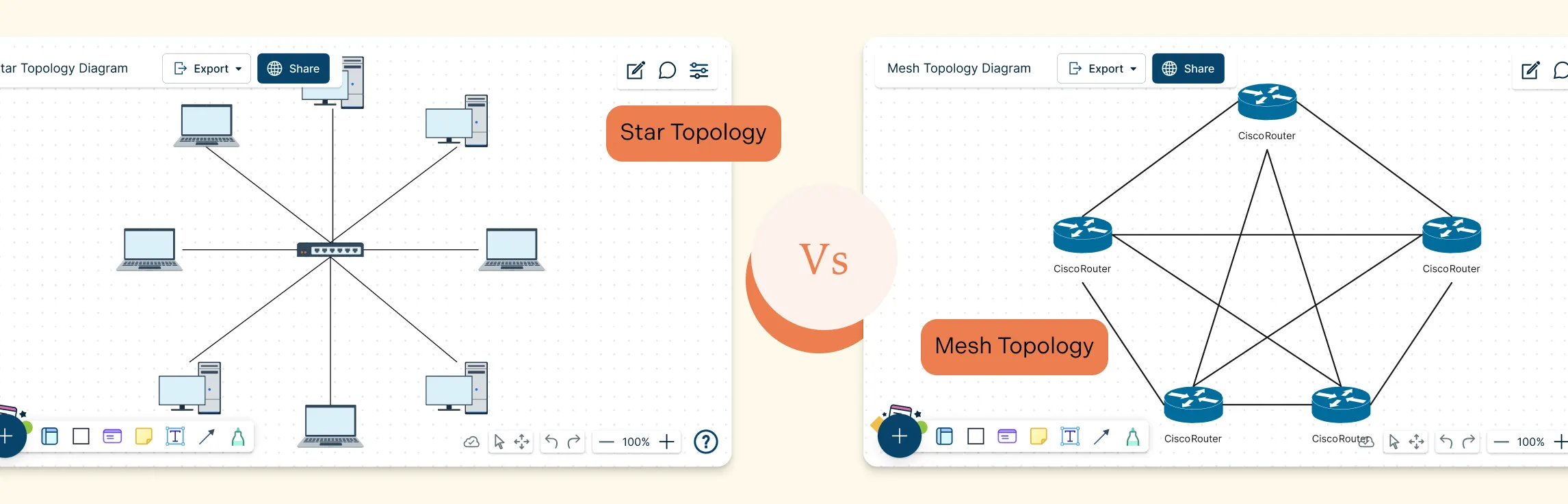
Choosing the right network layout can make all the difference in performance, reliability, and scalability. Star and Mesh Topology are two of the most popular designs, each offering unique ways to connect devices and manage data flow. Whether you’re building a small office network or a large, high‑availability system, understanding Star and Mesh Topology helps you make smarter design decisions, troubleshoot effectively, and ensure your network can grow with your needs.
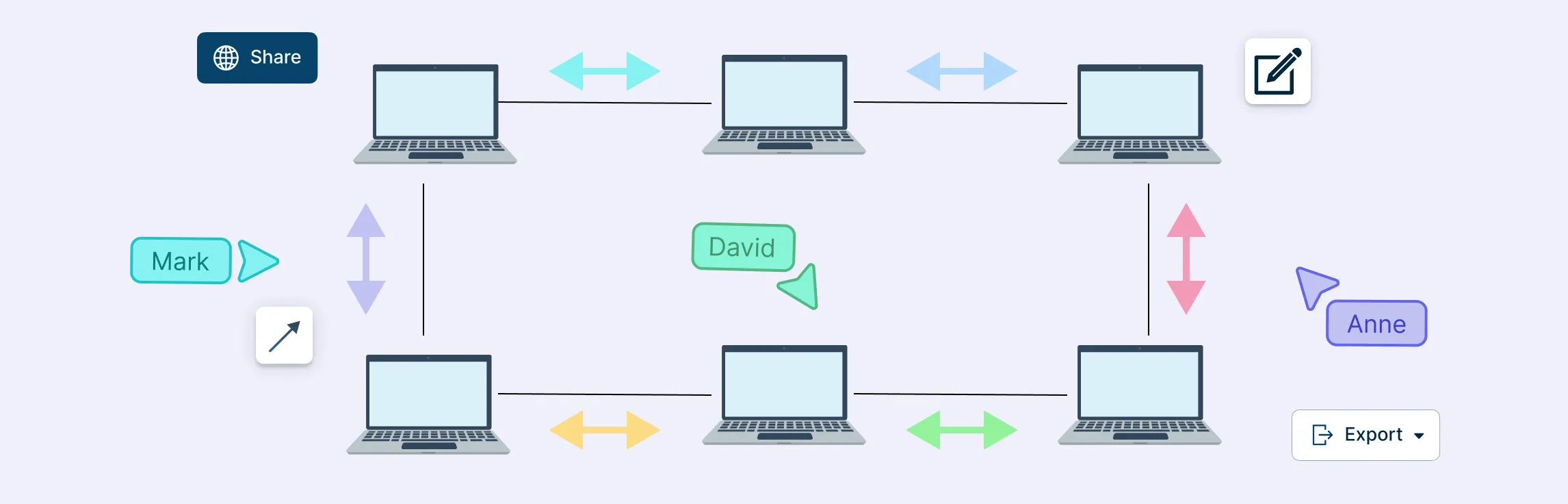
A ring network topology connects devices in a circular loop so each node links to exactly two neighbors, forming a closed path for data to travel either unidirectionally or bidirectionally. Ring topologies can be simple logical designs or part of hybrid network setups — they’re valuable for planning, documentation and troubleshooting network traffic paths.
Visualizing your network’s security setup is key to keeping systems safe and organized. Firewall network diagrams help IT teams see how traffic flows, identify weak points, and plan robust defenses. In this guide, we’ll explore practical examples and templates you can use to design clear, effective firewall diagrams for any network.
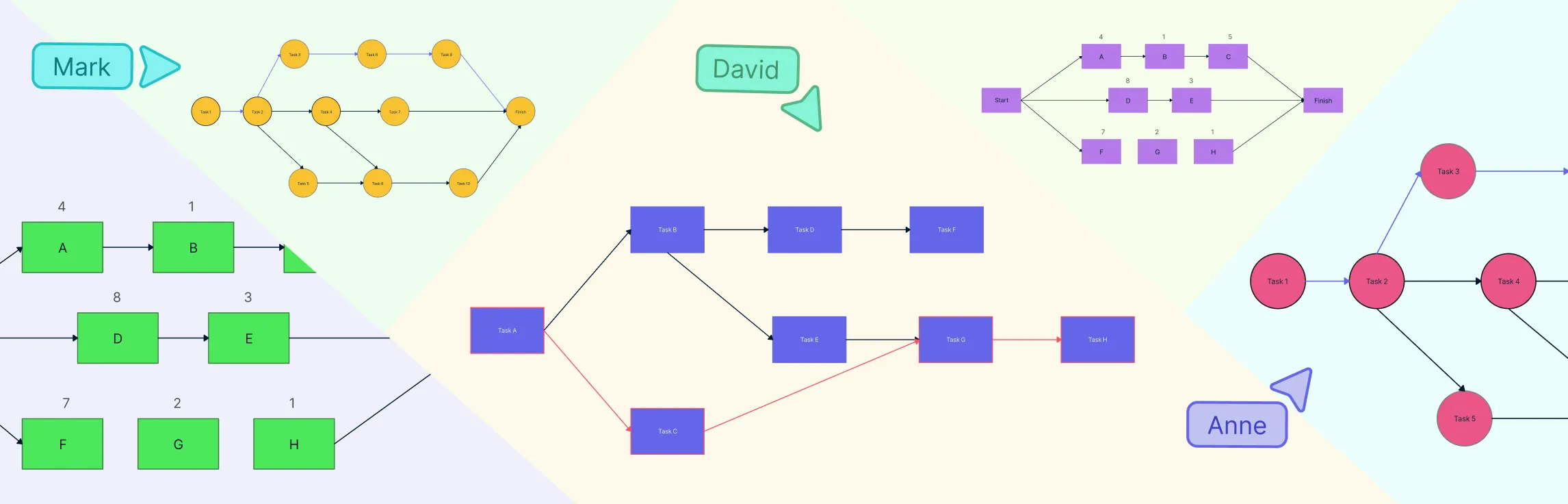
Want clearer project timelines and fewer surprises? Network diagrams and the critical path method (CPM) help you visualize how tasks connect, depend on one another, and ultimately drive your project schedule. A network diagram maps the flow of work, while the critical path — the longest chain of dependent tasks — defines the shortest possible project duration. Since any delay on this path delays the entire project, understanding these tools is essential for realistic planning, early risk detection, and staying on track.
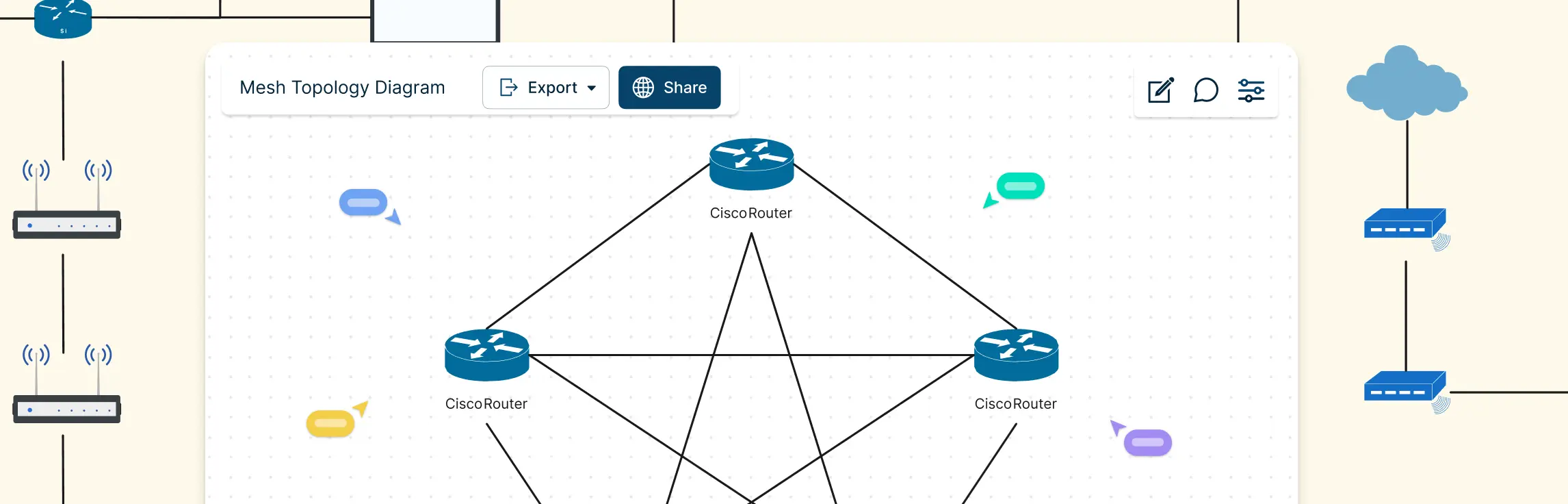
Mesh topology has become increasingly important as modern networks demand higher reliability, flexibility, and uninterrupted connectivity. Designed to keep data flowing even when individual connections fail, this network structure is widely used in environments where uptime and resilience matter most. Industry experts often highlight its ability to support dynamic routing, making it well-suited for wireless networks, IoT systems, and large-scale infrastructure. This guide walks you through mesh topology in computer network from a practical perspective, helping you understand its behavior, strengths, and structure through clear explanations and diagrams.
Network diagrams are the foundation of understanding how data flows in different network designs, and ring topology diagrams have a special place in that world because of their unique circular communication pattern. While ring topology might seem simple at first glance, they pack a lot of interesting behavior—from predictable traffic flow and equal access for all devices to the engineering trade-offs that make them both powerful and challenging in real deployments. This guide walks you through ring topology diagrams, how they work, and their practical applications in real-world networks.
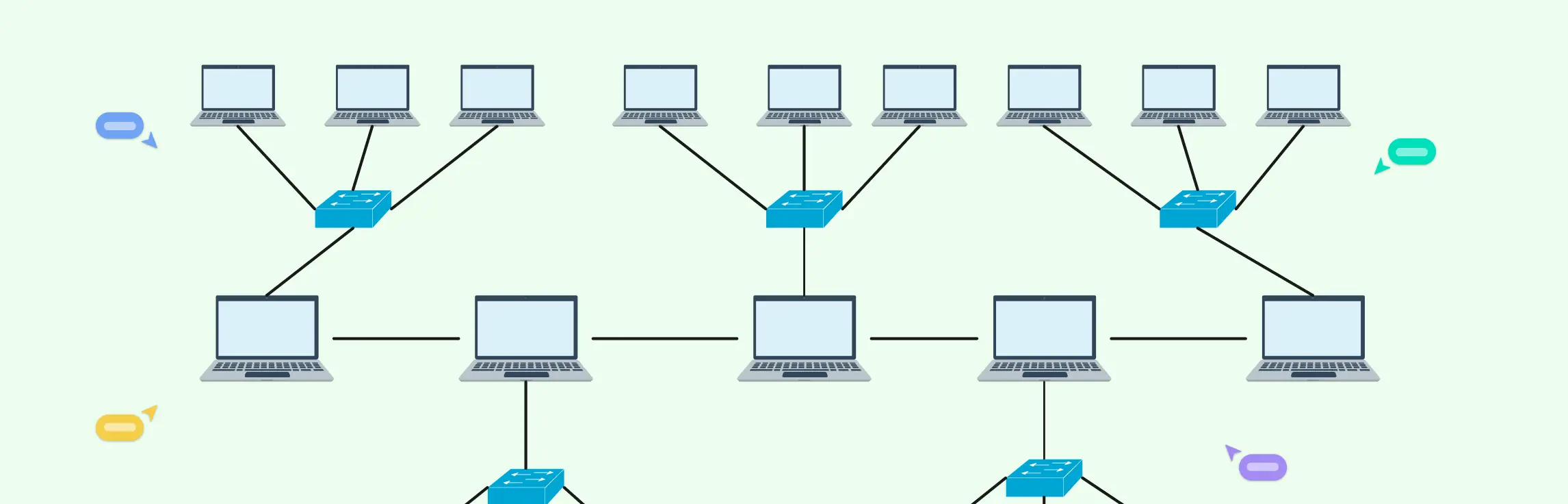
When you’re planning or managing a real-world network, clarity and control matter more than ever—and that’s where tree topology stands out. With their hierarchical layout and clearly defined branches, these diagrams make it easier to scale networks, organize complex infrastructure, and pinpoint issues without disrupting the entire system. This guide will take you through the essentials of tree topology, from how it works and its key characteristics to practical examples and diagramming tips, helping you design, visualize, and troubleshoot networks with confidence.
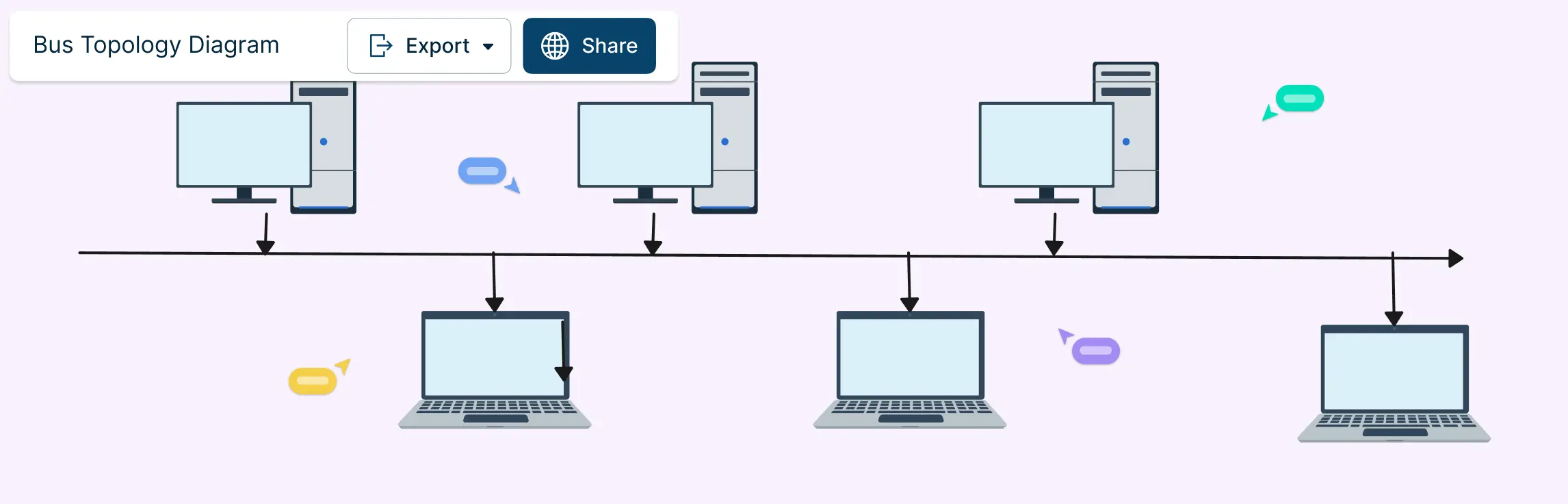
Bus topology is often one of the first network layouts people encounter because it’s simple, visual, and easy to follow. In this guide, you’ll learn how bus topology diagrams are structured, how data moves across the shared backbone, and what the layout looks like in real-world and learning scenarios. We’ll break down key bus topology diagram elements, highlight common design patterns, and point out the limitations you need to account for when working with this topology.
A network diagram is a visual representation of system components—such as devices, servers, and applications—and how they’re connected. It shows how data, traffic, or dependencies flow across a network, making complex systems easier to understand at a glance. In this guide, you’ll learn how to draw a network diagram step by step, from planning what to include to laying out components clearly and choosing the right symbols.
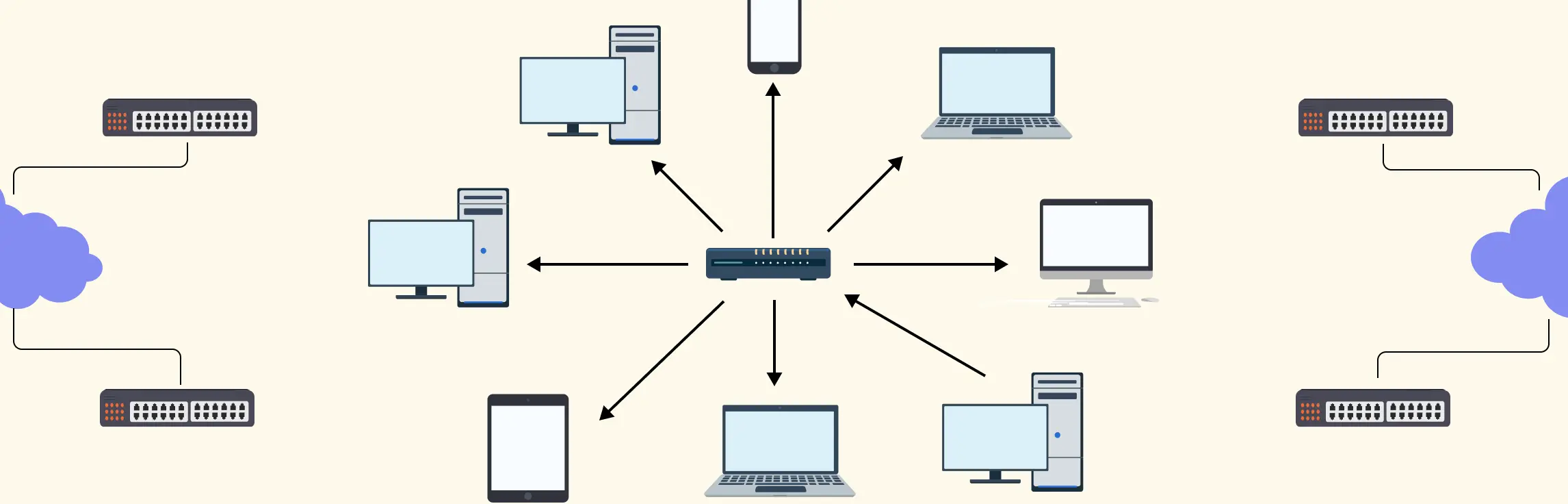
A star topology makes networks easy to see, manage, and troubleshoot by connecting all devices to a central hub or switch. The key is clarity and simplicity — a well‑designed diagram instantly shows how devices interact and highlights potential issues. In this guide, you’ll learn how to create a clear, professional network star topology diagram that communicates your network at a glance.
Designing a well-structured database starts with understanding how to represent data and its relationships clearly. One of the most influential tools for this is Chen notation, a visual language used in Entity-Relationship diagrams.
In database design, understanding how different entities relate to each other is essential for creating efficient and accurate data models. One of the most straightforward yet powerful types of relationships is the one-to-one relationship. This occurs when each record in one table is linked to exactly one record in another table—and vice versa.
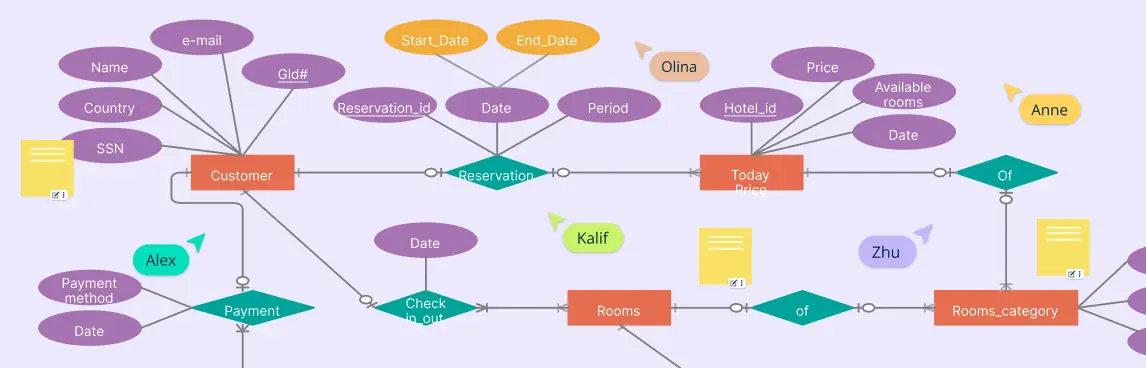
An ER diagram for a hotel management system is a simple way to show how all the parts of a hotel work together in a database. Whether you’re building hotel software or just trying to understand how hotel data is stored and managed, an ER diagram helps map out everything clearly—from guests and rooms to bookings and staff.
In database design, not all entities can stand on their own. Some rely on other entities to make sense or to be uniquely identified. These are called weak entities. They are an important part of ER diagrams, especially when modeling real-world situations where certain data cannot exist without being linked to other data.
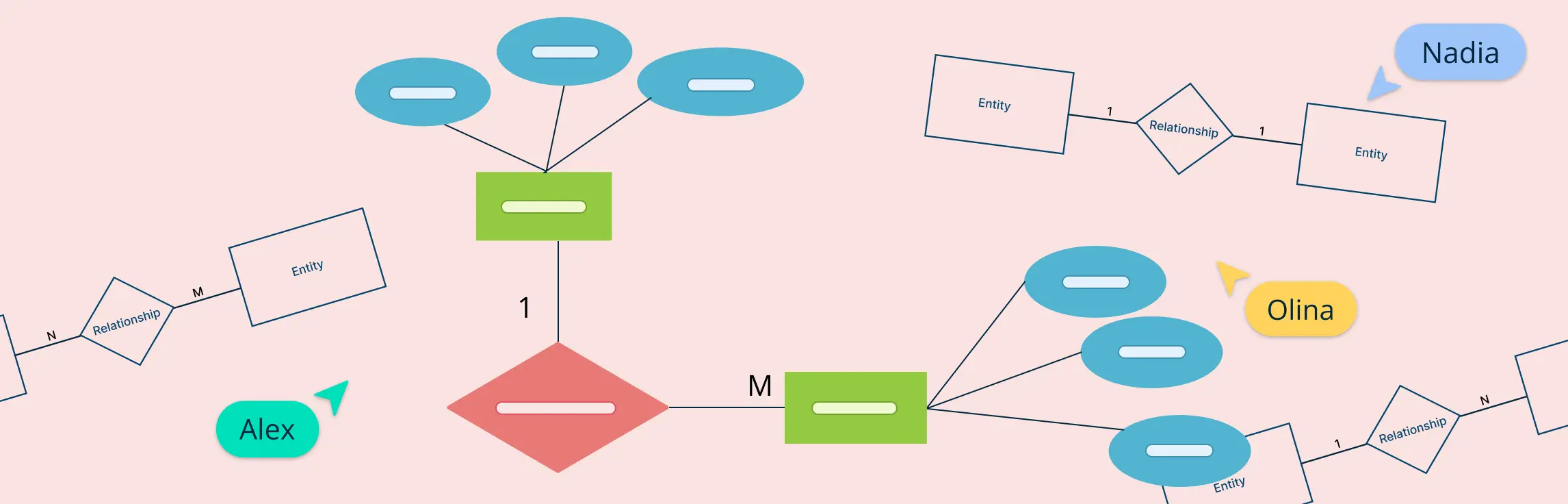
An entity relationship diagram is a visual representation of the structure of a database. It illustrates how entities (such as people, objects, or concepts) relate to one another within a system. Entity relationship diagrams are essential for designing databases, ensuring data is organized efficiently, and facilitating clear communication among stakeholders.
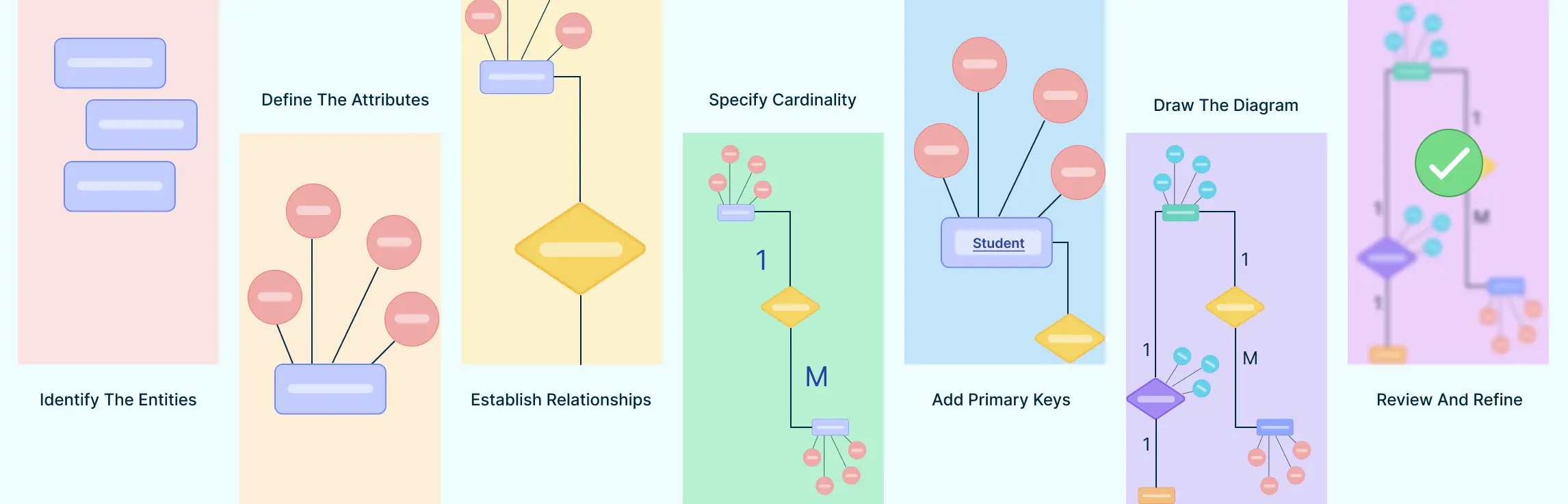
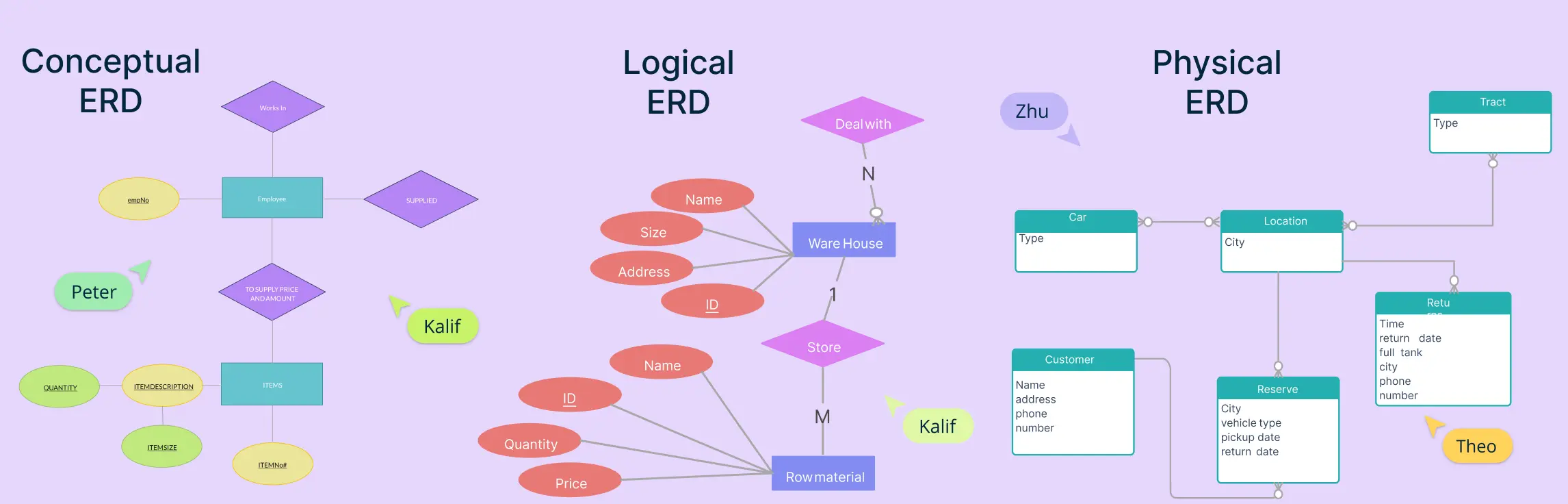
When designing a database, one of the most important steps is understanding how information connects and flows. That’s where Entity-Relationship Diagrams (ERDs) come in. ERDs help us map out the key parts of a system—like people, products, or events—and how they relate to one another.
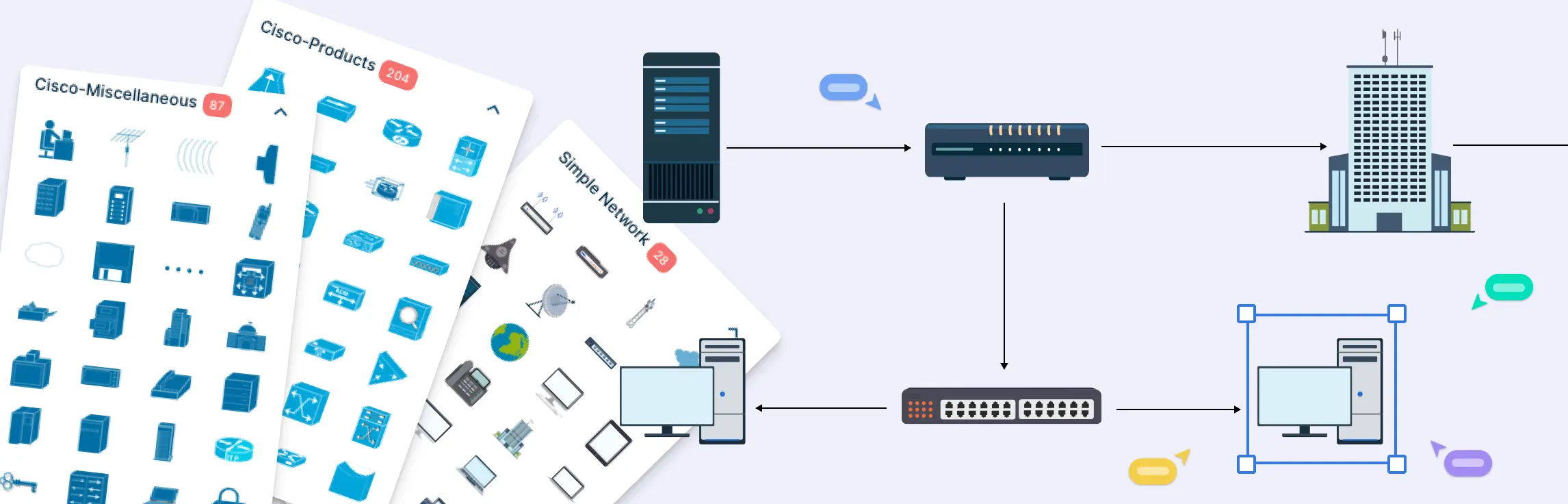
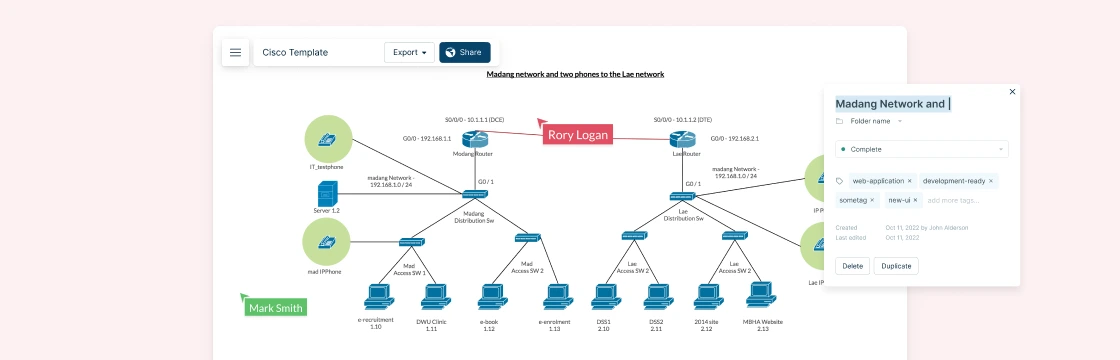
Cisco network topology diagrams play a critical role in how modern networks are designed, managed, and explained. For network engineers and IT teams working with Cisco environments, a clear visual layout of devices and connections makes it easier to plan architectures, communicate designs, and troubleshoot issues faster. In this guide, you’ll learn how to approach Cisco network topology diagrams with confidence and create visuals that are practical, accurate, and easy to understand.