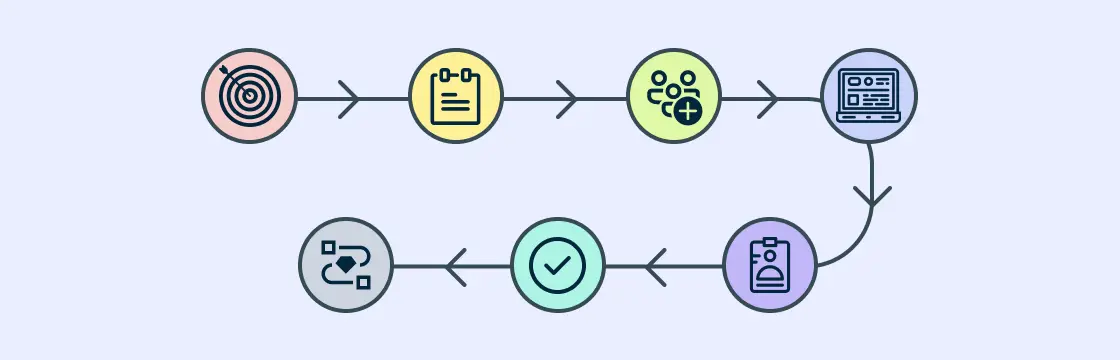
The recruitment life cycle is the end-to-end hiring process, from identifying a staffing need and sourcing candidates to selection, offer, and onboarding. Full cycle recruiting usually refers to managing this sequence as one connected process, whether one recruiter coordinates it or responsibilities are shared across a hiring team.
Understanding the recruitment lifecycle helps HR professionals and hiring managers define each stage, clarify decision criteria, and coordinate handoffs. A visible workflow can connect owners, interview guidance, approval points, and supporting documents so stakeholders can review and maintain the process together.
Having a clear understanding of the recruitment lifecycle is essential for several reasons:
- Efficiency: A well-defined recruitment process can reduce avoidable delays and make responsibilities easier to coordinate.
- Consistency: Standardized stages, job-related criteria, and structured evaluation methods help teams assess candidates more consistently.
- Compliance: Documented selection criteria and decision points can support compliance, but organizations should review the process against the employment and privacy requirements that apply to them.
- Candidate Experience: Clear expectations, timely communication, and transparent next steps can create a more consistent candidate experience.
These benefits depend on how consistently the process is applied, reviewed, and improved.
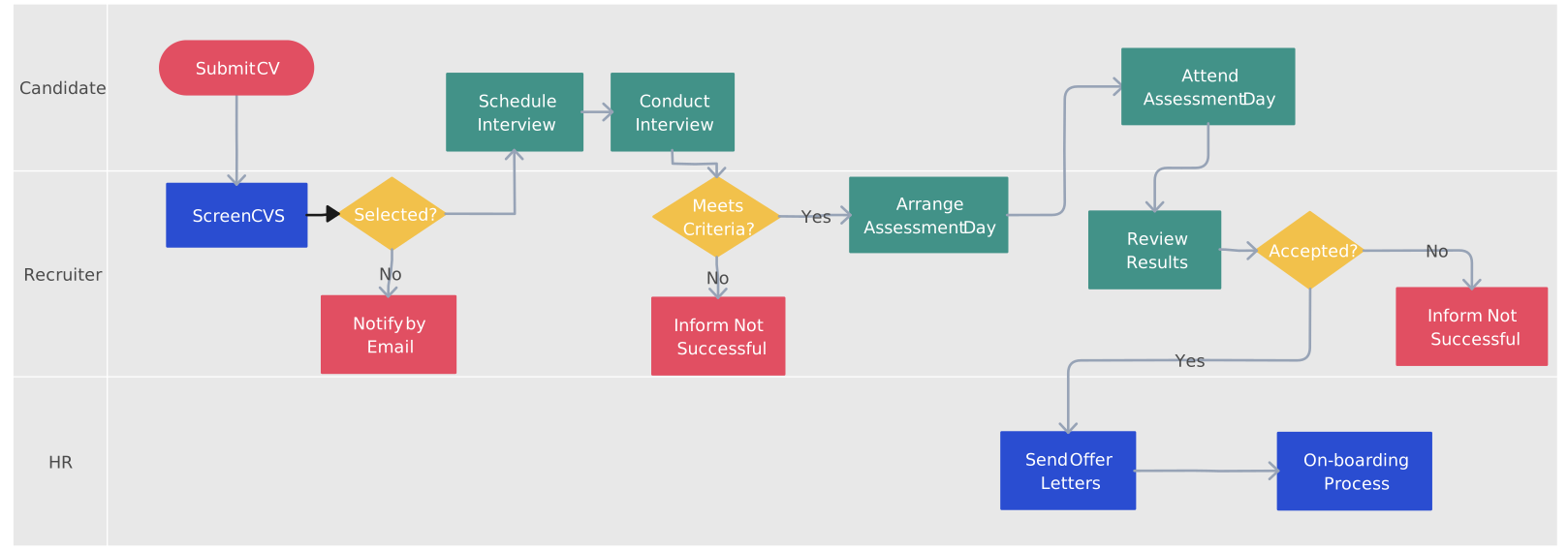

Full Cycle Recruiting: Stages of the Recruitment Life Cycle
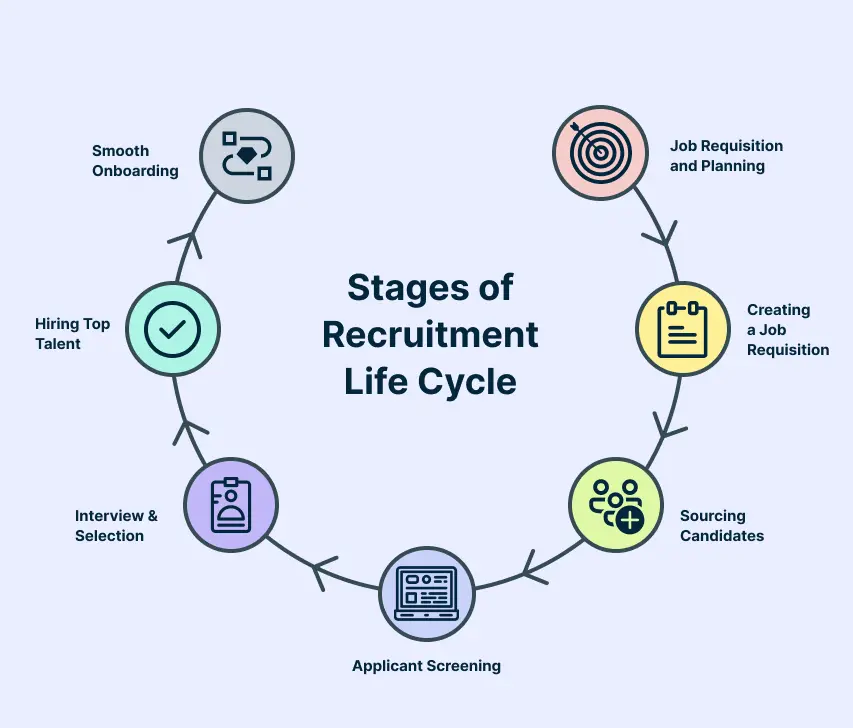
The recruitment lifecycle covers the connected stages used to plan and complete a hire. In a full cycle recruiting model, one recruiter may coordinate the process from requisition to onboarding; in other organizations, a recruiting team shares responsibility. In either model, named owners and documented handoffs make accountability clearer.
Each stage affects the next, so teams should review the lifecycle as one workflow rather than optimize individual activities in isolation.
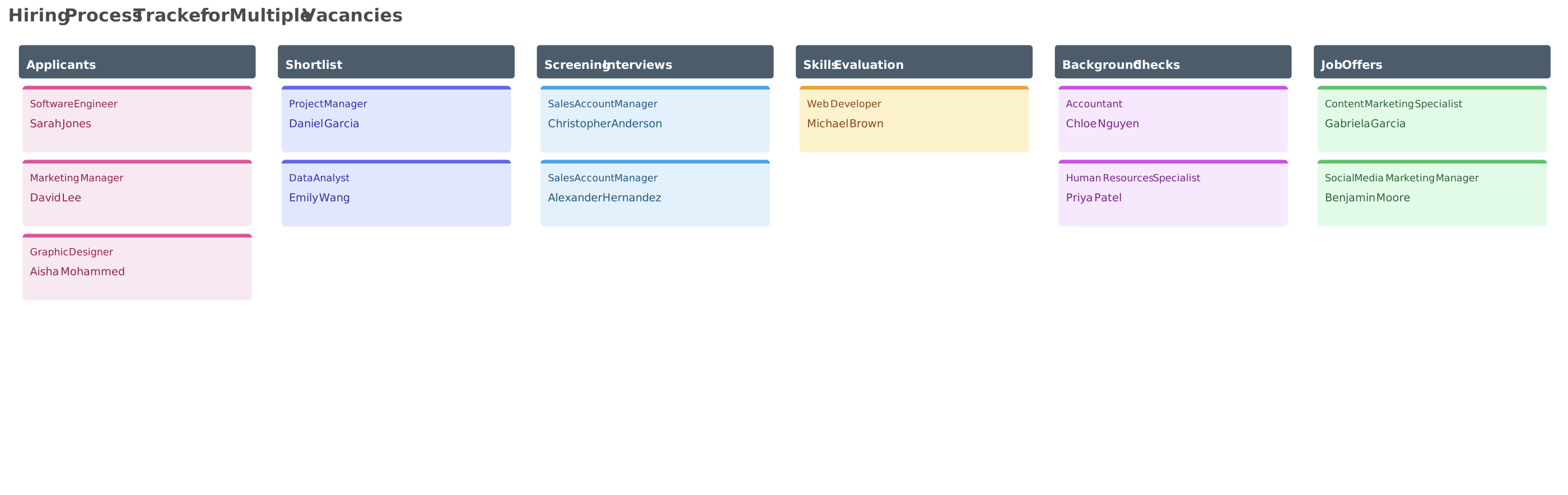
Stage 1: Job Requisition and Planning
Identifying Hiring Needs
The first step in the recruitment lifecycle is identifying the need for a new hire. This involves understanding the gaps in your current team and determining the skills and roles required to fill those gaps. Collaborate with department heads and team leaders to get a clear picture of the needs.
Creating a Job Requisition
Once the hiring need is identified, create a job requisition that gives stakeholders a shared basis for approval and sourcing. Record who owns the request, who approves it, and what information must pass from the hiring manager to the recruiting team. Include the following essential details:
Job Title: Clearly state the title of the position.
Department: Specify the department where the new hire will work.
Responsibilities: List the key responsibilities and tasks.
Qualifications: Detail the necessary skills and experience.
Budget: Include the salary range and any other financial considerations.
Set Recruitment Goals
Set realistic recruitment goals and timelines using role requirements, available resources, and historical hiring data. Track measures such as time in stage, candidate withdrawal, and completion of required evaluations instead of relying only on the number of interviews. These measures can reveal delays without encouraging teams to sacrifice evaluation quality for speed.
Collaboration with stakeholders is essential throughout this stage. Regular meetings and updates can help in aligning the recruitment strategy with the overall business goals.
Stage 2: Sourcing Candidates
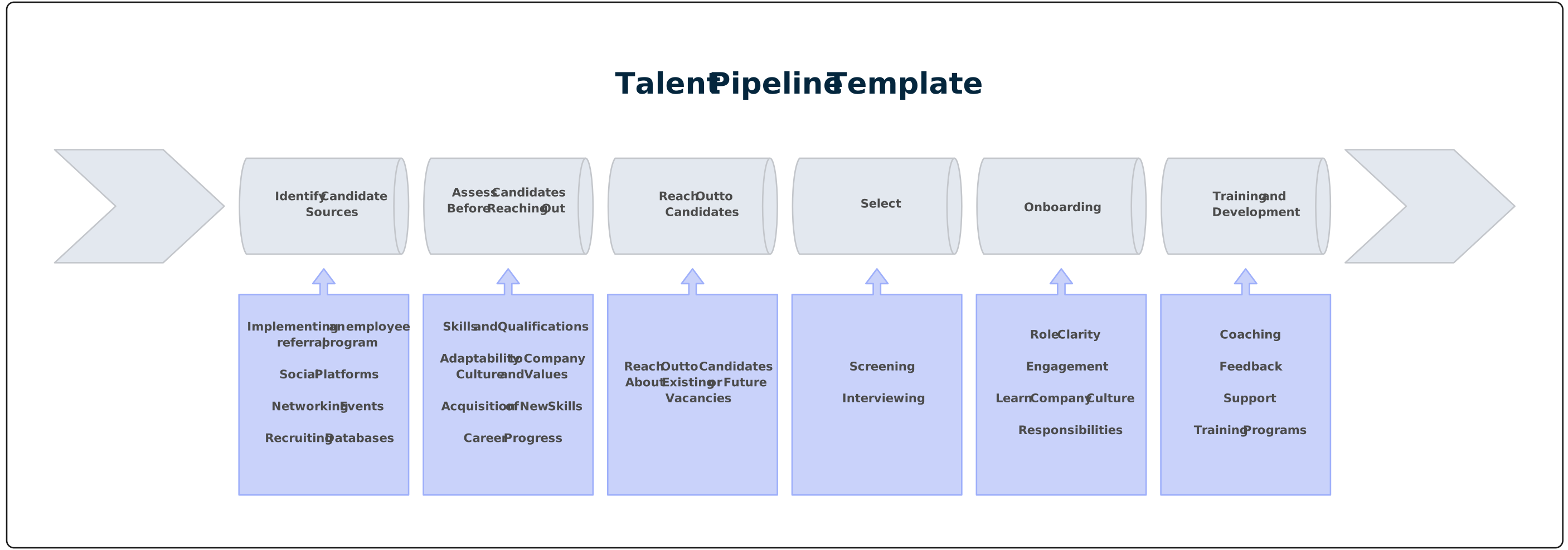
Sourcing involves identifying and engaging potential candidates whose experience and skills may match the role requirements. A deliberate channel strategy can broaden the relevant candidate pool and help teams understand which sources produce qualified applicants. The following strategies can support candidate sourcing.
Identifying Sourcing Channels
There are multiple channels available for sourcing candidates, each with its unique advantages:
Job Boards: Platforms like LinkedIn, Indeed, and Glassdoor are popular for posting job openings and reaching a broad audience.
Social Media: Professional and social networks can help you connect with active and passive candidates when the channel matches the role and audience.
Employee Referrals: A clearly governed referral program can introduce relevant candidates, but referred applicants should follow the same job-related evaluation process as other applicants.
Recruitment Agencies: Partnering with agencies can provide access to a larger talent pool and specialized expertise.
Building and Maintaining a Talent Pipeline
A talent pipeline helps teams maintain relationships with potential candidates for future openings, but it does not guarantee a steady supply of qualified applicants. Consider these steps:
Identify Key Roles: Focus on critical positions that require a continuous supply of talent.
Engage Passive Candidates: Regularly interact with potential candidates who are not actively seeking new opportunities. Learn more about building a passive talent pipeline.
Utilize Recruitment Software: Tools like Applicant Tracking Systems (ATS) can help manage candidate information and streamline the sourcing process.
Network Continuously: Attend industry events, webinars, and conferences to connect with potential candidates.
Use sourcing data and candidate feedback to decide which channels deserve continued investment. With Creately’s process mapping software, HR teams can map the recruitment lifecycle with swimlanes for recruiters, hiring managers, interviewers, and approvers. Owners, notes, links, files, and decision criteria can remain connected to relevant steps, while real-time editing, comments, and @mentions let stakeholders review the documented workflow in context and keep it current as hiring practices change.
Stage 3: Interviewing
Different Types of Interviews
Interviews help teams assess candidates against the job-related skills, experience, and behaviors defined for the role. Use consistent evaluation criteria and reasonable accommodations where required. Several interview formats serve different purposes:
Structured Interviews: These use a predetermined set of job-related questions and scoring criteria to support more consistent comparisons.
Unstructured Interviews: More conversational and flexible, but harder to compare consistently; use them carefully and keep questions job-related.
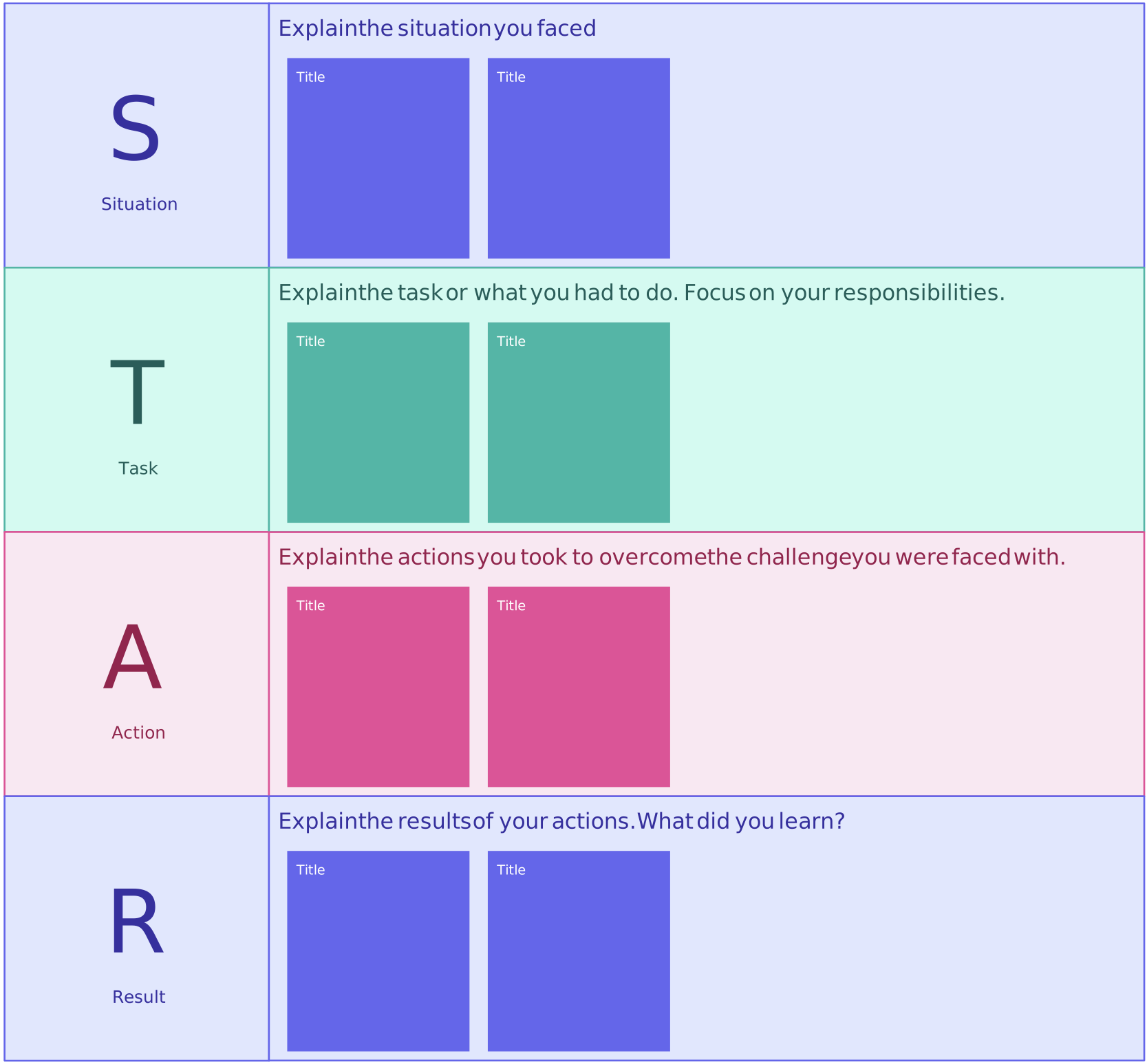
Behavioral Interviews: Focus on past experiences to predict future performance, often using the STAR method.
Panel Interviews: Multiple relevant interviewers assess the candidate in the same session and record their evaluations against shared criteria.
Technical Interviews: Evaluate specific skills and knowledge relevant to the job role.
Preparation Tips for Interviewers
Effective preparation is key to conducting successful interviews. Here are some tips for interviewers:
Review Resumes: Thoroughly read the candidate’s resume to understand their background and experience.
Prepare Questions: Develop a mix of technical, behavioral, and situational questions.
Set the Environment: Ensure a quiet, comfortable space for the interview, whether in-person or virtual.
Practice Active Listening: Focus on the candidate’s responses, taking notes and asking follow-up questions as needed.
By following these tips, interviewers can create a structured and effective interview process, ensuring they gather the necessary information to make informed hiring decisions.
Stage 4: Selection and Offer
The selection and offer stage turns interview evidence into a documented hiring decision. It includes selecting a candidate, preparing the offer, discussing eligible terms, and recording the outcome.
Final Selection Process
After conducting thorough interviews and evaluations, it’s time to make the final selection. This involves:
Reviewing feedback from all interviewers
Comparing candidates against the job requirements
Reviewing job-related evidence, demonstrated skills, and role-relevant growth potential
Recording a decision against the agreed criteria and confirming it with the accountable decision-maker
Crafting a Compelling Job Offer
Once the final candidate is selected, the next step is to create a job offer that is both attractive and competitive. Key elements to include are:
Job title and description
Salary and benefits package
Start date and work schedule
Any additional perks or incentives
Ensure the offer follows the approved compensation range, internal pay practices, and applicable employment requirements. Communicate which terms are fixed and which may be discussed.
Negotiating Terms
Negotiation is a natural part of the offer process. Be prepared to discuss:
Salary adjustments
Flexible work arrangements
Additional benefits or perks
Maintaining open communication and being flexible can help reach a mutually beneficial agreement.
Extending the Offer
Once terms are agreed upon, extend the formal offer. This can be done via email or a formal letter. Ensure that all details are clearly outlined and provide a timeline for the candidate to respond.
After extending the offer, be prepared for either acceptance or rejection. If the offer is accepted, initiate the onboarding process. If rejected, have a backup plan and consider other shortlisted candidates.
Stage 5: Onboarding
Onboarding connects the accepted offer to the employee’s first weeks and months in the role. A structured handoff from recruiting to HR, the hiring manager, IT, and other teams can help new employees access resources, understand responsibilities, and build working relationships. Retention and performance have many causes, so evaluate onboarding alongside manager support, role design, and broader employee-experience data.
Steps to Create an Effective Onboarding Plan
Pre-boarding: Start the onboarding process before the new hire’s first day. Send them necessary paperwork, company policies, and a welcome package to make them feel valued.
First Day Welcome: Ensure the new hire feels welcomed. Introduce them to their team, provide a tour of the office, and set up their workspace.
Training and Development: Provide role-relevant training that covers job-specific skills, company tools, and processes. In Creately, teams can maintain a visual onboarding flow and connect instructions, links, and files to the relevant stages for easier reference.
Mentorship Programs: Pair new hires with experienced employees who can offer guidance and support during their initial months.
Regular Check-ins: Schedule regular check-ins to address any concerns, provide feedback, and ensure the new hire is settling in well.
Feedback Loop: Collect feedback from new hires about their onboarding experience to continuously improve the process.
For more detailed steps on creating an effective onboarding plan, you can read our guides on remote employee onboarding best practices and employee onboarding checklist.

Benefits of a Structured Recruitment Process
Implementing a structured recruitment process offers numerous benefits:
More Consistent Selection: A systematic approach helps teams compare candidates against defined, job-related requirements and document how decisions were made.
Clearer Collaboration: Shared stages, owners, decision criteria, and handoffs give HR teams, hiring managers, and other stakeholders a common reference for coordinating their work.
Evidence-Informed Decisions: Documenting stage-level measures and feedback gives teams evidence they can use to review and improve hiring practices.
Better Use of Resources: Removing duplicate steps and addressing delays can reduce avoidable administrative effort, although the financial impact will vary by role and organization.
For more insights on optimizing your recruitment process for hybrid teams, check out our guide on the 7 step recruitment process.
Common Challenges in the Recruitment Lifecycle and Solutions
Recruitment is not without its challenges. Here are some common issues and how to address them:
High Competition for Talent: Differentiate your employer brand and offer competitive benefits to attract top talent.
Time-Consuming Processes: Streamline your recruitment process using HR automation tools to manage workflows efficiently.
Unclear Job Descriptions: Ensure that job roles and responsibilities are clearly defined to attract the right candidates.
Poor Candidate Experience: Set realistic expectations, communicate status and next steps, and provide a clear contact for questions from application through onboarding.
Future Trends in Recruitment
The recruitment landscape is constantly evolving. Here are some future trends to watch out for:
Responsible AI and Automation: Teams may use automation for suitable administrative tasks and AI-assisted analysis, but employment decisions still require human oversight, bias testing, privacy safeguards, and compliance with applicable rules.
Remote and Hybrid Hiring: Recruitment processes should support remote, hybrid, and on-site candidates with accessible communications and consistent evaluation methods.
Inclusive Recruitment: Teams should regularly review sourcing, assessment, accessibility, and selection practices for unnecessary barriers and unequal outcomes.
Careful Use of Recruitment Data: Stage-level data can identify delays and disparities, but teams should define legitimate purposes, limit access, and avoid collecting unnecessary candidate information.
Wrapping Up
The recruitment lifecycle connects job requisition and planning, sourcing, interviewing, selection, offer, and onboarding. Defining each stage, using job-related evaluation criteria, and reviewing stage-level evidence can help teams find gaps and improve the candidate experience. Clear ownership and documented handoffs also reduce ambiguity as candidates move between teams.
Treat the recruitment lifecycle as living process documentation rather than a one-time diagram. HR teams can use Creately to map the workflow, connect owners and supporting context to relevant steps, and gather comments from the people who run the process. An accountable process owner can then incorporate agreed updates so the documented lifecycle remains useful as roles, policies, and hiring practices change.